


By the Reverend Peter M. J. Stravinskas
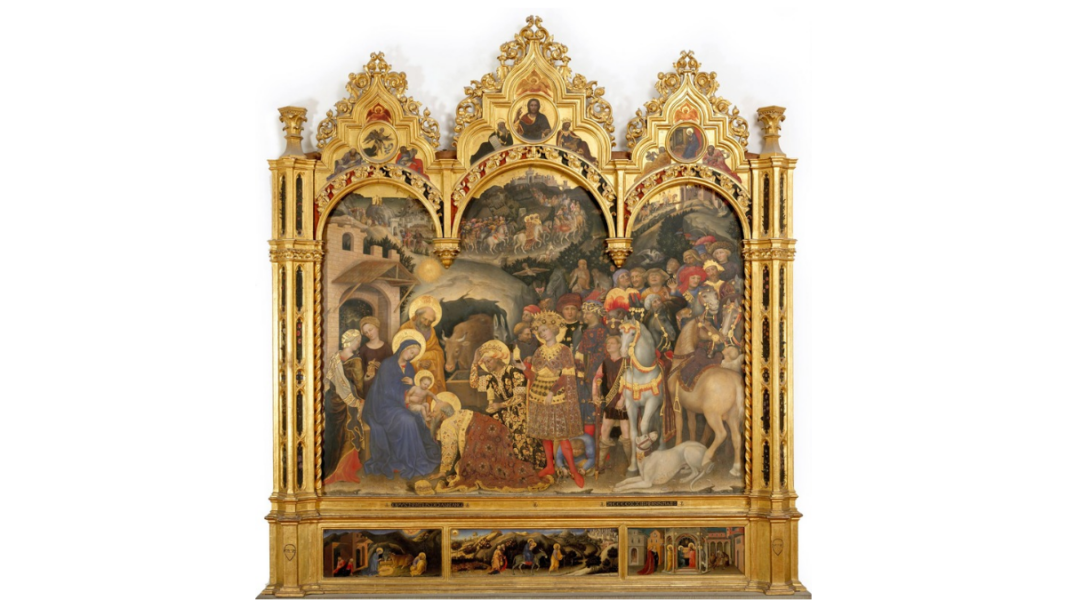
As should already be evident by now, the Solemnity of the Epiphany (celebrated in the Extraordinary Form and in all Eastern Churches on January 6, and this year in the United States on January 4 in the Ordinary Form) is the day of the Gentiles before the Crib. Mary and Joseph represent the believing Jews; Herod, the stiff-necked or faithless Jews; the Magi, the open-minded and willing-hearted Gentiles. A charming and ancient legend claims that these wise men became the first Christian missionaries, encountering both success and failure in their work, as they met with faith and unbelief among the Gentiles to whom they preached.
Undoubtedly, the meaning of this celebration is that «the Gentiles are now co-heirs with the Jews,» but how does this happen? St. Paul gives the answer: «Through the preaching of the Gospel.» If the barrier between Jew and Gentile is to be torn down, it will occur when both come into contact with the saving truth of Jesus Christ. This happens through the process of evangelization, the proclamation of the Good News, the Gospel. The solemnity of this day, therefore, invites us to reflect on the daunting task of evangelizing the world.
Consequently, a fundamental concern of the Church in every age must be the spread of the Gospel. Precisely for this reason, the Fathers of the Second Vatican Council (very opportunely) taught: «The pilgrim Church is, by her nature, missionary» (Ad Gentes, n. 2). This truth was underscored some years later in Pope Paul VI’s historic exhortation, Evangelii nuntiandi. It is important to keep this fact in absolute clarity, because it constitutes one of the distinctive characteristics of Catholicism.
Judaism, for example, has no interest as such in making converts; it certainly does not reject them, but it is not a central impulse of that religious tradition. Nor is it in the various Eastern religions, such as Buddhism, Shintoism, or Taoism. Even Eastern Orthodoxy and most of the dominant Protestantism lack a true evangelizing impulse. What makes us different? Nothing less than taking Christ seriously when He issues His great command: «Go, therefore, and make disciples of all nations, baptizing them in the name of the Father, and of the Son, and of the Holy Spirit, teaching them to observe all that I have commanded you» (Matthew 28:19 ff.).
And from the Magi of the Epiphany to modern missionaries, the Gospel has been proclaimed and has taken root on all continents. Thus, Germany has Boniface and Ireland has Patrick. And five hundred years ago, the so-called New World received the great blessing of coming into contact with the saving message of Jesus Christ through the sacrificial labors of dedicated clergy and religious.
Evangelization, however, is not a task of the past; nor is it the responsibility of a few chosen ones; nor is it limited to what we usually consider «mission territories.» On the contrary, evangelization is the obligation and privilege of every baptized Christian, at all times and in all places. In fact, Pope John Paul II spoke of a «new evangelization,» directed primarily to those lands that were among the first to hear and welcome the Gospel, but which unfortunately have drifted away from it due to indifference or secularization. Certainly, this theme was emphasized in all the continental synods of John Paul II’s pontificate.
In 1990, the Holy Father offered the Church the gift of an encyclical titled Redemptoris missio, on the permanent validity of the Church’s missionary mandate. Why was that encyclical necessary? It suffices to look at the topics it addresses to find the answer. Many people within the Church, because of a confused and confusing form of ecumenism, had come to hold that one religion is as good as another and that, therefore, no one should try to bring anyone into the Catholic Church.
The most astonishing thing of all, however, was that many full-time missionaries adopted that mentality, reducing themselves, their work, and the Church to mere providers of social services at best, or to political revolutionaries and even violent ones at worst. Perhaps the most disturbing passage in the entire encyclical states that «the number of those… who do not belong to the Church… has almost doubled» since the end of the Second Vatican Council (n. 3). Imagine! Twice as many people disconnected from the Church in just twenty-five years.
Sometimes people ask me what God will do with all the peoples of the world who have never heard of Jesus Christ. Are they condemned? Are they saved by some other path? I leave those questions in God’s hands. I prefer to ask myself how Christ will judge me for the fact that so many have never heard His saving Word, precisely because of my lack of enthusiasm or my desire to stay on the sidelines of the Church’s missionary work.
Today, the Magi offer the Child Lord gifts of gold, incense, and myrrh, and I am sure that this pleased the Heart of God. But if those first seekers of truth indeed became the first Christian missionaries, the Heart of Christ rejoiced even more.
Do you want to offer a gift to the «newborn King of the Jews»? Allow me to suggest that you commit to being part of Saint Pope John Paul II’s program to re-evangelize the First World, setting a double goal for this new year: pray and work with a lapsed Catholic to help him return to a living practice of the faith; pray and work with a person who has never been a believer to lead her to the fullness of truth and life that is found only in Christ’s one, holy, catholic, and apostolic Church.
That would be a gift that would really mean something to the Child King. That would say to all that you are a worthy heir to the Magi’s evangelization.
Caspar, Melchior, and Baltasar, pray for us, that we may be made worthy of the promises of Christ.
About the author
Father Peter Stravinskas holds a doctorate in school administration and in theology. He is the founding editor of The Catholic Response and editor of Newman House Press. Most recently, he has launched a graduate program in Catholic school administration through Pontifex University.