


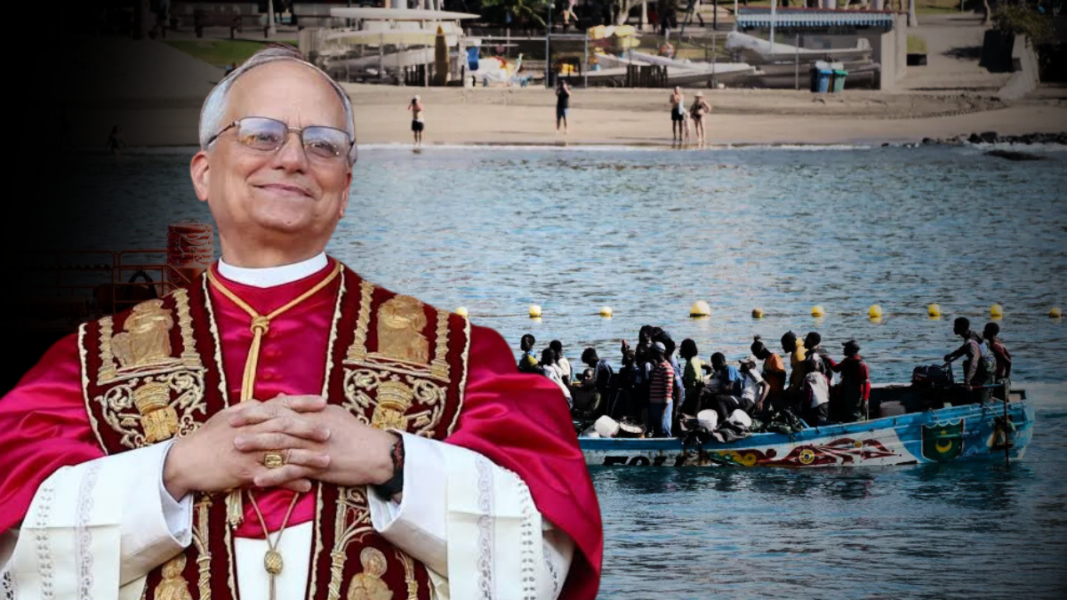
Cardinal José Cobo, Archbishop of Madrid and Vice President of the Spanish Episcopal Conference, has officially confirmed that Pope León XIV is scheduled to travel to Spain in 2026, emphasizing that it is a personal initiative of the Pontiff, beyond the invitations received from various sectors.
The announcement came after a technical meeting held in Rome to begin outlining the organizational details of the trip. According to the cardinal, the visit responds to the Pope’s expressed desire to learn firsthand about the reality of the Church in Spain and meet with the faithful.
Among the planned destinations are Madrid and Barcelona, as well as Canarias, whose inclusion is neither minor nor casual. The Pope’s presence in the archipelago clearly points to the migration issue, one of the axes that have marked the beginning of León XIV’s pontificate and which will predictably have a central weight in the message of the trip.
Although the trip is taken for granted, the definitive dates have not yet been confirmed, as they depend on the pontifical agenda and the evolution of the preparations. As an indicative reference, the surroundings of June 10 have been mentioned, coinciding with the centenary of the death of architect Antonio Gaudí, a figure closely linked to the Sagrada Família basilica in Barcelona.
Cardinal Cobo insisted that it will not be an informal visit, but a trip with a marked pastoral character. Likewise, he assured that conversations with civil authorities are progressing normally and that there are good institutional relations to facilitate the visit.
Focus on Migration
The confirmation of Canarias as part of the papal itinerary cannot be detached from the marked immigrationist focus that has accompanied much of the recent ecclesial discourse. The archipelago has become one of the main symbolic scenarios of migratory pressure towards Europe, and its inclusion in the papal agenda seems to respond more to a political and media intentionality that mixes with the pastoral tone.
It remains to be seen whether the trip will also serve to listen to local communities, directly affected by the social, economic, and security consequences derived from this phenomenon, or if the message will be reduced to a unilateral reading focused solely on welcoming, without addressing the responsibilities of the States or the root causes of the problem.