


Let’s talk about true historical memory. In Catalonia. Lluís Companys, a politician from Esquerra Republicana de Catalunya, was Minister of the Navy of Spain in the Second Republic (1933) and president of the Generalitat of Catalonia between 1934 and 1940, years of republican terror in Spain.
Companys is a figure who continues to be practically venerated, idolized, by the left-wing Catalan separatism, because, exiled after the civil war, he was captured in France and subjected to a court-martial by the Francoist government, being finally shot in 1940 in the castle of Montjuïc, in Barcelona.
However, regarding the figure of Companys, it can be said that under his government as president of the Generalitat he set in motion the greatest Catalan genocide, that of the Catholic Catalans, laypeople, religious and priests, which the priest and archivist Josep Sanabre, a direct witness to the events, described in Martyrdom of the Church in the Diocese of Barcelona during the religious persecution 1936-39. There we find this enlightening account: «The revolution and its attendant crimes were not a reaction of indignation from the people against the supposed intervention of the Church in the National Uprising, as was pretended to make the national and foreign public believe (…). We will never forget the words heard from the mouth of a union leader, when he recognized us in October 1936, after congratulating us on having remained unharmed until then, telling us: ‘You have seen the revolution from below, I from above; the plan was to murder all of you.’
The Church, from the first day, was a victim, and not a combatant; the plan was clearly evident in the first weeks of the action of the soulless groups that roamed the populations under Marxist domination; their first concern was the murder of priests; for this reason, upon their arrival in the towns, the first inquiry was to find out if the priest had been murdered; it constituted the first item on the program. This was the reality in our diocese and in the entire area that remained under the tyranny of the new regime.»
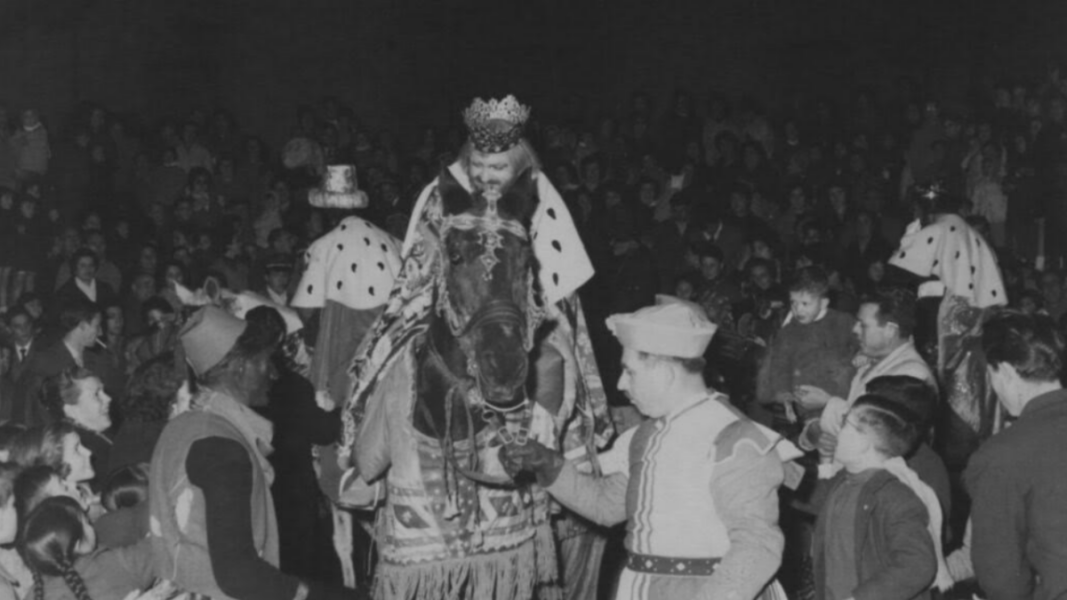
During his presidency of the Generalitat, Companys drafted a law that prohibited in Catalonia all celebrations related to Christmas, simply because of their religious roots, such as the Midnight Mass, the Three Kings Parade or the popular «Cagatió».
Meanwhile, he was mayor of the city of Lérida Joan Rovira y Roure, a politician belonging to the Liga Regionalista, a party founded by Francesc Cambó.
Joan Rovira y Roure was born in Barcelona in 1899. He was the son of a very religious family. He trained as a State lawyer and was a deputy in the Catalan parliament. In August 1935 he was elected mayor of Lérida, a position he held until mid-January 1936, when he was appointed Commissioner delegate of the Generalitat of Catalonia in Lérida.
Due to his academic training, as well as family tradition, Rovira Roure was a practicing Catholic, a fact that, during the Republic, cost him no small problems with the religious persecution that began in May 1931. During his brief term as mayor, he withdrew from Lérida the remaining unit of Mossos d’Esquadra in the municipality under the excuse that they were needed in Barcelona. The reality is that Rovira y Roure had maintained order, to the best of his ability, and faced the militiamen who intended to establish revolutionary terror from the cheka they had set up in the Catalan city.
He was also a person known for his kindness and generosity: the salary he earned as a deputy he donated to charity, and in his position as mayor he never wanted to collect it. He always helped the needy and, upon the approval of the Divorce Law in the Republic, he strove to save many marriages that wanted to divorce.
In Lérida, on January 5, 1936, the traditional Three Kings Parade was held with the express authorization of the mayor. Perhaps naively, the mayor thought that such an innocent and traditional event could not harm anyone. However, in that year of 1936, Lérida was the only city in Catalonia where the Parade was held.
Months later, when he was no longer mayor of the city but Commissioner delegate of the Generalitat of Catalonia in Lérida, Rovira y Roure was arrested along with other political leaders on August 18 and interned in the Lérida prison. It is said that it was revenge by Esquerra Republicana and the FAI. The reality was that, after the departure of the Mossos from the city, the chequists had imposed a regime of terror in the locality. On the 27th of the same month he was tried by the «popular tribunal», despite enjoying parliamentary immunity. The trial was summary and he was denied the possibility of defense. He was sentenced to death, among other reasons, for the fact that, in his capacity as mayor of the city, he had allowed the Three Kings Parade to be held, when religious manifestations had been repressed by the Republic.
Joan Rovira Roure was shot on August 27 on the walls of the municipal cemetery. His body, without a coup de grâce, was thrown into the common grave where he shared the fate with the hundreds of repressed by anarchists, socialists and communists. One of the cemetery gravediggers, who testified in the general cause, assured that the mayor died forgiving those who had tortured him in the cheka and were shooting him at that moment, while «invoking Jesus Christ».
Juan Rovira y Roure was married and had three children. He is one of the martyrs included in the canonization cause of Rafael García Segura and 168 companions, priests and laypeople.