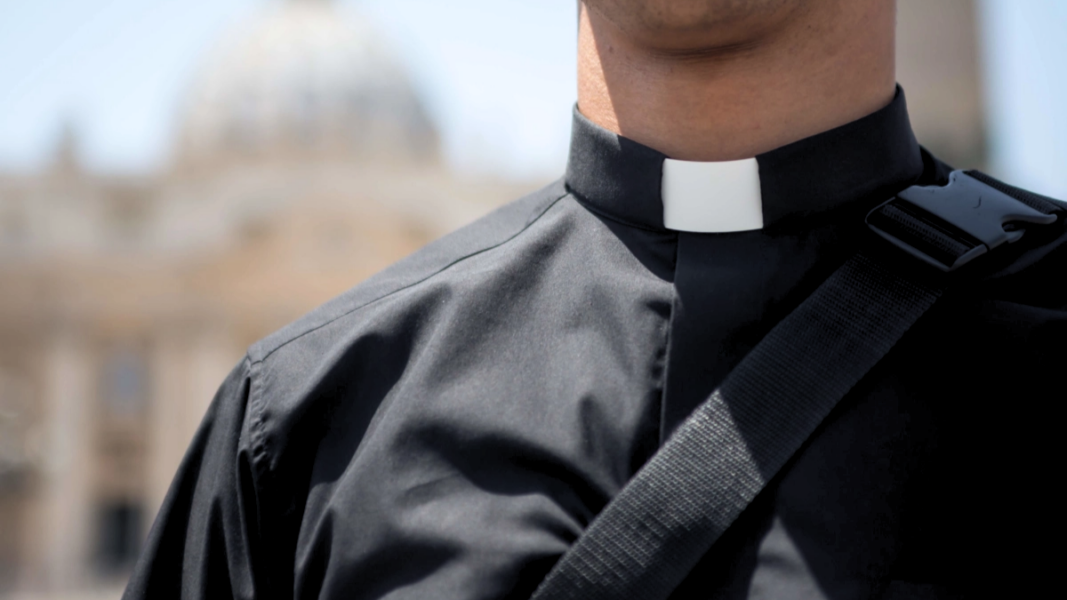
Addressing the issue of effeminacy in the clergy requires, first and foremost, recognizing the moral and communicative difficulty of the very approach. It is not a simple topic. Reading «Nosotros» (Homo Legens) by Father Gómez Mir, helps to open one’s eyes and provides serene tools to reopen a question that, due to its discomfort, we had shelved in the drawer of proscribed debates. In an era when taboos are being crushed, the question about effeminate priests or «the elephant in the sacristy» opens up—perhaps too late.
In contemporary culture, any critical inquiry into effeminacy in men tends to be interpreted as a form of aggression, lack of empathy, or a misunderstood masculinity. This reaction is not entirely unfounded: historically, effeminacy has been the object of ridicule, contempt, or cruelty, and not infrequently has served as a pretext for unjust humiliations. Therefore, any honest reflection must start from an unequivocal affirmation: the effeminate man, whether priest or not, can be an excellent person, morally admirable, spiritually profound, and, in some cases, a true example of Christian charity and even holiness.
Precisely out of respect for concrete persons, the issue cannot be posed in moral or psychological terms, but ecclesiological and pastoral ones. It is not about judging anyone’s goodness, uprightness, or dignity, but about analyzing what type of priestly model is de facto proposed in the ordinary life of the Church and what its medium- and long-term effects are on the transmission of vocations. The priesthood, especially the diocesan one, is not only a sacramental function exercised in the present, but also a visible model that operates as a symbolic reference for children, adolescents, and young people who begin to formulate, in a still implicit way, the question about their own vocation.
From this perspective, it is difficult to deny that the priest’s personal style, his way of speaking, moving, celebrating the liturgy, and relating pastorally, possesses a formative force that goes far beyond his explicit words. The priest does not only teach doctrine; he embodies a way of being a consecrated man, a concrete form of living authority, spiritual paternity, and self-giving. In that sense, the priestly archetype acts as an attractive force that is not neutral and tends, in a natural way, to elicit identification in those who feel comfortable in that human and expressive model.
When the dominant model is perceived as soft, markedly effeminate, emotionally infantilized, or excessively horizontal, the vocational effect is largely predictable. Not out of malice, but due to an almost anthropological dynamic: it preferentially attracts those who already feel identified with that register. The result is a feedback process in which the effeminate priest tends to reproduce himself, progressively reinforcing his hegemony. It is not so much a conspiracy (at least not in its execution, perhaps yes in its design) nor a moral pathology, but an elementary logic of imitation and affinity. The problem arises when that dynamic becomes practically monopolistic and makes it difficult for masculine profiles to perceive the priesthood as a realistic and desirable vital possibility.
This situation is decisively contributed to by a certain liturgical and pastoral style in which the celebration loses its symbolic, vertical, and objectifying character to become a sort of school classroom or participatory assembly centered on the personality of the celebrant. When the priest’s ego overflows in gestures, comments, affective tones, and expressive resources oriented toward generating emotional closeness, spontaneity, or sympathy, the liturgy ceases to offer a space in which the young man can recognize himself called to something that transcends and demands him. In that liturgical context blowing in the wind full of naive spirituality or retired ladies (depending on where you live), it is not strange that many non-effeminate adolescents perceive the priestly vocation as something alien, if not incompatible, with their own masculine identity.
From here, one better understands an affirmation that, formulated without nuances, might seem hurtful, but acquires another sense when expressed with rigor: not every good, holy, or admirable person is called to the priesthood, and even less to ordinary parish priesthood. Not because they lack virtue, but because the priest, in addition to being a minister of the sacraments, is a vector of future vocations. In that vectorial function, the priest’s way of being is not indifferent. Just as the Church has historically discerned the convenience of excluding certain profiles for prudential and pastoral reasons, here too the issue is not personal dignity, but suitability for the archetype that one wishes to transmit.
The priest is not an animator or an emotional therapist. He is a shepherd of souls in combat. His daily work consists of listening to human miseries without sweetening them, correcting when it hurts, sustaining broken people, speaking of sin without relativizing it, and keeping alive the hope of holiness when everything invites cynicism. To do that for years, without breaking or betraying the truth, inner strength is needed. Character is needed. Virility is needed.
Recognizing this implies no contempt whatsoever toward effeminate persons or those who experience a deeply rooted homosexual orientation. It implies, rather, taking seriously the institutional responsibility of the Church and its duty to safeguard the health of the ministry. In a time of deep vocational crisis, perhaps one of the most uncomfortable but also most necessary questions is whether the priestly model being offered today really allows virile men to feel challenged by God’s call, or if, on the contrary, many seminaries have narrowed until becoming exclusive by pure cultural and pastoral inertia.