


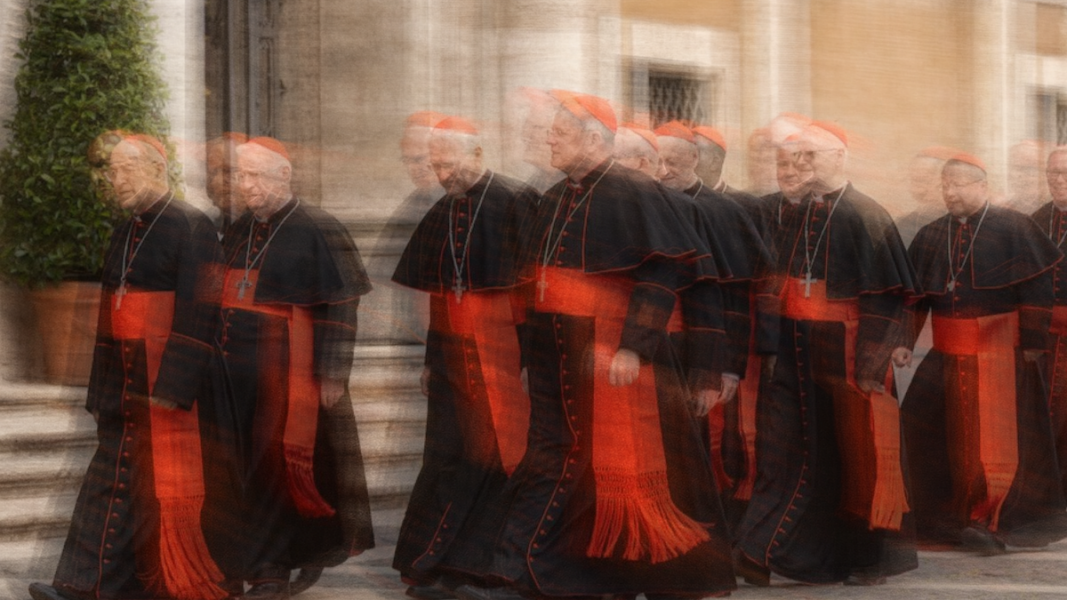
A few days before the first extraordinary consistory of the pontificate of Leo XIV is celebrated, attention is once again focused on a key institution of the Church’s government: the meeting of the College of Cardinals around the Pope. This is not merely a procedural act. The consistory, by its nature and by the historical moment in which it is convened, usually reflects with clarity the internal pulse of the Church.
Before delving into the content and scope of the consistory convened for January 7 and 8, 2026, it is worth recalling exactly what a consistory is and its place in ecclesial tradition. The term comes from Latin con-sistere —»to stand together»— and already in imperial Rome it designated the emperor’s sacred council. Over time, the Church adopted this concept to refer to the assembly of cardinals gathered around the Pope, the true senate of the Roman Pontiff, as Innocent III defined it at the beginning of the 13th century.
From the early centuries, the pontiffs were accustomed to deliberating with this body on issues affecting faith, discipline, and ecclesial life. Over time, and especially from the Middle Ages onward, the College of Cardinals—direct heir to that presbytery—consolidated itself as the principal consultative body of the Pope in the supreme and universal government of the Church.
In current practice, Canon Law distinguishes three types of consistories. The ordinary or secret consistory is held solely with the presence of the Pope and the cardinals, and it is the proper forum for major government decisions and the creation of new cardinals. The public consistory allows the presence of other ecclesiastical authorities and even some laypeople, and it is used mainly for solemn acts, such as the delivery of the cardinal’s biretta or canonization causes. The semi-public consistory, on the other hand, also gathers certain bishops and is traditionally linked to the final phases of canonization processes.
Paul VI and the search for balance after the Council
After the closure of the Second Vatican Council in 1965, the Church found itself in an unprecedented scenario: profound reforms, opposing interpretations, and growing internal tension. In that context, Paul VI turned to consistories as an instrument to affirm episcopal collegiality and keep the College of Cardinals united while implementing the conciliar decisions.
His meetings, then much smaller in number, addressed doctrinal, disciplinary issues, and above all, the reform of the Roman Curia. Paul VI needed a space where cardinals could express themselves before changes affecting centuries-old structures. Without promoting open confrontations, he fostered a dialogue that sought to contain the tension between a reading of continuity of the Council and a more rupturist one.
John Paul II: doctrinal unity and multitudinous consistories
With John Paul II, the consistories acquired a broader dimension and, in many cases, a markedly pastoral one. The growth of the College of Cardinals and the universal projection of the pontificate demanded increasingly numerous meetings.
Wojtyła used the consistories to reinforce his project of doctrinal and moral restoration in a Church shaken by secularization. In them, issues such as the family, bioethics, evangelization, and the relationship between bishops and episcopal conferences were addressed. Although internal pluralism was evident, the Pope avoided the consistories turning into open ideological confrontations, always reaffirming unity around the magisterium.
Benedict XVI: sobriety and clarity in times of tension
Benedict XVI’s consistories had a different tone: more sober, more doctrinal, more focused. They were held in a context marked by internal tensions, resistances to the liturgical reform promoted by Summorum Pontificum, curial pressures, and the Vatileaks scandal.
Without appealing to an explicit reconciliation of currents, Benedict XVI sought to strengthen unity through doctrinal clarity and fidelity to tradition. His consistories reflected that style: contained interventions, calls for theological coherence, and a constant effort to recompose an ecclesial fabric weakened by decades of divergent interpretations of the Council.
Francis: consistories and growing polarization
During the pontificate of Francis, the consistories changed dynamics. Although presented as an expression of a more synodal style, criticisms soon arose for the lack of real debate. Several cardinals denounced that interventions were excessively controlled and that meetings were limited, in many cases, to communicating already-made decisions.
Meanwhile, internal polarization intensified. Doctrinal controversies around Amoris Laetitia, German synodality, and restrictions on traditional liturgy created a climate that the consistories failed to channel. For some cardinals, far from serving as a space of communion, the meetings evidenced internal fractures.
Leo XIV and a new unprecedented scenario
The convening of the January 2026 consistory by Leo XIV has reactivated interest in the very function of these meetings. If it is confirmed that the Pope intends to foster direct dialogue between opposing sensitivities within the College of Cardinals, as suggested in recent weeks, we would be facing an unusual gesture in recent history.
Since the Second Vatican Council, no pontiff has convened a consistory with the explicit aim of addressing internal polarization at its root. There have been attempts to reinforce collegiality or doctrinal unity, but not such a direct approach to existing tensions.
An instrument that reflects the pulse of the Church
Over the last decades, consistories have acted as a thermometer of ecclesial life. They have served to order reforms, listen to diverse voices, and, at times, contain internal conflicts. The 2026 consistory now presents itself as a possible turning point.
According to various sources, the consistory will address the role of the College of Cardinals in Leo XIV’s government, synodality, and the so-called «liturgical peace.» The Pope would have asked the cardinals to prepare by rereading the apostolic exhortation Evangelii gaudium and studying the apostolic constitution Praedicate evangelium, which reformed the Roman Curia in 2022.
Read also: Government, synodality and liturgy: Leo XIV’s agenda for the consistory
The Holy See has insisted that the meeting is situated in continuity with the tradition and mission of the Church. Nevertheless, everything points to this consistory also being a key moment to gauge the way in which Leo XIV seeks to govern with a College of Cardinals diverse in origins, sensitivities, and ecclesial approaches.
Its success or failure will depend on something that recent history makes clear: the unity of the Church is not built on political balances or power strategies, but on fidelity to the truth that the Church has guarded for two thousand years.