


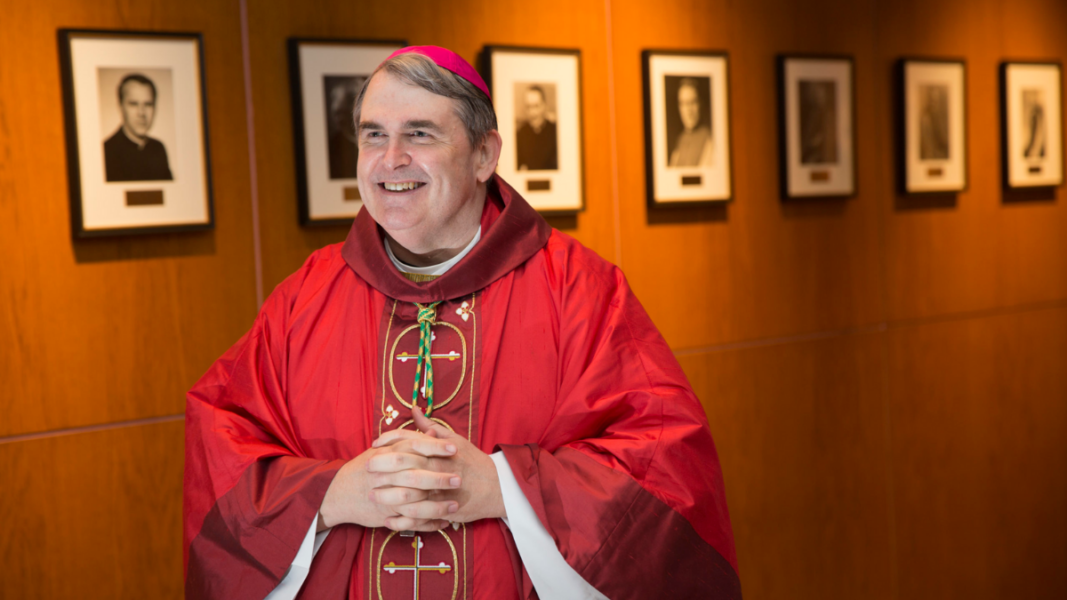
The closure and subsequent sale of St. Raphael’s parish in Niagara Falls (state of New York) has provoked a strong reaction among its faithful, who accuse the Bishop of Buffalo, Michael Fisher, of acting in bad faith by ordering improvement works on the temple shortly before decreeing its definitive closure.
The case has been reported by Crisis Magazine, a medium that collects the testimony of a parishioner directly affected by the episcopal decision, in a context marked by massive closures of parishes in several U.S. dioceses and by the economic pressure derived from the financial crisis that the Diocese of Buffalo has been going through for years.
A diocese in bankruptcy and restructuring
The Diocese of Buffalo declared bankruptcy in 2020, filing for Chapter 11, following an avalanche of lawsuits for sexual abuses under the Child Victims Act of the state of New York. Since then, it has been facing a reorganization process that includes the payment of hundreds of claims, high legal costs, and a pastoral restructuring plan that has involved the closure, merger, or sale of numerous parishes, in an attempt to obtain liquidity and reduce structural expenses.
A costly improvement before the closure
According to the testimony, on October 3, 2023, Bishop Fisher visited St. Raphael’s for a confirmation celebration. During that brief stay, he indicated the need to paint the interior of the temple, a modest church with architecture and aesthetics typical of the post-conciliar era.
The new pastor, in his first pastoral assignment, quickly organized the works. To finance them, an extraordinary contribution of $250 was requested from each family, a significant amount for many parishioners, which was added to the ordinary expenses of the parish. The result was, according to the faithful themselves, satisfactory and notably improved the appearance of the temple.
Rumors, closure, and sale of the temple
Shortly after the works were completed, rumors began to circulate about the possible closure of several churches in Niagara Falls, including St. Raphael’s. In February 2025, Bishop Fisher celebrated the last Mass in the parish, which was subsequently sold to a Baptist community.
For the faithful, the underlying problem is that the improvement financed by the community itself would have served to increase the market value of the building before its sale. St. Raphael’s was also the last parish in the area accessible on foot for many neighbors and the only one in the north of the city.
A pastor and a community struck
The closure deeply affected the pastor, who, according to the account collected by Crisis Magazine, publicly expressed his feeling of having failed and of having misled the faithful. For the community, the decision meant a painful rupture after having obeyed an episcopal indication that, shortly afterward, was left empty of pastoral sense.
The article also emphasizes that Bishop Fisher had no prior ties to the Buffalo region and questions his ability to understand the local reality of a diocese marked by bankruptcy, the closure of its seminary, and a prolonged loss of trust among the faithful.
A questioned model
The testimony criticizes a diocesan policy centered on the closure and sale of parishes as a response to the financial crisis, warning that it is a limited and pastorally damaging strategy. In this context, it is mentioned that even the Holy See has begun to hear the complaints of faithful from parishes threatened with closure.
The author concludes with a symbolic request: that the diocese return to the former parishioners the extraordinary contribution made for works that they barely got to enjoy, since the church no longer belongs to them. The community, he states, has lost its temple and will hardly recover its trust.