


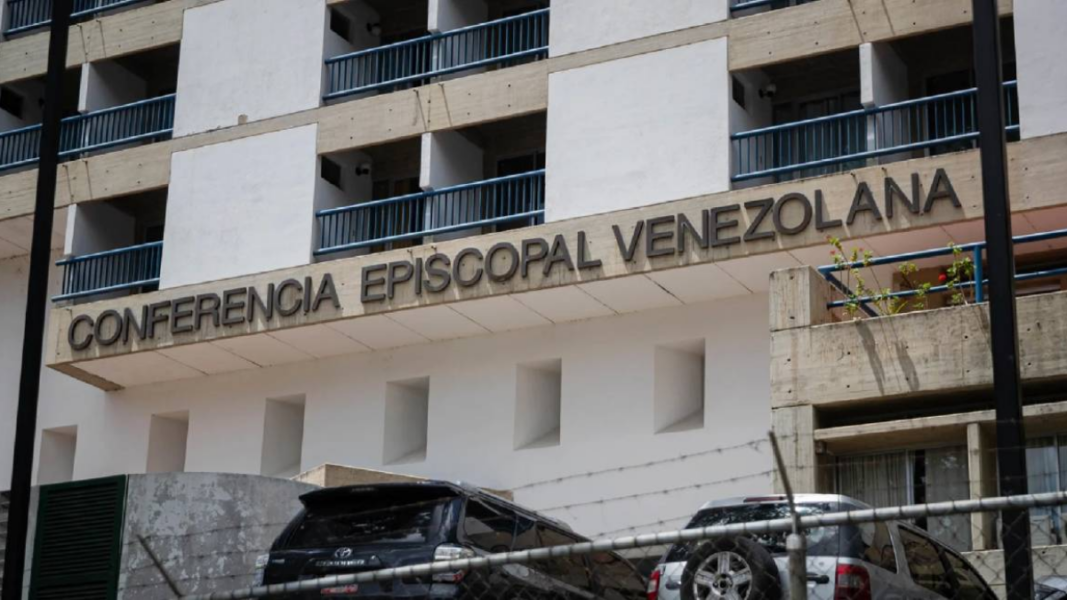
The Venezuelan Episcopal Conference has not yet issued any official statement following the capture of Nicolás Maduro, which occurred in the early hours of January 3 during a U.S. military operation in Caracas. This was confirmed to The Pillar by the president of the episcopate, Monsignor Jesús González de Zárate, Archbishop of Cumaná.
“The situation is still developing. We need to have an overview before making a statement,” explained the prelate, who added that the bishops have spent the last hours in prayer. “We have been praying since two in the morning,” he stated.
A large-scale military operation
Around 2:00 a.m. on January 3, numerous users on social media reported explosions at various points in Caracas, as well as the overflight of helicopters and military aircraft. Hours later, the President of the United States, Donald Trump, confirmed that U.S. armed forces had carried out an operation to capture Nicolás Maduro and his wife, Cilia Flores.
According to Attorney General Pam Bondi, Maduro has been indicted in the United States on charges of narcoterrorism conspiracy, cocaine trafficking, and possession of weapons and explosives. Flores also faces drug- and weapons-related accusations in federal courts.
During the operation, the U.S. army bombed several military targets, including the headquarters of the Ministry of Defense, the country’s main military airport, and a nearby port. Trump assured that there were no U.S. casualties, while The New York Times reported at least one civilian victim.
A regime marked by crisis and repression
Maduro has governed Venezuela since 2013, in a period characterized by a deep political, economic, and social crisis, with repeated denunciations of corruption and human rights violations. In 2024, the National Electoral Council, controlled by the regime, announced his re-election for a third term, in elections widely questioned by the international community, which recognized serious irregularities and gave credibility to the opposition’s claims of victory.
Read also: Venezuela prohibits the exit of Cardinal Porras and retains his passport
The Church, a habitual critic of Chavismo
The Catholic Church enjoys widespread respect in Venezuela and the episcopate has been one of the most constant critics of the Maduro regime. In their 2025 Christmas message, the bishops denounced the “deprivation of liberty for political reasons,” the widespread impoverishment of the population, and the economic collapse of the country.
Nevertheless, they also expressed their concern at that time about U.S. military actions in the Caribbean region, lamenting the loss of human lives and the presence of foreign forces in international waters.
The current silence of the episcopate reflects, according to The Pillar, the uncertainty about the country’s immediate future, amid contradictory information following the capture of the leader.
Political uncertainty and international reactions
While Maduro awaits processing in New York, Trump stated that the United States will “administer the country” until a “safe and appropriate” transition occurs. He later pointed out that Vice President Delcy Rodríguez had been sworn in as interim president, something she herself denied hours later from Caracas, describing the operation as an “illegal kidnapping” and demanding Maduro’s release.
The capture of the dictator has been celebrated by broad sectors of the Venezuelan diaspora, but it has elicited mixed reactions in the international community and in U.S. politics, with supports and criticisms regarding the legality and geopolitical consequences of the operation.
Pope Leo XIV has not yet spoken on the events. In a press conference on December 2, when asked about a possible military action against Venezuela, the Pontiff stated that “it is better to seek dialogue, perhaps pressure, even economic, but seeking other ways to provoke change”.
Recommended Article:
Keys to analyzing the situation in Venezuela without falling into simplistic pacifism