


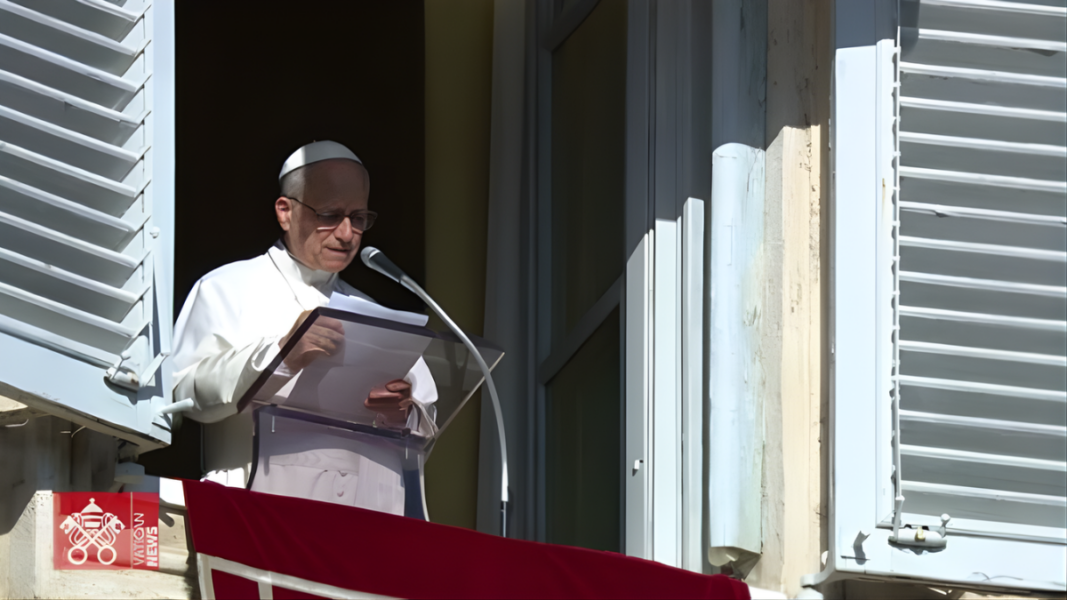
During the Angelus prayer this Sunday, just one day after the United States’ intervention in Venezuela, Pope Leo XIV referred to the situation in the South American country with notable diplomatic caution. From the window of the Apostolic Palace, the Pontiff stated that he is following “with concern the evolution of the situation in Venezuela” and asked that “the good of the beloved Venezuelan people prevail above any other consideration”, avoiding at all times any explicit mention of the North American military action or a possible violation of international law.
In his address, the Pope insisted on the need to guarantee the country’s sovereignty and to respect “the human and civil rights of all and each one”, exhorting to work together to build “a serene future of collaboration, stability, and concord”, with special attention to the poorest, harshly punished by the prolonged economic crisis. The message, delivered in a context of maximum international tension, has drawn attention precisely for its moderate tone and for the absence of concrete references to the events that occurred the previous day, which have elicited much more forceful reactions in the European political sphere.
Particularly significant is the Pontiff’s appeal to the need to “ensure the Rule of Law enshrined in the Constitution”, a direct reference to the Venezuelan constitutional framework inspired by Bolivarianism. This is a text widely questioned for its legitimacy and for its instrumental use by the regime, to the point of being considered by numerous jurists and international observers as a document of scant real normative value. The Pope’s decision to explicitly rely on that Constitution, without introducing nuances or reservations, is at the very least striking in the current context.
The contrast with the statements of several European heads of state and presidents is evident. While these have spoken openly of a violation of international law and clear responsibilities following yesterday’s intervention, the Angelus message has avoided any direct accusation, limiting itself to a generic appeal to sovereignty, peace, and dialogue.