


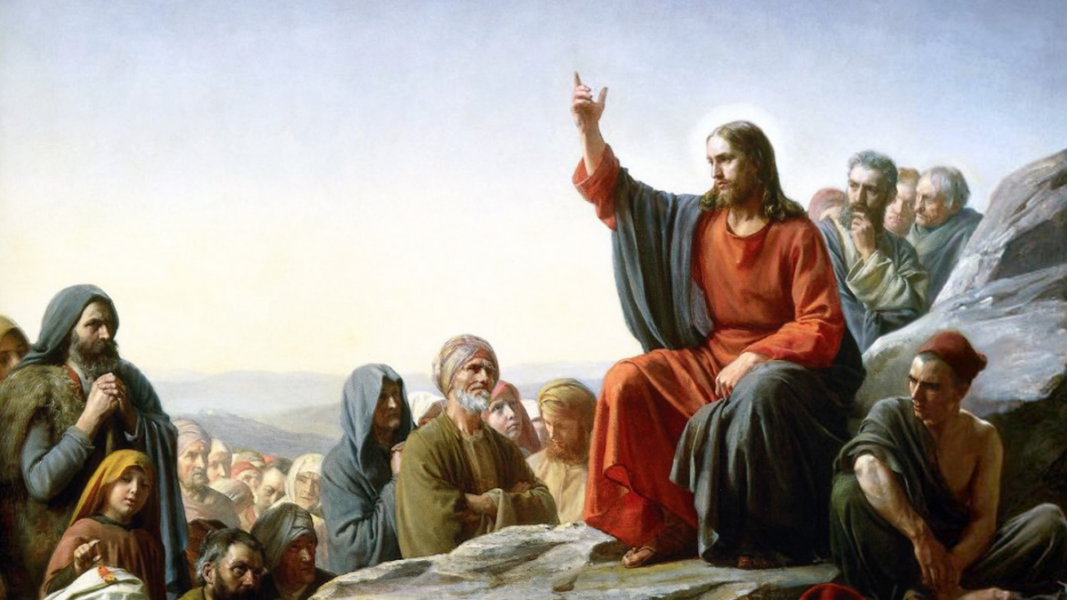
“The Gospel is the mouth of Christ,” affirmed St. Augustine. The Roman liturgy has taken this truth with all its radicality. In the traditional Mass, the proclamation of the Gospel is not a simple reading nor just another didactic moment, but the living presence of Christ speaking to his Church. Therefore, the rites surrounding the singing of the Gospel are charged with singular solemnity: honors, gestures, and signs that manifest that it is not a man who speaks, but the Word of God himself.
The Gospel: the Word of the Word
St. Augustine exhorted the faithful to listen to the Gospel as if God himself were addressing them. And it is not a metaphor. Christ is the eternal Word of the Father, and the Gospel is the word of the Word, the Verba Verbi. Therefore, in the liturgy, the Gospel is Christ. This conviction explains the extraordinary veneration that the Church pays to the book of the Gospels and the solemnity with which its text is proclaimed. Through the Sacred Scriptures, inspired by God, the Lord continues to speak to men for their salvation.
The Evangelary: beauty in the service of truth
The Evangelary, which contains the passages from the four Gospels, is usually richly ornamented. The beauty of its binding and illuminations does not respond to a superficial aesthetic taste, but to the awareness that it is a holy book, bearer of the divine Word. In it are gathered the Gospels of St. Matthew, symbolized by man; St. Mark, by the lion; St. Luke, by the ox; and St. John, by the eagle, sign of the theological height of his Gospel. The arrangement of these texts and their reading cycle are rooted in the oldest tradition of the Church. If St. Gregory the Great returned today, he would hear in our churches the same readings proclaimed in the Roman basilicas of the 7th century, according to a liturgical cycle that has evangelized entire continents and formed generations of saints.
The ministry of the deacon and the honor of the altar
Since the fourth century, it corresponds to the deacon, vested in the dalmatic, the honor of singing the Gospel. Before doing so, he places the Evangelary on the altar, which represents Christ himself, thus manifesting the inseparable unity between the Lord and his Word. Nothing may be placed on the altar stone except the offerings, the Most Holy Sacrament, or the book of the Gospels, precisely because it receives the same honors as Christ.
Before proclaiming it, the deacon asks the priest for the blessing and prays on his knees the ancient prayer of the Munda cor meum, supplicating that his heart and lips be purified, as those of the prophet Isaiah by the burning coal of the seraph. He thus prepares to utter the Verba Verbi, the words themselves of the Word. Taking the Evangelary from the altar, he acknowledges that he does not speak on his own, but receives the word of Christ to transmit it faithfully.
The procession of the Gospel and its missionary orientation
The proclamation of the Gospel is preceded by a solemn procession. Two acolytes carry candles, symbol of the double nature—human and divine—of Christ; the thurible follows, sign of adoration; then the subdeacon, and finally, the deacon with the holy book. The procession heads to the north side of the presbytery, where the Gospel is sung. After the east—figure of Christ—and the south—symbol of Israel—, the north represents the pagan world, the darkness still not illuminated by faith. Toward that direction the Gospel is proclaimed, announcing that the Good News is destined for all nations.
The signs of the cross and the response of the faithful
Before the proclamation, the deacon traces the sign of the cross over the book and then over himself: on the forehead, on the lips, and on the heart. These gestures express that the Word of God must be received with the intelligence, proclaimed without fear, and kept with love. The faithful respond: “Glory to you, Lord”, remembering that the proclamation of the Gospel is, above all, an act of glorification of God, which is why it is first sung in Latin, the sacred language of the Church.
The final veneration of the holy book
Once the singing of the Gospel is concluded, the subdeacon carries the Evangelary directly to the priest, crossing the presbytery without genuflection, as if carrying the Most Holy Sacrament. The priest then kisses the book at the place marked by the cross. This gesture is at once an expression of communion with the evangelical doctrine and an act of adoration of Christ himself, whose Word has just resounded. From ancient times, kissing is a profoundly religious gesture: ad-orare literally means “to bring to the mouth,” sign of supreme veneration.
The proclamation of the Gospel is one of the highest moments of the Mass. In it, Christ himself speaks to his Church, instructs it, and calls it to conversion. Therefore, the liturgy surrounds it with honors, signs, and gestures that educate the faith and dispose the soul to receive the divine Word.