


Part II
In the first part, we focused on pointing out the traditional teaching of the Church on sexual morality and on seeing how, from its beginnings in the 1940s, Karol Wojtyla’s thinking on the matter inverted the ends of marriage in practice, in the same way that Vatican Council II later did: equalizing them without hierarchizing, and emphasizing conjugal love and the self-donation of the spouses, to the detriment of the procreative end.
Today we will delve into the changes produced in the traditional teaching of sexual morality in the 1960s. It goes without saying that this text, like all those written by this servant, does not have objectives of exhaustive knowledge, but of pointing out the contradictions in many contemporary ecclesial teachings and practices compared to the bimillennial tradition of the Church, so that each one can become aware of it and continue forming themselves.
It is inevitable to study the inversion of the hierarchized ends of marriage ignoring the repercussions it has on the development of ideas regarding birth control.
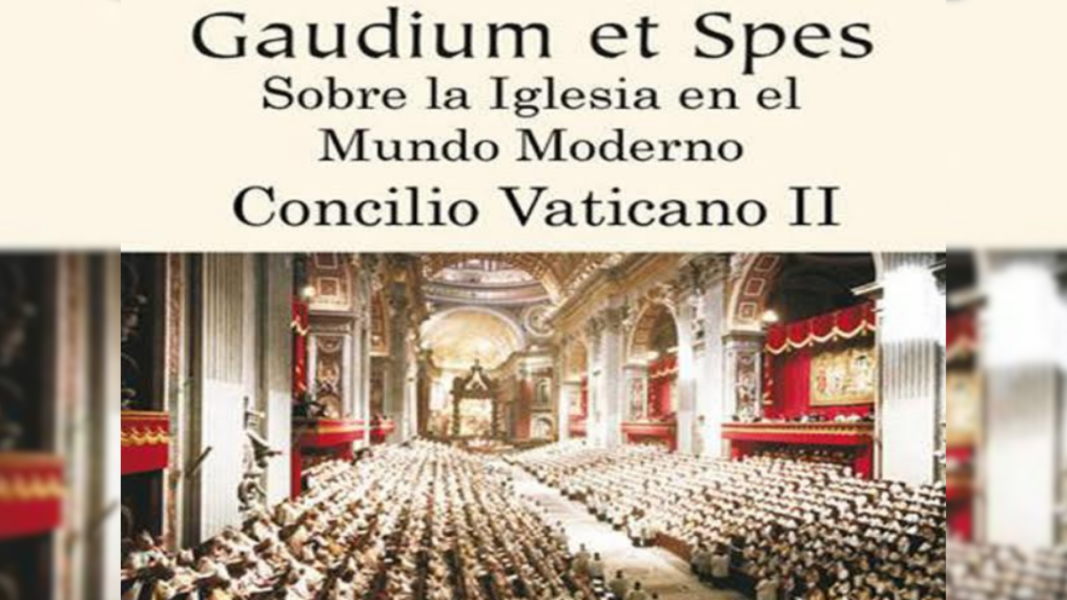
Both in Gaudium et Spes and in Humanae Vitae and in every document of John Paul II before and after his ascent to the chair of Peter, the Church is constant in the teaching that rejects contraception. However, it does begin to address the “natural regulation of births”, stating that “recourse to the temporal rhythms (natural infertile periods) to regulate birth, ‘when there are serious reasons for doing so, is profoundly different from any contraceptive practice, both from the anthropological and moral point of view’” (Pontifical Council for the Family, Vademecum on some topics of conjugal morality, 2,6; cf. John Paul II, Familiaris consortio, 32). Reserving sexual relations for infertile periods is a “non-conceptive” act (since conception cannot follow from such relations due to the nature itself) and not “anti-conceptive,” since the spouses do nothing against (anti) nature (they do not alter biology with pills or injections, nor the structure of the act with barrier methods). In principle it is lawful for spouses to regulate births (both the number and the periodicity of them) by resorting to natural means, that is, to the woman’s infertile periods, as long as there is sufficient cause to do so. In this area, the Church does not give a “list” of “how far it is advisable” or what “spacing it out for economic reasons” means. It is the Church’s role to give, in this area, the moral principles. The application will be seen in each case by the spouses before God. It could even be lawful to resort to infertile periods to definitively avoid new births for the rest of life. It is understood that such a case arises only when there are very grave and irreversible reasons. It is sinful to resort to infertile periods without reason or without sufficient cause.
In the interview book by Diane Montagna, Bishop Athanasius Schneider states regarding Vatican Council II on sexual morality that the pastoral constitution Gaudium et Spes did not modify it directly, but avoided speaking of the distinction between the primary and secondary end. By avoiding these expressions, Bishop Schneider considers, “the Council introduced some ambiguity about the first end of marriage”, which led to erroneous interpretations and applications. Despite this ambiguity, Schneider states that Gaudium et Spes “also leaves us part of the traditional teaching on the nature of marriage: ‘By its very nature, the institution of marriage and conjugal love are ordered to the procreation and education of offspring (no. 48).’ The Magisterium of the Church has consistently taught that the end of giving life is objectively the primary of the ends. Although it is inseparably united to the second, which is the unitive.”
Msgr. Schneider observes, however, also the problem of the fact that Paul VI spoke in Humanae Vitae of “the two meanings” of the conjugal act; an expression to which John Paul II later repeatedly resorted. The meanings of the conjugal act are two, called by Paul VI “unitive meaning” and “procreative meaning.” The unitive meaning represents the closest bodily communion between spouses, signifying the union and fusion of the two into one; it is the sign that expresses the fullest self-donation because it delivers to the spouse the totality of the bodily being, including the procreative capacity; correspondingly it means, that is, it manifests the acceptance total of the other spouse because it includes the acceptance of their most sacred capacity, which is the power to transmit life. The conjugation of both meanings. Therefore – states Bishop Schneider – couples must truly trust in God and allow Him to decide when He should create a new human person and a future citizen of heaven. What leads to limiting the number of citizens of Heaven? I applaud couples who heroically avoid contraception and who have sacrificed their conjugal life according to God’s plan and will. Natural methods, which God has provided in a woman’s body cycle, can be used with a contraceptive mentality.”
Msgr. Schneider considers that “in this sense, Paul VI’s encyclical was very important, timely, prophetic, and necessary to safeguard the dignity of human sexuality and the dignity of spouses. Unfortunately, some bishops made a hole in this wall by allowing couples to decide for themselves ‘according to their conscience’ whether to use contraception or not, to decide based on an ‘emergency case’ or a ‘urgent and profound need.’”
The thinker Gonzalo J. Cabrera differs from Msgr. Schneider in his article Humanae Vitae: an urgent judgment, who considers that “in the current context of the development of the technique of knowledge of the infertile days of marriage, with a high degree of accuracy, practically without margin of error, it can be said that marriage can know with certainty the days when conjugal relations are fruitless. Therefore, on those infertile days, it can be said that the procreative end of marriage will not take place. Then, since the conjugal act is only performed voluntarily with the end of procreating and/or with the end of sensible pleasure, whoever consciously and exclusively uses such periods discarding the first of the ends, and whatever their motives for doing so, is performing the conjugal act for this pure delight, sinning venially. And furthermore, as theologians teach, by the moral union of many slightnesses, the venial sin can easily become mortal.”
“For it to be sinful, this exclusion of procreation must be voluntary and deliberate, that is, not motivated by illness or pathology that systematically makes the conjugal act infertile. The reason is that the weight of moral judgment falls on the agent’s intention, that is, to perform the conjugal relationship having chosen, deliberately and exclusively for it, the days certainly considered infertile; and not in an external circumstance, which does not invalidate the lawfulness of the act, no matter how systematically but accidentally agenesiac it is foreseen. Paul VI also does not mention the possibility of total voluntary continence, more spiritually perfect, and which is justified by a supernatural reason. Through it, the principle of procreation as the primary end of marriage is repealed, due to the greater intrinsic perfection of the continent compared to the one who is not.”
Cabrera highlights that Francisco de Vitoria brands the sexual act during the most certain infertile period as sinful, at least according to the science of that time, which is the menstrual period. With this, it is demonstrated that the intention of this moral judgment is to qualify as sinful the conjugal union performed exclusively at a time when the spouses know with certainty that procreation is ruled out.” What a great paradox that the name of the university of the Legionaries of Christ where their flagship subject, the Theology of the Body, is taught, is precisely Francisco de Vitoria.
From this development of sexual morality in the second half of the 20th century, we find that, unfortunately, in the current Code of Canon Law (can. 1055) the secondary end appears mentioned first and only then is the first cited, opening a new understanding and practice. When the unitive subjectivity is the primordial end of marriage, couples can say that “since this is the first end of our marriage, we can use contraception,” because procreation comes after the unitive end. This attitude may be in the minds of the spouses, because procreation was mentioned second both in VCII and in the CIC, without stating that it is secondary, but that it is mentioned second. Lamenting this inversion, Msgr. Schneider considers that “we have to make the Magisterium return to collecting the correct order of the ends of marriage.”
In this regard, Romano Amerio, in his key work “Iota Unum, the transformations of the Church in the 20th century,” exposes that “after Vatican Council II the pastoral (and theological?) anthropological approach to sexuality has been transformed. Many episcopal documents on sexuality have no religious depth, Amerio affirms: immodesty is not condemned by virtue of the moral prevarication it implies, but purely as a disorder. Theological reasons do not appear, no link is established with original sin. This anthropology is not Catholic when an episcopal document states, as the pastoral letter of the German bishops (OR, July 1973) does, that “sexuality informs our entire life, and since body and soul are a unity, our sexuality also determines our thinking and our decisions.” The traditional Catholic anthropology, in any of its schools, considers that “sexus non est in anima” (sex is not in the soul, Summa theol. Supp. q. 39, a. 1). Amerio considers that the current Church has fallen into “somatolatría,” the worship of corporeality.
In chapter XXXIX, dedicated to the sacrament of marriage, Amerio exposes that, among the transformations in the Church in the 20th century, there is a new concept of conjugal love and marriage. “The Council itself confesses it, enumerating among the novelties of the Church, which is continuously reforming itself, ‘matrimonii spiritualitas’ (Unitatis Redintegratio 6) and declaring that the transformations of modern society ‘manifest more and more in various ways the true nature of marriage.’ The Council refers to a new spirituality of marriage; an announcement of novelty that is accompanied in Gaudium et Spes 47 by the usual euphemism: various aids that modern society would bring to marriage and the family community are praised. The variation of the traditional doctrine leaves intact the supernatural value of Christian marriage, which consists in reproducing and signifying the union of Christ with the Church. It does, however, reach the unitive and procreative value of the conjugal union.
“The conjugal union is in reality the most complete union possible with which two rational beings of different sex can be bound – Amerio continues. Now, this perfect union is not truly consummated in carnal union. At its peak and essence, this is a moment of division, losing in the embrace the consciousness of oneself and of the other. The perfect union is of moral order and belongs to the sphere of friendship’s dilection, by which neither spouse wants the other, but beyond that love of concupiscence wants for the other and with the other personal perfection. The natural effect of the conjugal union is procreation, and procreation is undoubtedly the intrinsic purpose of marriage, since man loves and nature generates. But precisely according to the metaphysics of Catholicism, natures are (so to speak) words of the divine Word launched into existence. Therefore, they become a principle of ethics, because man’s moral office consists in assuming his own nature, following the immanent law to it, and fulfilling its end. The procreative end was called the primary end, and the end of mutual perfection was called secondary. This latter term is versatile, but in substance it meant ‘end that follows the first,’ and by no means ‘end of lesser and accessory importance.’ In fact, by attending to the work of generation the persons of the spouses perfect themselves, for if that fullest union were lacking, there would be a moral union of another kind, but no longer of the conjugal kind.”
Amerio concludes that “the traditional doctrine of marriage as a union ordered by itself to generation is bent in the Council, which considers it primarily as ‘community of life and love’ (Gaudium et Spes 48), to which procreation follows. If the term ‘secondary’ is taken in the mentioned sense (its proper sense: the one that follows) it can be noted that, in the Council’s doctrine, with the essential equality of the two values remaining, the procreative value has somehow become secondary with respect to the personalist one. The equality of the two ends is maintained and the doctrine therefore remains very distant from the purely biological conception, because conjugal affection is aroused and directed by the will to person in person (GS 49): it is a friendship and not a concupiscence, and marriage itself is put into act by a consent of the will.
“The post-conciliar tendency – Amerio indicates – to compare generation and love (tendency later turned into a pretext for the scission of the two ends, the superposition of love over procreation and, in its ultimate evolution, the legitimation of contraceptive practice) not only does not consent, but in our opinion disagrees with the conduct maintained up to that moment by the Church. The doctrine is varied if the end of perfection and reciprocal donation is put as sufficient intention for the goodness of the union. It also seems that the intention to generate (not the fact of generating) is so intrinsic to marriage that Jesus, responding in Lk 20, 35 – 36 to the captious objection of the Sadducees about the woman with seven husbands, explicitly gives as the cause of the existence or non-existence of marriage the possibility or impossibility of wanting to generate children as a remedy for mortality: ‘In heaven they will neither marry nor be given in marriage, for they can no longer die.’ Here, marriage is identified with the work of generation, which is a remedy for mortality, and no reference is made in any way to a communion of life and a personal love donation, which would necessarily last as long as the persons last. However, in the evangelical text, this community of life is completely relegated, along with generation, to the ephemeral sphere of the earthly world.”
Amerio states that “John Paul II, in the long catechesis dedicated to the meaning of the union of spouses, has never cited this passage from Luke, which certainly takes strength away from the doctrine of the parity of the two ends prevailing after the Council: ceasing mortality, generation ceases, and ceasing generation, marriage ceases”.
We will dedicate the third and final part of this series of texts to the development of sexual and conjugal morality by John Paul II in his Theology of the Body, starting from the 1960s.