


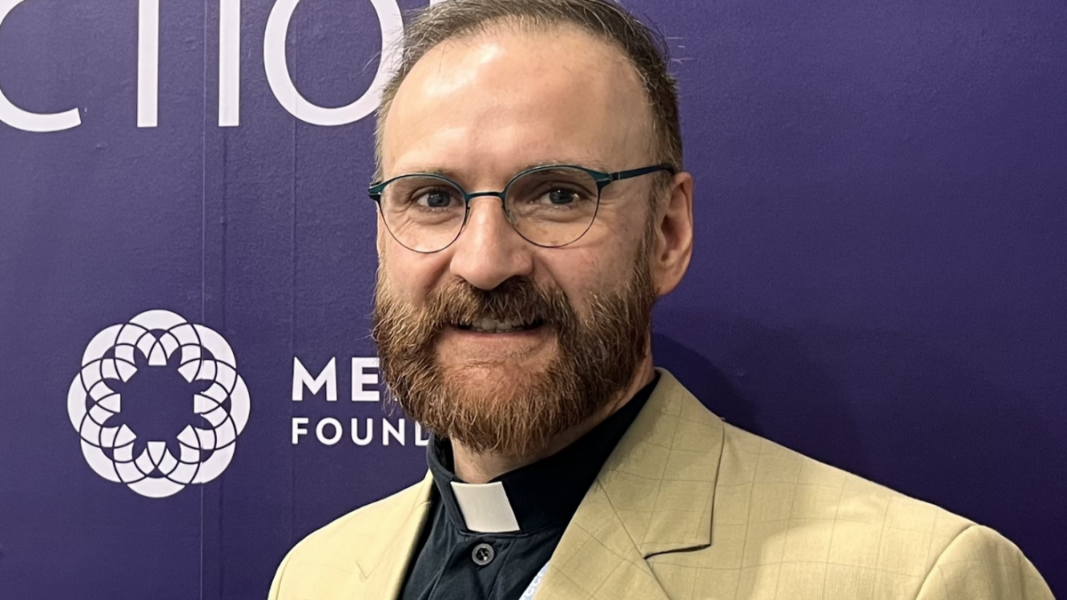
The Argentine Carmelite Eduardo Agosta, director of the Department of Integral Ecology of the Spanish Episcopal Conference, has defended in an extensive interview for Ecclesia the direct involvement of the Church in the COP in Brazil. Agosta’s approach, a doctor in physics, Vatican advisor, and who has been participating in these forums for years, is serious and pastoral, but the chosen framework raises deep doubts: a climate summit that is structurally ineffective and alien to the Church’s own competence.
The COP: a political ritual without real decision-making capacity
Agosta’s own description of climate summits is revealing: «it’s like a kind of annual ritual that countries attend because they have to, as if we were pretending to do something». The phrase is not an external critique, but an internal constatation. And precisely for that reason, it is surprising that, recognizing its sterility, the Church decides to get actively involved in this scenario.
The result is once again the usual one: great expectations, solemn documents, and no structural measures. Agosta himself acknowledges the main failure of the summit: «the total absence of a clear reference to the elimination of fossil fuels». After days of negotiations, the core of the problem remains intact.
A European scenography against the Asian reality
The COP functions, to a large extent, as a symbolic space for Europe, where the discourse of degrowth and historical guilt finds political echo. However, the real great powers of the system—China and India—continue to expand their industrial, energy, and polluting capacity without the slightest complex.
This imbalance is rarely addressed realistically. The COP does not impose real costs on those who pollute the most, but it does reinforce a moral narrative that falls mainly on the West. In that context, the Church’s active involvement runs the risk of legitimizing a European climate agenda, ideologized and with null impact on the decisive actors.
From moral authority to technical overreach
Agosta celebrates as a milestone that «it was the first time the Church had such an active participation within a climate summit». However, it is worth asking whether this presence truly strengthens the ecclesial mission or displaces it toward terrains that are not its own.
When it is stated, for example, that «the available net carbon budget is practically exhausted», the Church stops moving in the realm of morality to enter that of complex, provisional, and debated scientific models. It is not a matter of denying the environmental issue, but of remembering that the Church does not possess specific charism to arbitrate technical or geopolitical debates of this nature.
The pastoral risk: speaking with authority where prudence is required
The Church has authority to speak of good and evil, of sin and grace, of human dignity and salvation. It does not have it—nor should it pretend it—for establishing scientific consensuses or global energy strategies. When it confuses both planes, it runs a serious risk: losing spiritual credibility by assuming as its own changing political consensuses.
The COP is not a council, nor a synod, nor an ecclesial discernment space. It is a failed political forum, effective for producing declarations and deeply ineffective for transforming realities.
Transcendence as a footnote
Agosta insists that «integral ecology is only understood because there is an ethical, spiritual, and theological dimension». The statement is correct in the abstract. However, in practice, that dimension appears subordinated to the climate agenda. It is mentioned as a foundation, but it does not act as a guiding criterion.
There is extensive talk of carbon, biodiversity, and lifestyles; very little of sin, conversion, sacraments, or grace. The transcendent functions as a justificatory framework, not as an operational center.
A necessary correction
Concern for creation is legitimate and part of Christian morality. But not every global problem is the direct competence of the Church, nor should every political urgency become a pastoral priority.
The Church’s mission is not to manage the planet’s climate or correct the world geopolitical board, but to announce Christ, call for conversion, and lead souls to salvation. When the secondary takes center stage, even with the best intentions, the Church does not gain relevance in the world: it loses it.