


A guest comment by Martin Grichting.
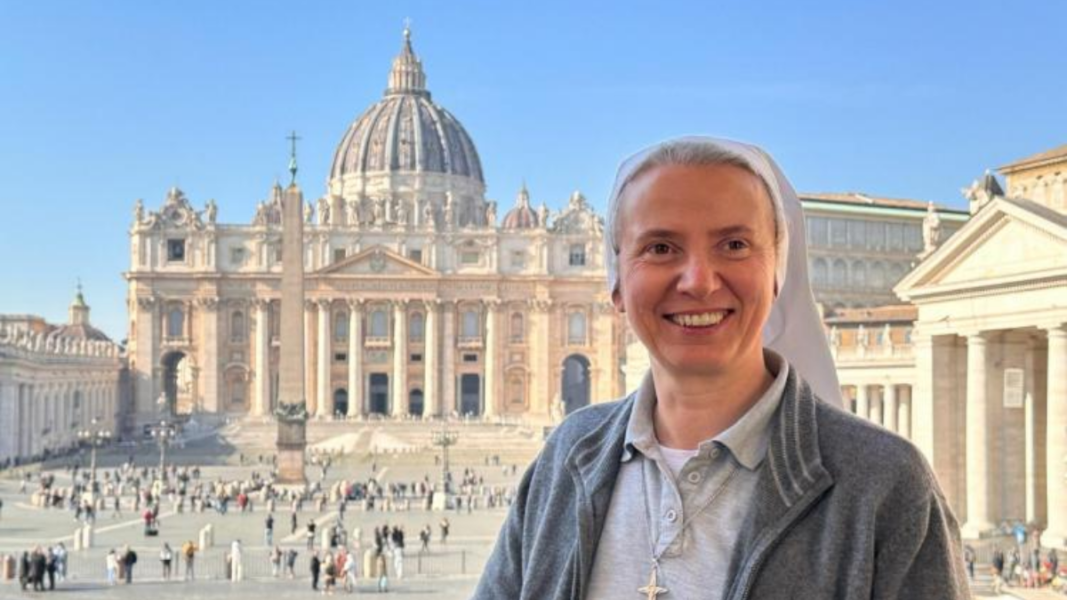
The question of the «prefect» of the Dicastery for Institutes of Consecrated Life and Societies of Apostolic Life is, ultimately, the same as that of the female diaconate. The sacrament of orders is «one», but it can be distinguished in three degrees: episcopate, presbyterate, and diaconate. If women could receive an element of it, the diaconate, it could be argued that they should receive the entire sacrament, since it is only one. The «potestas sacra» is also «one», although it can also be differentiated, for example, into power of governance and power of order, into potestas propria and vicaria, etc. Here too, it is a matter of saying: if laypeople can exercise vicarious power of governance, as Vatican II rejected, why not also the potestas propria? After all, there is only «one» potestas.
First, we are heading in the following direction: CIC, can. 274 § 1 states: «Only clerics can obtain offices for whose exercise the power of order or the power of ecclesiastical governance is required». This canon is in line with Vatican II (LG 21 and Nota explicativa praevia, 2). But the canon has been partially «derogated», that is, de facto abolished, or at least undermined, by the «Praedicate Evangelium» (2022) and other similar papal measures such as the «prefect». In the recent progressive-inspired doctoral thesis by Lukas Maria Brechtel, «Möglichkeiten und Grenzen einer Beteiligung von Laien an der Leitungsgewalt der katholischen Kirche» (Possibilities and limits of the participation of laypeople in the governance power of the Catholic Church), Würzburg 2024, here p. 364, it is not demanded that can. 274—and with it, Vatican II—be fully respected again, but quite the opposite: the canon must be modified, following the example of «Praedicate Evangelium», so that it generally allows the exercise of the power of governance (vicarious) by laypeople. Until now, this canon prevents, for example, the appointment of a lay general vicar in a diocese.
For the moment, a limit is still considered, in the sense of the salami tactic, where the power of governance is linked to pastoral care («cura pastoralis»). Because in the CIC, can. 150 states: «The office that entails full care of souls, for whose fulfillment the exercise of the priestly order is required, cannot be validly conferred on someone who has not yet been raised to the priesthood». However, reality has already gone further. Thus, in the world’s most dogmatically corrupt dioceses, Basel and St. Gallen [Switzerland], laypeople have long been officially designated as «community leaders» («Gemeindeleiter»). They also act as parish leaders. They then employ «collaborator priests». These laypeople are officially designated as «Seelsorger» [«Seelsorge» means «cura pastoralis»]. Therefore, they already exercise the «cura pastoralis» spoken of in can. 150. In reality, the sacramental essence of the Church has been overturned here in the fundamental area of pastoral care. Shouldn’t what is already being lived be legally recognized?
Also with regard to the «potestas sacra vicaria», the post-sacramental and profaning thinking is making its way upward. In the Diocese of Basel, while the deaneries existed, laypeople acted as «codeans». And the episcopal council, to which according to canon law the general vicars and episcopal vicars belong (CIC, can. 473 § 4), has long been populated by numerous laypeople in Switzerland. In the Diocese of Lausanne-Geneva-Fribourg, laypeople and deacons have been imposed on the priests of the parishes in the subregions of the diocese as the bishop’s «delegates», who serve as links with the curia. In German-speaking Fribourg, it is a woman in her thirties. Undoubtedly, priests can be humiliated with these canon law antics, which, by the way, have been approved by the Holy See. But who wants to be a priest in a Church that has betrayed its sacramental nature?
Pope Leo XIV has inherited a bad legacy. And he is not only pressured by the undermining of the sacramental essence, as his predecessor did in the curia, but also by destructions, such as those that have occurred in Switzerland, and by the leveling between laypeople and clerics, as is being carried out in Germany with the «synodal way». The Pope will continue to lack credibility before the «German Church» as long as he allows in his curia what the Germans want to impose at the diocesan and parish levels. What is at stake there is clear: the sacramental nature of the Church must be sacrificed to serve the goal of «equality» between the sexes. In the Middle Ages, the Church’s involvement in feudalism led to «lay bishops» and «lay priests». These scandalous circumstances were one of the reasons why the Reformation broke out. Today, the essence of the Church is again being sacrificed for social interests alien to the faith. Nothing is learned from history, and the foundations for a new schism are being laid.
When the sacramental essence of the Church is attacked, one must be aware of the ultimate consequences. Undoubtedly, the Pope can «do everything» in the Church. Canon 333 § 3 states: «No appeal or recourse may be made against a sentence or decree of the Roman Pontiff». And can. 1404 accordingly emphasizes: «The First See is judged by no one». Therefore, in theory, he can reject Vatican II on essential dogmatic issues. Because, in fact, he is omnipotent if he so desires. But then he must ask himself how he wants to maintain the idea of an omnipotent being. Because, logically, there cannot be two. In other words: if the Pope believes he is empowered to relativize the sacramental nature of the Church, he is sending the message that the Church’s doctrine is not unalterable in its essence. Then it seems as artificial as any other political or ideological doctrine, which is also subject to changes or abolition at any time. The Pope must be clear that if he follows the path of his predecessor, he undermines faith in God in the hearts of the faithful. In the end, that’s what it’s about. It is a dangerous game.