


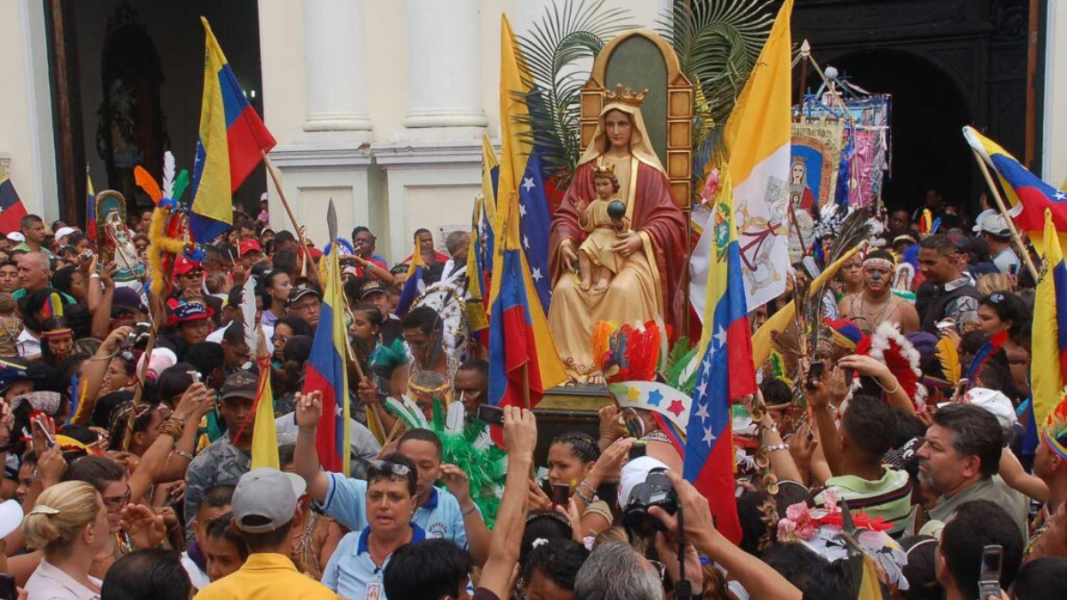
The year 2026 is shaping up as an especially uncertain period for the Catholic Church in Venezuela, in a context marked by institutional deterioration, political repression, and the progressive closure of spaces for freedom. This is what analysts and experts consulted by ACI Prensa warn, who do not rule out a scenario of religious persecution similar to that which the Church in Nicaragua has been suffering for years under the dictatorship of Daniel Ortega.
The Venezuelan episcopate has reiterated in recent months that the national reality overshadows even central celebrations like Christmas. In their end-of-year message, the bishops again denounced the weight of the economic crisis, the collapse of basic services, and the climate of political tension that directly affects the population, especially the most vulnerable.
To this panorama is added the worsening of political and ideological persecution by the Chavista regime, which keeps hundreds of prisoners—including minors—in conditions denounced by international organizations. The Church has not been left out of this dynamic and, according to various observers, has begun to suffer increasingly direct harassment.
The Venezuelan political scientist Víctor Maldonado explained to ACI Prensa that the relationship between Chavismo and the Catholic Church is “very bad,” although the episcopate has tried to maintain a prudent stance to avoid a frontal assault like that experienced in Nicaragua. This strategy, he said, responds to a logic of “defense of spaces” in the face of the risk of open persecution.
However, Maldonado warned that in the last months of 2025, verbal attacks, institutional contempt, and harassment against bishops and ecclesiastical figures have intensified, especially against Cardinal Baltazar Porras, emeritus archbishop of Caracas, who has denounced the country’s situation more clearly.
From a comparative perspective, the Nicaraguan researcher Martha Patricia Molina—author of the report Nicaragua: una Iglesia perseguida—pointed out that dictatorships tend to systematically attack any social power that does not submit to their project. When civic spaces for resistance disappear, she explained, the Church usually becomes the next target.
Molina emphasized the importance of Venezuelans identifying from now on the patterns of repression used in Nicaragua against religious freedom, and highlighted the urgency of training laypeople and clergy in public denunciation as a mechanism for peaceful resistance.
In the same vein, Maldonado indicated that Chavismo has actively promoted other religious expressions, such as Santería or certain Protestant groups, with the aim of weakening the historical hegemony of Catholicism. He also denounced the instrumentalization of priests sympathetic to the regime to legitimize their political agenda, which has generated confusion and scandal among the faithful.
For her part, Marcela Szymanski, an expert in religious freedom from Ayuda a la Iglesia Necesitada, explained that autocratic regimes especially fear religious leaders, as they represent an independent moral authority. When they fail to co-opt them, she said, they resort to their elimination through violent or non-violent methods, often in alliance with organized crime.
Szymanski warned that, although in Venezuela there is still some concern for the international image, this barrier is weakening progressively. In this context, she insisted that the strength of the persecuted Church lies in faith, prayer, and the perseverance of priests, religious, and laypeople who remain alongside the suffering people.