


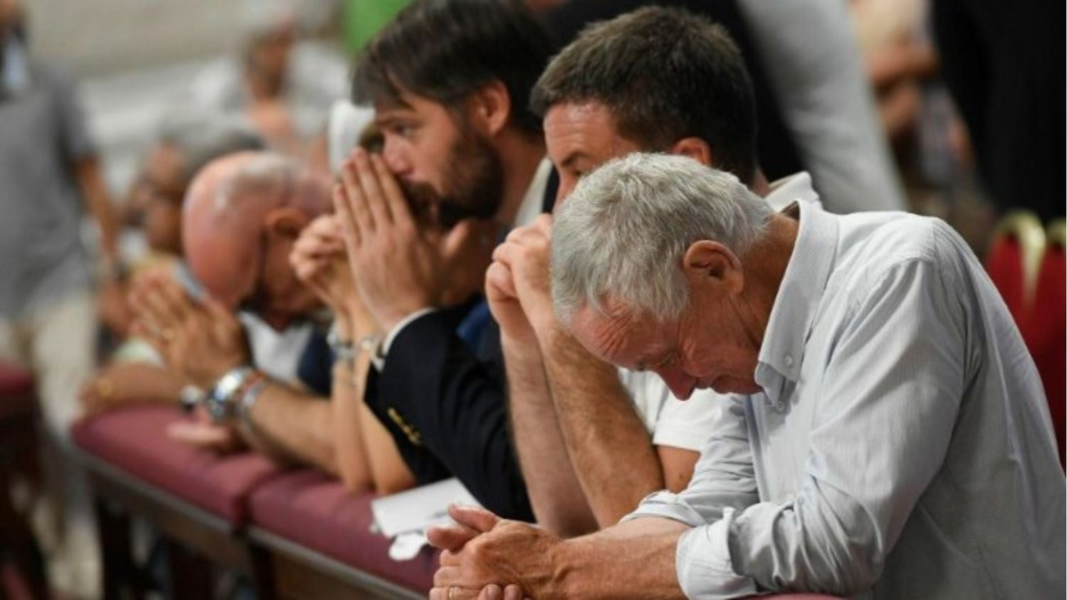
As we approach the end of the year 2025, and as every year, during the vigil of December 31 and January 1, the solemnity of Saint Mary, Mother of God, it is possible to obtain plenary indulgences, a gift that the Church grants to help Christians in their path to sanctification.
Far from being a secondary pious practice, indulgences are part of the spiritual treasure of the Church and remind us that conversion is not limited to the forgiveness of sins, but also involves the purification of the consequences that sin leaves on the soul.
The public recitation of the Te Deum on December 31, as an act of thanksgiving for the year that is ending, began to spread from the 17th and 18th centuries and it was Pope Pius VII who explicitly confirmed the granting of the plenary indulgence linked to this hymn, integrating it into the annual liturgical calendar.
In the same way, the Veni Creator on January 1, the solemnity of Saint Mary, Mother of God, was associated with the granting of indulgences as a supplication to the Holy Spirit at the beginning of the new year. A practice that was reaffirmed by several pontiffs throughout the 19th century and the first half of the 20th, including Leo XIII and Saint Pius X.
After the Second Vatican Council, these indulgences were collected and officially confirmed in the Enchiridion Indulgentiarum (Handbook of Indulgences), promulgated by the Apostolic Penitentiary and currently in force.
December 31: indulgence for the Te Deum
On the eve of the new year, the Church grants a plenary indulgence to the faithful who publicly recite the hymn Te Deum, giving thanks to God for the benefits received throughout the year that is ending.
This hymn of praise expresses a deeply Christian attitude toward the passage of time: recognizing that every good comes from God and that even trials are part of his providence. Reciting the Te Deum on December 31 is, therefore, an act of gratitude and faith.
January 1: indulgence for the Veni Creator
On January 1, the solemnity of Saint Mary, Mother of God, the plenary indulgence is granted to those who publicly recite the hymn Veni Creator, imploring the action of the Holy Spirit for the year that is beginning.
This gesture underscores that the beginning of the year is not entrusted to mere human resolutions, but to God’s grace, asking for light, strength, and perseverance to live in accordance with the Gospel.
The papal and episcopal blessing
Plenary indulgence can also be obtained by those faithful who devoutly receive the papal blessing Urbi et Orbi, even through the media, as well as those who receive with devotion the blessing of their diocesan bishop in the circumstances provided for by the Church.
This aspect recalls the visible communion with the Roman Pontiff and with one’s own bishop, as an expression of the unity of the Church.
The necessary conditions
To obtain a plenary indulgence, the Church establishes certain indispensable conditions, which ensure that the act is not merely external:
- Rejection of all attachment to sin, even venial sin.
- Sacramental confession.
- Eucharistic communion.
- Prayer for the intentions of the Pope.
Confession can be made a few days before or after, although it is recommended that Communion and prayer be done on the same day as the indulgenced act. A single confession can serve for several indulgences, but each indulgence requires a separate Communion.
A new year beginning in grace
The end-of-year indulgences are an invitation to close the year in thanksgiving and begin the new one in a state of grace, placing life in God’s hands. In a world marked by haste and superficiality, the Church reminds us that time is a gift and that each year is a renewed opportunity to advance in holiness.