


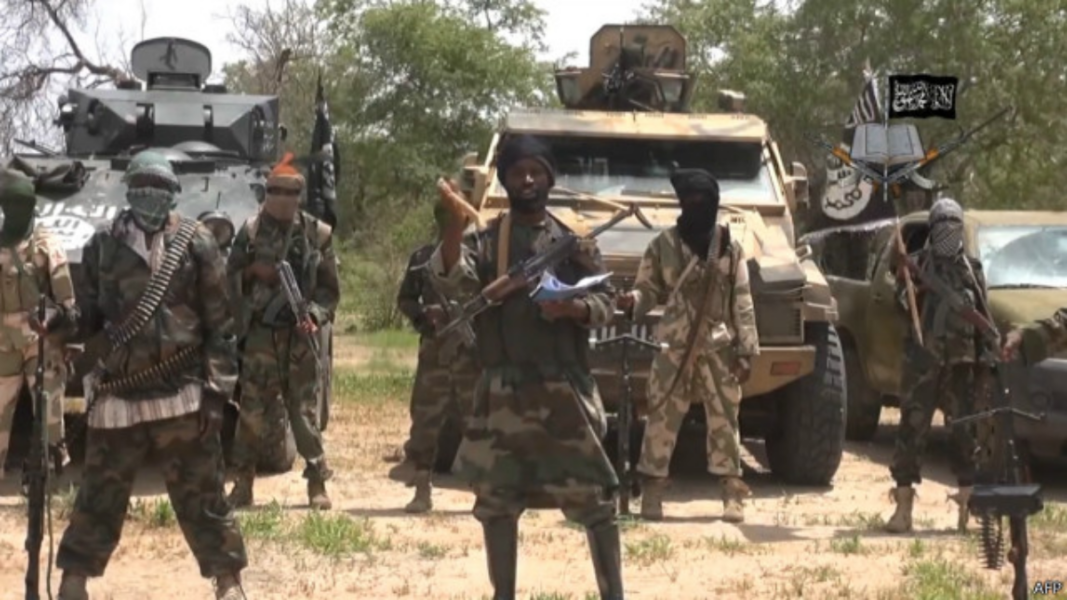
For days we have been witnessing a spectacle that is already all too familiar: bishops, commentators, and ecclesiastical opinion-makers talking about Nigeria, Trump, and jihadist violence with language loaded with selective emotions, asymmetric indignation, and a gaseous morality that dissolves precisely when it should become firm. Much appeal to the “spirit of Christmas,” much generic invocation of peace, but very little doctrine, very little magisterium, and above all, very little attention to the concrete reality of Christians who have been massacred for years.
Read also: Trump orders attacks in Nigeria in a context of violence against Christians
That is why it is almost an intellectual—and moral—relief to hear Father Javier Olivera Ravasi explain what happened in Nigeria without ideological filters, without personal antipathies, and without that sentimental pacifism that has dangerously infiltrated contemporary ecclesiastical discourse. Ravasi does not defend Trump nor canonize him. He does something much more uncomfortable for many: he analyzes the facts in the light of the Church’s social doctrine, not in the light of political sympathies or cultural phobias.
And that is the starting point that others have deliberately avoided.
Ravasi recalls an essential fact that too many commentators have omitted or minimized: the U.S. intervention occurs at the express request of the Nigerian government, overwhelmed for years by the systematic violence of jihadist groups against Christian communities, both Catholic and Protestant. This is not a capricious interference or an improvised crusade, but assistance requested by a State unable to protect its population from a grave, certain, and prolonged evil.
From there, Ravasi does what today seems almost revolutionary: he opens the Catechism of the Catholic Church. He does not improvise theology, does not cite slogans, does not reduce the Gospel to slogans. He goes straight to the classic principles of legitimate defense and just war, developed from St. Augustine, systematized by St. Thomas Aquinas, and clearly set forth in numbers 2265 and 2309 of the Catechism.
The Church—Ravasi reminds us—is not pacifist in the ideological sense of the term. The Church loves peace, but not at any price. Irenism, that is, the pacifism that accepts evil in order to avoid conflict, has been repeatedly condemned. There are situations in which it is not only lawful to defend oneself, but morally obligatory, especially when one is responsible for the lives of others. Defending the innocent is not a concession to bellicism, but a demand of charity.
Read also: Irenism: the false unity that arises from fear of the truth
Applied to the case of Nigeria, the criteria are clear. There is a grave, certain, and lasting harm: mass murders, kidnappings, ethnic cleansing, and systematic attacks against Christian civilians for years, confirmed not only by international reports but by the direct testimony of Nigerian priests and bishops in constant contact with Ravasi. Peaceful means have failed: negotiations, containment attempts, and internal measures have not managed to stop the violence. There is, moreover, a well-founded probability of success thanks to the requested military support. And finally, the operations described do not constitute a total war or indiscriminate punishment, but limited actions against specific armed groups, in accordance with the principle of proportionality.
None of this is an extravagant opinion. It is elementary Catholic doctrine. What Ravasi does is recall it when others prefer to forget it.
In the face of discourses that judge hidden intentions, he insists on something profoundly Catholic: morality judges acts, not souls. Trump is not Catholic, he has no obligation to know the Catechism or to adjust his rhetoric to European ecclesiastical sensitivity. What can and must be evaluated is the concrete fact: military assistance requested to stop a massacre. Everything else—his personal flaws, his style, his other policies—is irrelevant to this specific moral judgment.
Particularly revealing is that Ravasi does not speak from a European office or a media platform, but by relying on Nigerian ecclesiastical voices. Priests and bishops in the country have described the intervention as “the best news in twenty years,” a sign that the world has not forgotten their suffering and a real hope in the face of a violence that seemed endless. They are not hawks from Washington: they are shepherds who bury their faithful.
Here the most uncomfortable contrast becomes visible. While some Western bishops rush to rebuke from moral abstraction, those who live on the ground thank someone who has finally done something. That distance between discourse and spilled blood is what Ravasi refuses to accept.
His explanation does not glorify war nor deny the risks, abuses, or sins that can occur in any armed conflict. But neither does it fall into moral cowardice by automatically condemning every defensive action out of fear of seeming “un-evangelical.” On the contrary: he reminds us that there is nothing evangelical about allowing the innocent to be massacred while preaching a purely rhetorical peace.
That is why Olivera Ravasi’s intervention stands out so much amid the noise. Not because it is strident, but because it is sober. Not because it is partisan, but because it is doctrinal. Not because it seeks ideological applause, but because it submits—with humility and clarity—to what the Church really teaches.
In times of moral confusion, listening to a priest who reasons with the Catechism in hand and his eyes on the real victims is, simply, an act of intellectual hygiene. And perhaps also of Christian justice.