


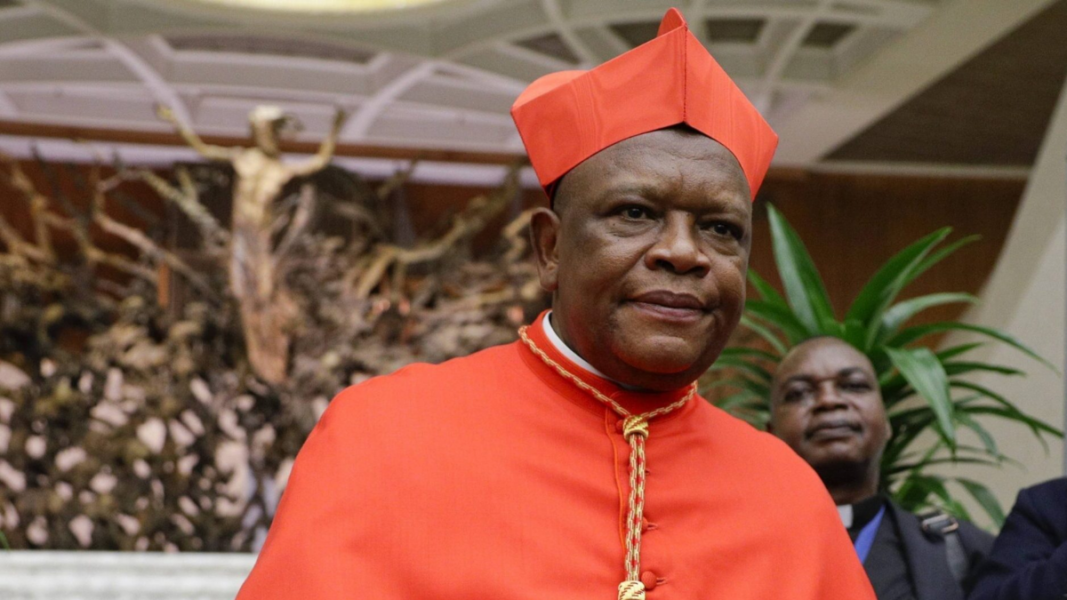
Cardinal Fridolin Ambongo, Archbishop of Kinshasa and President of the Symposium of Episcopal Conferences of Africa and Madagascar (SECAM), has warned about the worsening of persecution against Christians in various African countries, in a context marked by armed violence, the advance of Islamist jihadism, and the weakness of political structures. He stated this in an extensive interview granted to Vatican News on the occasion of the closing of the 2025 Jubilee.
Christians, growing target of jihadist violence
Ambongo has expressed his deep concern over the kidnappings and murders of Christians in countries such as Nigeria, the Democratic Republic of the Congo, and Cameroon. Although he acknowledged that the violence also affects Muslims, he emphasized that there is a increasingly clear trend of targeting Christians specifically.
The cardinal cited the case of the Diocese of Bunia, in eastern Congo, where jihadist groups killed Christian faithful while they were at prayer. Similar situations—he noted—occur frequently in Nigeria, one of the countries hardest hit by this form of religious persecution.
A risk to religious coexistence
In the face of this «gratuitous and ruthless» violence, Ambongo has warned of the risk that insecurity could push Christians toward extreme positions, deteriorating coexistence with Muslim communities that, he recalled, also suffer the consequences of terrorism. For this reason, he has appealed to the conscience of the entire world to combat this phenomenon «at its root» and not with superficial measures.
Peace as a moral and Christian responsibility
In the context of the 2025 Jubilee, the cardinal has placed the persecution of Christians within a broader moral crisis. Commenting on the Christmas message of Pope Leo XIV, centered on peace, Ambongo emphasized that peace is not built with weapons, but through personal conversion, dialogue, and solidarity with the weakest and oppressed.
According to the prelate, the Pope’s call directly challenges the Christian conscience, reminding that the indifference and selfishness of the powerful fuel conflicts and leave the most vulnerable communities defenseless, including Christian ones.
Violence, unjust power, and democratic collapse
Ambongo has linked religious persecution to the political deterioration of numerous African countries. The rollback of democracy, the concentration of power in the hands of elites, and the absence of a just redistribution of wealth create a breeding ground for violence, coups d’état, and the expansion of armed groups.
In this context, he pointed out that the exercise of power detached from the common good not only impoverishes populations but leaves entire communities—including Christians—without effective protection against violence.
The plundering of Africa and its human consequences
The cardinal has also denounced the systematic plundering of Africa’s natural resources by foreign powers, often with the complicity of local leaders. This looting—he warned—perpetuates poverty, fuels conflicts, and weakens states, facilitating the expansion of terrorism and religious persecution.
Ambongo has called on Africans to take up the defense of the goods that God has entrusted to the continent and to demand from their leaders an exercise of power understood as service and not as an instrument of personal enrichment.
«Peace and the liberation of Africa are in our hands»
In concluding his reflection, the SECAM president insisted that Africa’s future depends on Africans themselves. Despite the violence and persecution suffered by Christians, Ambongo exhorted not to fall into despair and to persevere in hope.
«Peace and the liberation of Africa are in our hands,» he affirmed, emphasizing that only through justice, moral conversion, and commitment to coexistence will it be possible to curb violence and ensure a dignified future for all.