


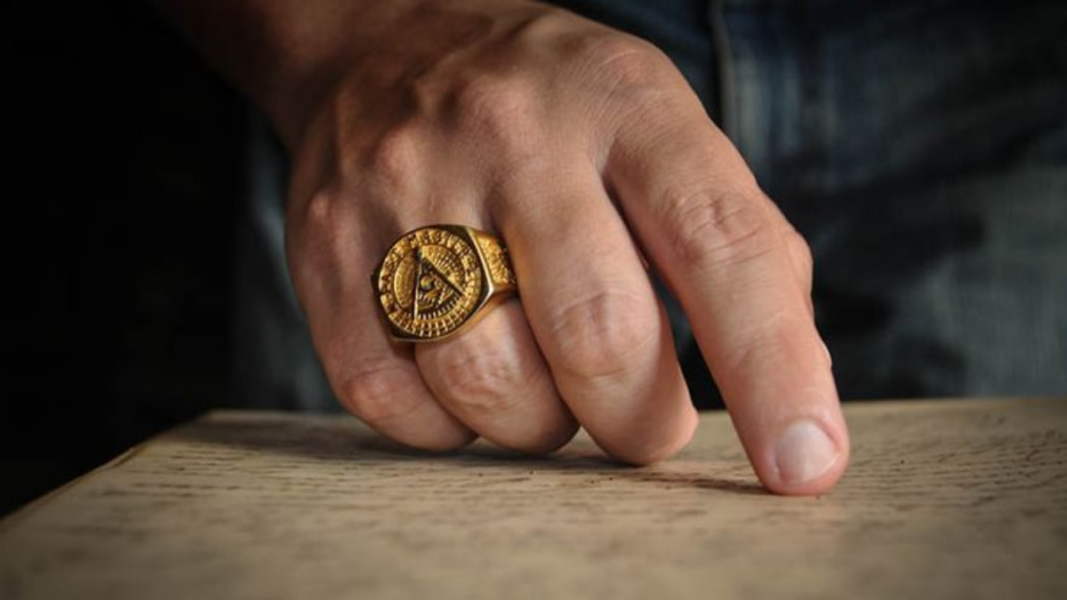
The decision by the Metropolitan Police to force its officers to declare their membership in closed hierarchical organizations has triggered an angry reaction from British Freemasonry, which has turned to the courts to try to halt the measure. However, far from being an ideological persecution, the police initiative responds to long-standing internal complaints, persistent suspicions and the need to restore public trust.
The rule was promoted by Commissioner Sir Mark Rowley as part of a package of reforms aimed at strengthening the impartiality of the force after years of reputational crises, internal complaints, and scandals that have eroded the institution’s credibility.
A reasonable measure in the face of closed loyalty structures
London’s police maintain that the problem is not the officers’ personal convictions, but membership in organizations that demand internal commitments of mutual support, which can generate conflicts of loyalty that are difficult to reconcile with public service, especially in a force that must act with neutrality and without any shadow of favoritism.
In fact, the institution itself states that two-thirds of the officers consulted support the measure, considering that this type of affiliation affects the public’s perception of impartiality. In that context, the requirement to declare membership is presented as a preventive and transparency action, not as a sanction.
Historical suspicions that justify the control
The police’s reservations do not arise out of nowhere. For decades, the presence of Freemasonry in certain areas of the British State has been surrounded by accusations of favoritism, cover-ups, and internal protection, especially in bodies like the police and, according to various complaints, also in some judicial environments.
The police acknowledge that they have handled intelligence information for years about possible misconduct linked to relationships forged in lodges, although they admit that in many cases the threshold of proof required by the courts has not been met. Even so, the pattern of suspicion has been recurrent and has fueled the social demand for stricter controls.
A particularly sensitive example was the investigation into the murder of private investigator Daniel Morgan, in which an official commission detected a significant presence of Freemasons among relevant officers in the case and recommended strengthening controls, although without proving that Masonic channels had been used to sabotage the investigation.
Freemasonry presents itself as a “religion” to shield itself
In response to the new policy, the Masonic organization has opted for a striking strategy: to argue that the obligation to declare membership constitutes “religious discrimination”, claiming that professing a faith is necessary to be a Mason and that, therefore, it would be protected by the legal safeguards associated with religion.
From a Catholic perspective, this argument is particularly problematic. The Church has consistently pointed out the incompatibility between the Catholic faith and membership in Masonic organizations, among other reasons due to their system of oaths, their initiatory structure, and the doctrinal ambiguity that usually characterizes Freemasonry. In this case, moreover, the appeal to the “religious” appears as a defensive recourse in the face of a demand for transparency in such a sensitive area as policing.
Legitimate transparency versus organized opacity
In the midst of an institutional trust crisis, demanding transparency from those who exercise the coercive authority of the State is not only legitimate, but necessary. The measure seeks to avoid parallel loyalties or discreet networks of influence within a force that must guarantee equality before the law and neutrality in the application of justice.
The court will now decide whether to grant a precautionary suspension of the policy. But the debate is already underway: when an organization with a discreet structure resists the light, the question is not why it is monitored, but why it fears being declared.