


Leaders of the Catholic Church in Nigeria have cautiously but positively valued the military attacks carried out by the United States against targets of the terrorist group ISIS in Nigerian territory, as part of a joint operation with the country’s Government, according to ACI Africa. The statements were made on December 26, one day after US President Donald Trump publicly announced the intervention.
Read also: Trump orders attacks in Nigeria in a context of violence against Christians
The attacks, later confirmed by Nigeria’s Ministry of Foreign Affairs, were directed against terrorist targets in the northwestern state of Sokoto and involved the cooperation of Nigerian forces. From Washington, US Executive officials emphasized the coordinated nature of the operation and thanked the local Government for its support.
Episcopal Assessment: Caution, but Relief
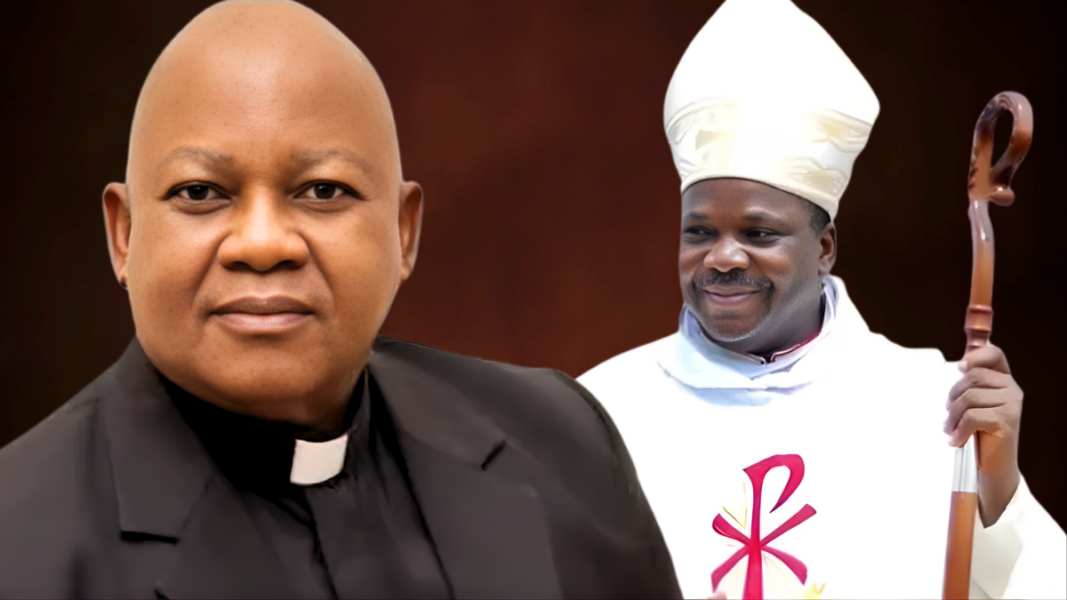
Bishop Emmanuel Adetoyese Badejo, of the diocese of Oyo, highlighted the importance of the intervention being presented as a joint action, which, in his opinion, can reduce the usual politicization of security measures in a country marked by strong polarization. The prelate recalled that, although the Nigerian Government has rejected the qualification of “genocide against Christians,” it has acknowledged the severity of the persistent insecurity, especially in the north of the country, and has requested international assistance.
Badejo noted that, although it is too early to draw definitive conclusions, the operation has been well received by broad sectors of the population, both Christian and Muslim, as a possible indication of a change in approach after more than fifteen years of terrorism, insurgency, and banditry.
In similar terms, Father Patrick Alumuku, director of Social Communications for the Archdiocese of Abuja, described the intervention as news of particular significance for the population. The priest emphasized that the cooperation between Nigeria and the United States sends a clear message that the violence suffered by the country is not ignored by the international community.
Alumuku also highlighted the symbolic value of the moment: for the first time in nearly fifteen years, no attacks on churches were recorded on Christmas, a date that has historically been used by jihadist groups to maximize the impact of their violence.
Christmas and Terrorism: An Uncomfortable Reality
This fact is particularly relevant in a context where, from certain European ecclesiastical circles, conflicts with radical Islamism tend to be presented in terms of symbolic gestures or historical analogies that are not well-adjusted to the current reality. Comparing the fight against ISIS with the 1914 Christmas truce, when German and French soldiers sang carols and played soccer between trenches, may be well-intentioned, but it does not hold up against the facts.
Read also: His obsession against Trump leads Munilla to condemn the attacks on ISIS
In the fight against Islamist terrorism, there are no carol truces. Jihadism does not suspend its violence out of respect for Christmas; it has repeatedly turned it into a target. For years, attacks against churches, faithful, and liturgical celebrations have been deliberately planned around December 25, precisely because of their symbolic weight for Christians.
Presenting this threat as if it were a conflict susceptible to spontaneous humanitarian pauses or romantic gestures between enemies implies a naive reading that blurs the nature of the problem. ISIS does not seek dialogue or understanding, but submission through violence, and it acts accordingly.
Defense of the Victims, Not Moral Confusion
Recognizing the legitimacy of a firm response to terrorism does not equate to glorifying war or renouncing peace as a horizon. It simply implies not confusing mercy with inaction or the desire for coexistence with the denial of evil. In contexts like the Nigerian one, where entire communities have been massacred and displaced for years, the defense of the civilian population is a moral imperative prior to any abstract discourse.
The positive assessment expressed by Nigerian bishops and priests does not stem from a bellicose ideology, but from the concrete experience of those who have seen churches burn on Christmas and communities live under permanent threat. For them, the absence of attacks on these dates is not a symbolic gesture, but a real respite.