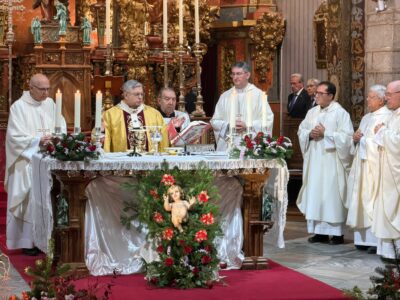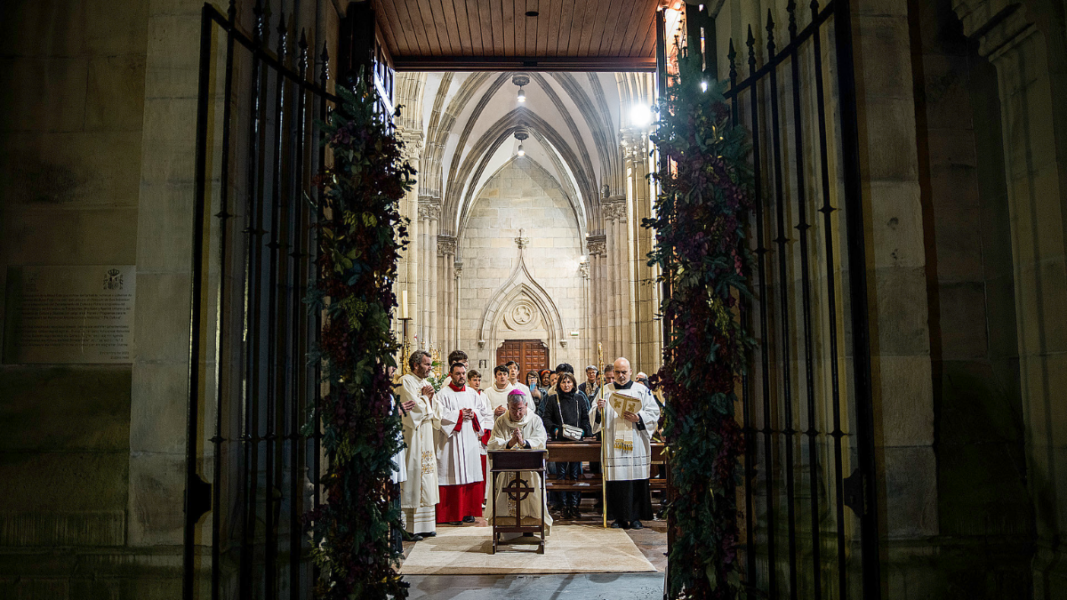
This weekend saw the closing of the Holy Doors and the conclusion of the 2025 Jubilee Year in much of Spain’s dioceses, coinciding with the feast of the Holy Family, as established by the liturgical provisions for the particular Churches. The days were marked by solemn Eucharistic celebrations in the cathedrals, presided over in most cases by the diocesan bishops, with wide participation from the clergy and the faithful.
From Pamplona to Málaga, from Seville to Bilbao, the cathedrals hosted the closing Masses as acts of thanksgiving for the Jubilee time lived throughout the year. In many dioceses, the celebration brought together numerous priests, deacons, and seminarians, as well as hundreds of faithful, underscoring the ecclesial and communal character of the Jubilee’s closure.
In the Archdiocese of Seville, the Sevillian Cathedral was the setting for the closing Eucharist presided over by the archbishop, Monsignor José Ángel Saiz Meneses, who encouraged the faithful to persevere as “pilgrims of hope”. A similar celebration took place in the Primatial Cathedral of Toledo, where the archbishop highlighted the call to live a concrete faith, marked by welcome, charity, and ecclesial communion.
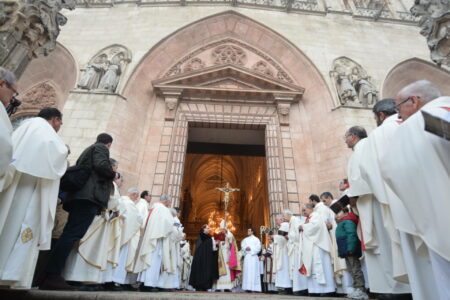
Also in Pamplona, the closure was celebrated in the cathedral in the early afternoon, with the participation of nearly a hundred ordained ministers and seminarians, accompanied by the cathedral’s musical chapel and a notable presence of the faithful. In Vitoria, the diocese reported a multitudinous Mass in the Cathedral of Santa María, in an atmosphere of thanksgiving for the celebrated Jubilee.
In Castile and León, several dioceses concluded the Jubilee Year with solemn celebrations in their cathedrals. In León, the Eucharist was presided over by the bishop, Monsignor Luis Ángel de las Heras, and was linked to the beginning of a new pastoral stage, with a collection destined for the fight against human trafficking. In Valladolid, Archbishop Luis Argüello presided over the closing Mass in the cathedral, broadcast live, while in Burgos Archbishop Mario Iceta emphasized in his homily that the end of the Jubilee does not mean the end of Christian commitment.

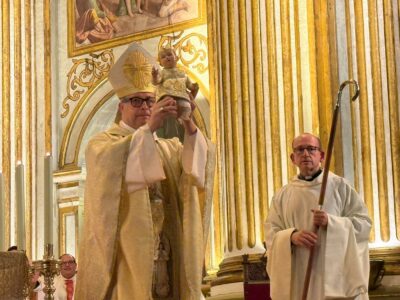
In northern Spain, the Diocese of Bilbao celebrated the closure with a Eucharist of thanksgiving in the Cathedral of Santiago, and the Diocese of San Sebastián closed a year marked also by a doubly jubilee character, with the liturgical gesture of closing the Holy Door in the Cathedral of the Good Shepherd.
In Aragon, the Diocese of Barbastro-Monzón and the Diocese of Huesca concluded the Jubilee with solemn Eucharistic celebrations presided over by their respective bishops. In Galicia, the Diocese of Lugo closed the Jubilee Year in the cathedral with an Eucharist presided over by Monsignor Alfonso Carrasco, centered on the affirmation of Christ as firm and true hope.
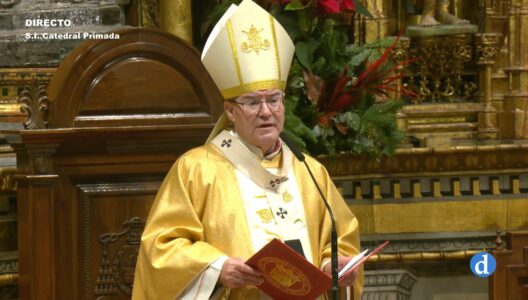
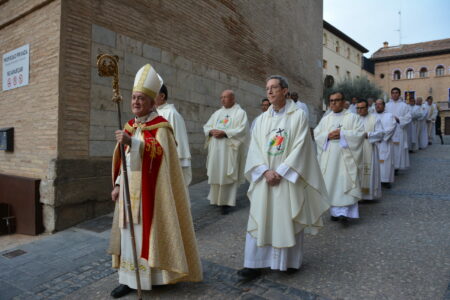
In the south, besides Seville, the Diocese of Málaga celebrated the closure in its cathedral with a Mass presided over by the bishop, Monsignor José Antonio Satué, who invited the faithful to understand the Jubilee not as an endpoint, but as a new beginning in Christian life. In Mérida-Badajoz, the closure took place in the Badajoz cathedral with a solemn Eucharist presided over by Monsignor José Rodríguez Carballo.
Also in Ciudad Real and Albacete, the dioceses concluded the Jubilee Year with cathedral celebrations, in some cases broadcast live. In the Canary Islands, the Diocese of San Cristóbal de La Laguna concluded the Jubilee with a diocesan celebration that brought together faithful and communities around the cathedral.
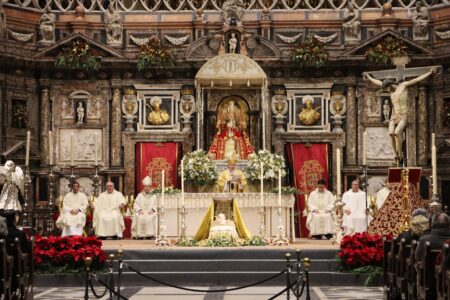
Now the Jubilee continues its course in Rome until the Epiphany, but in Spain, with the solemn celebrations of December 28 concluded, the particular Churches return to liturgical and pastoral normalcy, called to discern whether the Jubilee has been more than a calendar of acts and whether the proclaimed hope is concretized in a more faithful, more coherent, and more Christ-centered ecclesial life.