


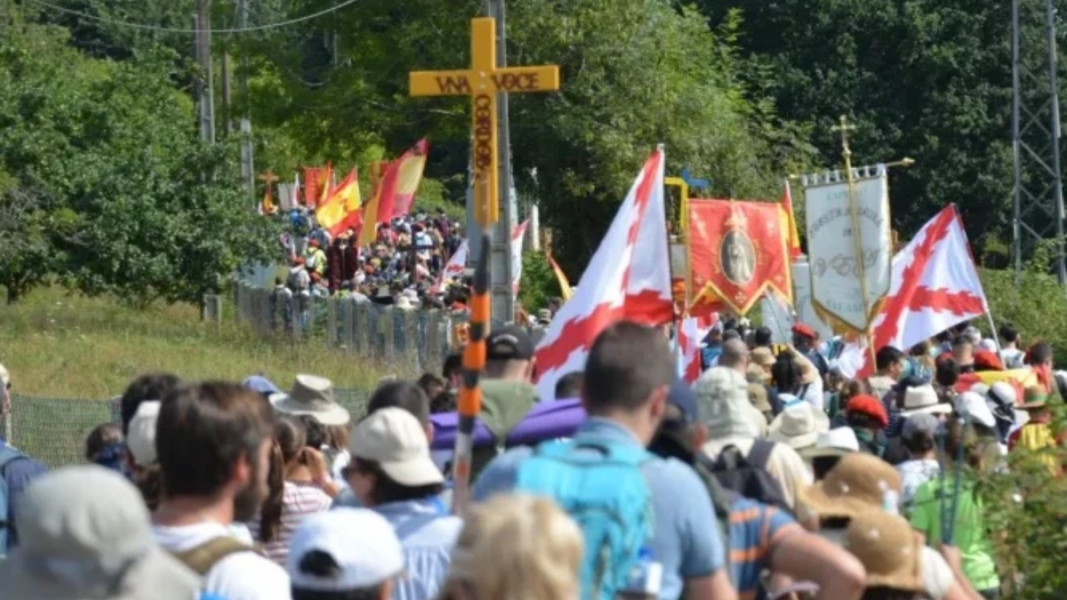
The Survey on Social Trends of the Sociological Research Center (CIS), conducted in December 2025, confirms a complex reality for the Church in Spain, marked by the advance of secularization, but also by signs of stability and continuity. Despite the profound cultural changes of the last decades, more than half of Spaniards (around 52%) continue to declare themselves Catholic, which keeps Catholicism as the main religious reference in the country.
Read also: The “Christian community”: that picturesque minority according to the Government
Within that group, 15.2% define themselves as practicing Catholics, while 36.9% consider themselves non-practicing Catholics. The data reflects a widely observed phenomenon: a faith that is no longer transmitted automatically, but remains rooted in the culture, family, and moral memory of broad sectors of Spanish society.
Young People and Catholicism
However, the CIS data also point to a significant fact: the retreat of Catholicism slows down among young people, in contrast to the general trend. In a context of growing secularization, a generation emerges that begins to rethink the religious question.
According to the latest barometer, one in three young Spaniards still identifies as Catholic. Specifically, 34% of young people aged 18 to 24 and 38% of those aged 25 to 34 declare themselves Catholic, a relevant figure in a country that has experienced a progressive loss of religious identity for decades.
The data gains greater relevance considering that, since the 1990s, the number of people identifying as Catholic has steadily decreased. However, the CIS now suggests a generational change in pace: the decline slows down and tends to stabilize among the youngest.
Vulnerability, Meaning, and Reopening to the Transcendent
Younger generations grow up in an environment marked by economic uncertainty, job precariousness, and social fragility, which favors a reopening to fundamental questions about the meaning of life, the future, and hope.
In this context, Catholic faith reappears not so much as an inheritance, but as a personal and conscious choice. For many young people, religion ceases to be a received custom and becomes a response to the need for meaning, community, and stability amid an unstable cultural landscape.
Social Networks as First Contact, Not as a Substitute
Another relevant factor highlighted by the study is the role of social networks, which have become a space where religious discourse circulates with greater visibility and reaches young people who, in many cases, have had no prior religious formation.
In the digital environment, the Christian message finds a direct language, personal testimonies, and visible communities that facilitate first contact with faith. This approach does not substitute parish life or sacramental participation, but acts as an entry door for those who had no prior connection with the Church.
Additionally, one of the most striking changes reflected in the social context is the end of the religious complex among young believers. Unlike previous generations, many young Catholics do not hide their faith or relegate it to the private sphere, but express it naturally in public and cultural life.
A Less Sociological and More Conscious Church
The CIS data do not point to a massive return to religious practice, but they do describe a significant evolution: Catholic faith has not disappeared among young people. In a society that seemed to have closed the door to transcendence, a more defined and conscious believing minority is confirmed.
Practicing Catholicism maintains a solid core, visible especially in sacramental life. According to the CIS, 11.4% of Spaniards attend Mass every Sunday and holy day, and 4.7% do so several times a week, modest but stable figures.
Comparison with surveys from previous years shows a reduction in so-called sociological Catholicism, but not a disappearance of faith. Far from diluting, Catholicism in Spain seems to profile itself as a reality displaced in social terms, but with a clearer and more coherent identity according to what can be interpreted from the CIS survey.