


In a time when even from the pulpits there is less and less talk of Heaven and hell, the historian and essayist Roberto de Mattei has wanted to recall, on the occasion of Christmas, a central truth of Christianity: the eternal destiny of man and the ultimate meaning of the Incarnation. For the Italian intellectual, remaining silent about the last things does not make them disappear, but makes them dangerously invisible in a culture that has lost the perspective of eternity.
De Mattei notes that many priests today avoid speaking of Paradise and hell, as if these realities were uncomfortable or unsuitable for contemporary sensitivity. However, he recalls that precisely these ultimate truths are the ones that orient human life toward its true end. When they are silenced, not only is Christian preaching impoverished, but the very meaning of existence is obscured, reduced then to a purely temporal horizon.
The faith of the Church has always taught that eternity is not only a future promise, but a reality that begins to take shape in the present. Every act, every decision, every orientation of the heart already prepares the definitive destiny of the soul. As Saint Gregory the Great and Saint Alphonsus Liguori—cited by de Mattei—reminded us, what is sown in time is reaped in eternity, and salvation can depend on a single moment.
From this perspective, the author observes that the current world offers abundant images that evoke an anticipation of hell: normalized violence, systematic lying, deception elevated to a norm, and a profound unhappiness that nests even in apparently satisfied hearts. This is not hell in the strict theological sense, but an unsettling reflection of what happens when man rejects the truth and the love of God. The result is loneliness, inner emptiness, and often a despair disguised as well-being.
But the present time—de Mattei affirms—is not devoid of signs of light. And among them, Christmas holds a singular place. The birth of Christ is presented as one of the highest images of Paradise anticipated in history. In the poverty of the manger, in a Child laid in a cave, heaven opens over the earth. Where everything seems fragile and insignificant, God becomes close, visible, and accessible.
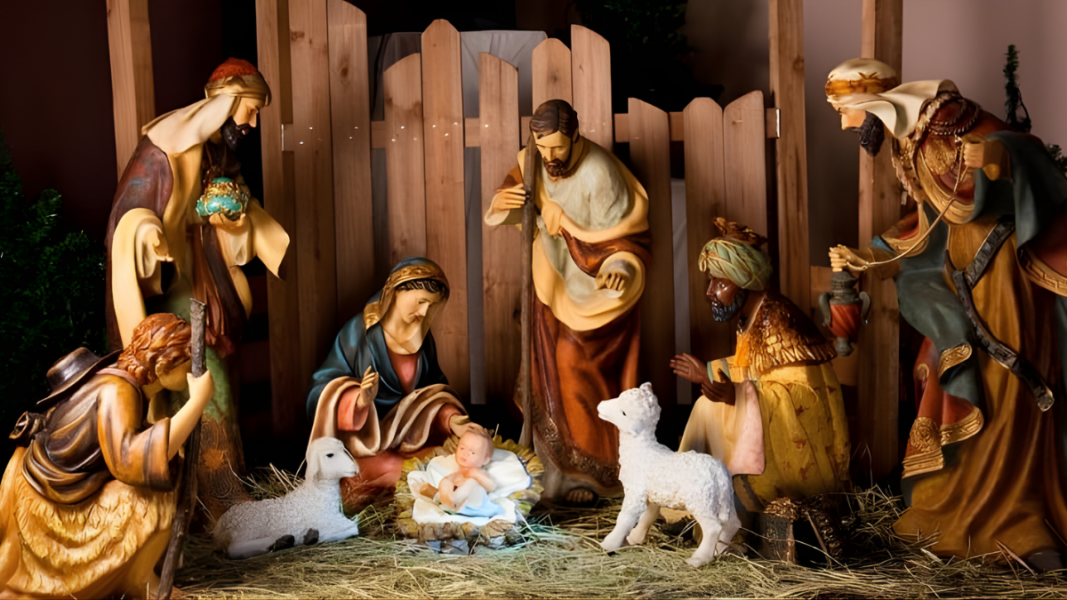
The nativity scene concentrates this supernatural reality: the Holy Family, the angels singing the glory of God, the shepherds and the Magi adoring the Word made flesh. Families that gather around the manger—sometimes without full awareness—participate in that joy that springs from the supernatural life radiating from Bethlehem. The peace and joy proper to Christmas are not mere feelings, but a prefiguration of the eternal happiness of Heaven, where the soul will live in full communion with God.
Paradise, de Mattei recalls, surpasses any human image. It is the fullness of all goods, the beatific vision of God, a happiness that does not exhaust or diminish with the passage of centuries. There, spiritual friendships and family bonds are also restored, now purified and elevated in the divine light. The blessed live in an ever-new joy, without boredom or weariness, because they participate in the infinite Good.
After the direct vision of God, the greatest joy of Paradise will be the contemplation of Jesus Christ, the Incarnate Word, and of the Most Holy Virgin Mary, Queen of Heaven. The melodies that resound there—the author notes—are the same ones that the angels intoned in Bethlehem, announcing the glory of God and peace to men of good will.
Between the anticipation of darkness and the anticipation of light, man is called to choose. That choice is not decided at the end of life, but in the present time: in the way of believing, worshiping, hoping, and loving. Therefore, de Mattei concludes, Christmas is the historical anticipation of what Paradise is eternally: the full communion between God and man.
If at Christmas God allows Himself to be seen in a human face, in Paradise man will see God without veils, in a definitive and eternal vision. The mystery of the manger is not, thus, a sentimental scene, but the first glimmer of the ultimate destiny for which man has been created.
Source: Messa In Latino / Radio Roma Libera (December 21, 2025)