


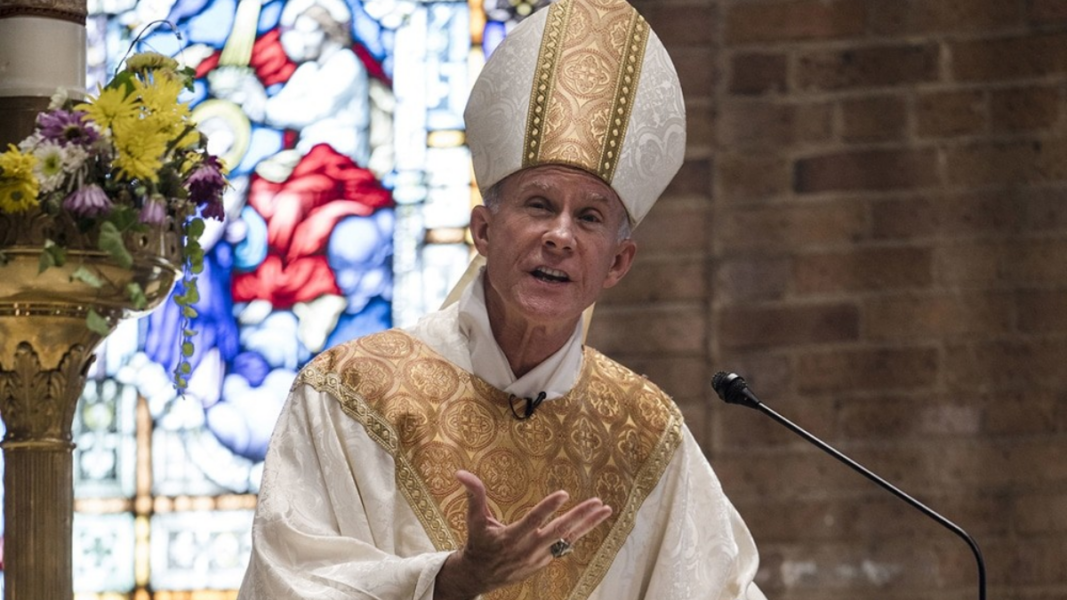
Christmas the beginning of everything. Thus recalls the emeritus bishop Joseph E. Strickland in an extensive reflection published in Pillars of Faith, in which he insists on a truth that the Church has always guarded, although today it is uncomfortable: the shadow of the manger is a Cross.
The Church, the prelate explains, prolongs the celebration of Christmas over several days because the mystery of the Incarnation is too great to be reduced to a momentary emotion. Christian joy is real, deep, and firm, but not naive. It is not a fragile joy that needs to be protected from the truth. On the contrary: it is a joy capable of facing sacrifice, suffering, and the price of redemption head-on.
Christ has not come—Strickland emphasizes—to make the world more comfortable. He has come to save it. And every salvation has a cost. That is why, when the Church places before the faithful, in the midst of the Christmas octave, figures like St. Stephen, St. John the Apostle, or the Holy Innocents, it is not breaking the Christmas atmosphere, but explaining it. It is showing what it really means for God to have entered history.
Separating the manger from the Cross, the bishop warns, inevitably leads to a deformed faith. When the Cross disappears from the horizon, joy turns into mere tranquility, superficial comfort, a faith that no longer saves because it demands nothing. But authentic Christian joy does not consist in being affirmed by the world, but in belonging to Christ, even when that belonging implies sacrifice.
The witness of St. Stephen, the first martyr, occupies a central place in Strickland’s reflection. His death was not an absurd tragedy or a defeat, but the logical culmination of what began in Bethlehem. Filled with the Holy Spirit, Stephen did not soften the truth to save his life, nor adapt the message to make it acceptable. He died forgiving, pronouncing the name of Jesus, leaving behind a seed that God would make fruitful even in the heart of Saul, the future apostle Paul.
Alongside Stephen appears St. John, whose fidelity did not pass through the sword, but through the weight of prolonged obedience. John lived under the shadow of the Cross his entire life: caring for the Virgin, enduring the wear of time, remaining faithful when others disappeared. His martyrdom—the bishop recalls—was silent, but no less real. The Cross does not always fall suddenly; sometimes it rests on the shoulders for years.
The Holy Innocents, victims of the violence of power that trembles before the truth, also form part of this Christmas pedagogy. They did not choose sacrifice, but were caught in its shadow because Christ had been born. In them is revealed both the cruelty of the world and the certainty that no suffering escapes God’s mercy.
From these testimonies, Msgr. Strickland issues a clear warning to today’s Church. There is a constant temptation— he affirms—to soften the message when the Cross becomes uncomfortable: to speak more of accompaniment than of fidelity, more of consensus than of truth, more of comfort than of conversion. It is then that the language of the world substitutes for the language of the Gospel, and what was once received with reverence begins to be seen as an obstacle.
But the Church was not called to reflect the world, but to offer it something different. When the Cross is hidden, Christmas is emptied. The manger becomes a decoration and joy a passing feeling. And that joy—Strickland reminds us—cannot save anyone.
Celebrating Christmas, the bishop concludes, is not stopping at the tenderness of the Child, but accepting the path that Child brings with Him. Kneeling before the manger is the beginning of discipleship, not its end. It means allowing oneself to be sent into everyday life—to the family, to work, to society—with a faith that does not flee from conflict or sacrifice.
The shadow of the manger is a Cross. It always has been. And far from being a loss, it is the promise that the Child we adore is the Savior who redeems, the King who reigns, and the Lord who remains with His Church, even when fidelity costs everything.