


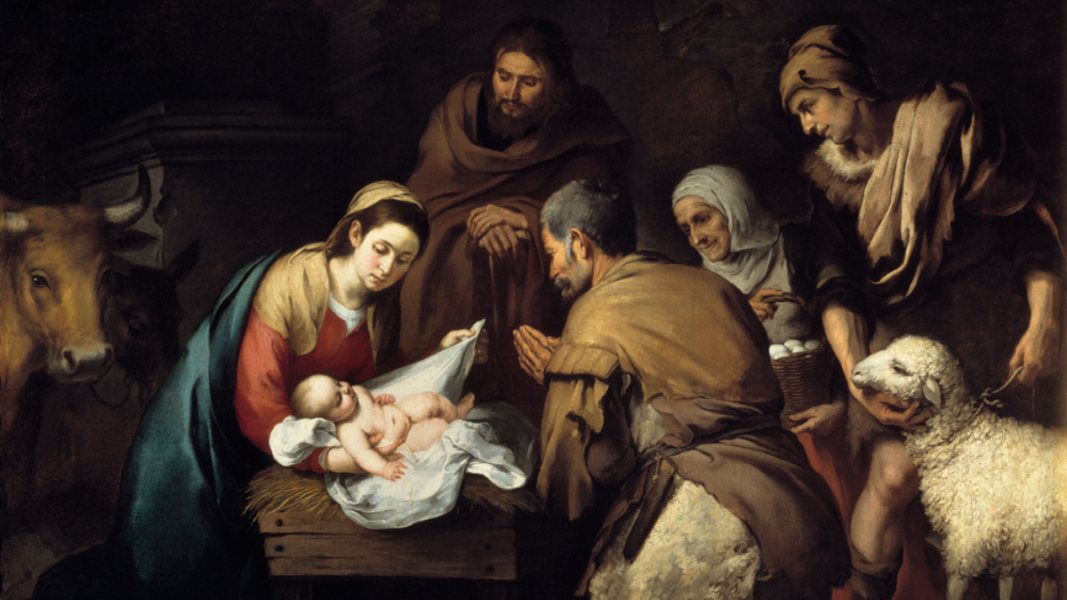
In the Catholic tradition, the Nativity scene is enveloped in a profound sacred silence. It is not an empty silence, but one filled with awe and divine presence. St. Augustine captured this paradox with wonder by stating that Christ was “beautiful as the Word born without speech”, for even as a newborn, unable to speak humanly, “the heavens spoke, the angels proclaimed praises, [and] a star guided the magi” to Him. In other words, the eternal Word arrived in the world in silence, and in that silence the rest of creation raised its voice: the heavenly choirs intoning “Glory to God in the highest” and the star of the East guiding the seekers of truth. “While all was in quiet and silence, and the night was in the middle of its course, your almighty Word descended from heaven from your royal throne” says Scripture, underscoring that God chose the most silent hour to reveal the Light that knows no setting. In the depths of that tranquil night, an eternal light was kindled for humanity. The Creator of the universe burst forth without fanfare, in the darkness of a stable, manifesting the true face of God: a humility and meekness that confound the proud world.
Divine Humility Revealed in a Silent Night
The Fathers and Doctors of the Church have taught that this silence of Bethlehem was not accidental, but profoundly eloquent. “The Savior, however, was born in silence and in the utmost poverty”, recalled Pope Benedict XVI, contrasting the false expectations of a powerful Messiah with the disconcerting reality of humble Christ. In Bethlehem, God speaks to us by lowering the volume of all ostentation: the King of kings is not born in a palace amid trumpets, but in a dark stable, accompanied by the whisper of the night and the breathing of simple animals. St. Thomas Aquinas explains that Christ “befitted Him to lead a poor life in this world”, accepting to be born in indigence precisely to give us a superior wealth. The Angelic Doctor reasons that, “just as He accepted bodily death to give us spiritual life, in the same way He endured temporal poverty to give us spiritual riches”. That divine choice of poverty and silence teaches humanity an eternal truth about God and about ourselves: true greatness is united to humility. Christ “did not demand a place nor force doors” to be born, “did not impose His Love”– He came stripped of everything, to reign solely from love and truth. That silent poverty of the Child God, wrapped in swaddling clothes and laid in a manger, is already a living preaching: it urges us to renounce pride and empty noise, inviting us to the simplicity that pleases God. As St. Thomas teaches, in whom He voluntarily becomes poor out of love –and Christ did so to the highest degree– “poverty itself is a sign of supreme humility”. In the silent humility of Bethlehem shine, therefore, the true glory and omnipotence of God, which do not need worldly pomp but the humble language of the Incarnation.
The Silence That Speaks More Than Words
Far from being mute or inert, the silence of Bethlehem is a silence “that speaks” to the soul. The shepherds hurried after hearing the angel’s announcement, but upon arriving they found simply a newborn Child with His Mother, in the utmost nocturnal recollection. However, in that quiet scene they knew how to recognize “the true face of God”. The Most Holy Mary kept all these things, pondering them in her heart, and Joseph, the just man, accompanied with silent adoration. The saints have seen in this contemplative silence a model for our faith. “Bethlehem is the school of silence and contemplation”, writes St. Augustine, “of a contemplative and obedient Joseph, and of a absorbed and maternal Mary who pondered all those things in her heart”. Words fall silent so that Love may speak. In fact, God usually reveals Himself in the gentle whisper more than in the clamor: “The Lord is in his holy temple: let all the earth be silent before Him!” (Hab 2,20). Centuries after Bethlehem, St. John of the Cross would formulate this lesson in a sublime way: “The Father spoke one Word, which was His Son, and this Word speaks always in eternal silence, and in silence it must be heard by the soul”. The eternal Word of the Father is Silence made flesh, and only in interior silence can we truly hear Him. Therefore, the Child God does not pronounce discourses in His Nativity; His very Presence is the Message. “As then, [God] hides mysteriously in a holy silence and, as then, reveals precisely in this way the true face of God”, preached Benedict XVI, pointing out that Christ reveals Himself to us veiled in humility, inviting us to an interior pilgrimage of adoration. The apparent weakness of that Child who cannot even articulate words is in reality the loving omnipotence of God, who “chooses the weak things of the world to confound the strong” (cf. 1 Cor 1,27). In Bethlehem, the silence of the newborn Jesus “speaks” more than any human oratory: it speaks to us of the ineffable love of God who humbles Himself to us, it speaks to us of the hope that no longer disappoints, it speaks to us of the gift of salvation offered humbly to all humanity.
Eternal Truths Revealed in the Stillness of Bethlehem
The mystery of the silence of Bethlehem retains all its challenging force amid our noisy century. Bethlehem invites us to be silent to listen to God, to lower the external and internal volume to capture the whisper of the Word made flesh. Contemplating the manger in silence is to let the supreme Love speak to us: Deus caritas est. If we turn off the noise of the world for a moment and enter the grotto of Bethlehem with the faith of Mary, Joseph, and the shepherds, then the “great joy” of Christmas (cf. Lc 2,10) will also flood our soul. “Our Savior is born today: let us rejoice. There is no room for sadness on the day the Life is born” – exclaims St. Leo the Great. May the sacred silence of Christmas Eve break our chains of noise and sin, shatter our fears, and fill us with eternal joy and hope. In that blessed silence of Bethlehem resound forever the “word of peace” and the “Good News of salvation” that God addresses to humanity. Let us draw near, then, in silent adoration to Emmanuel, God-with-us, and let the eternal Truth speak to our heart in the gentle voice of silence.
Merry and Holy Christmas!