


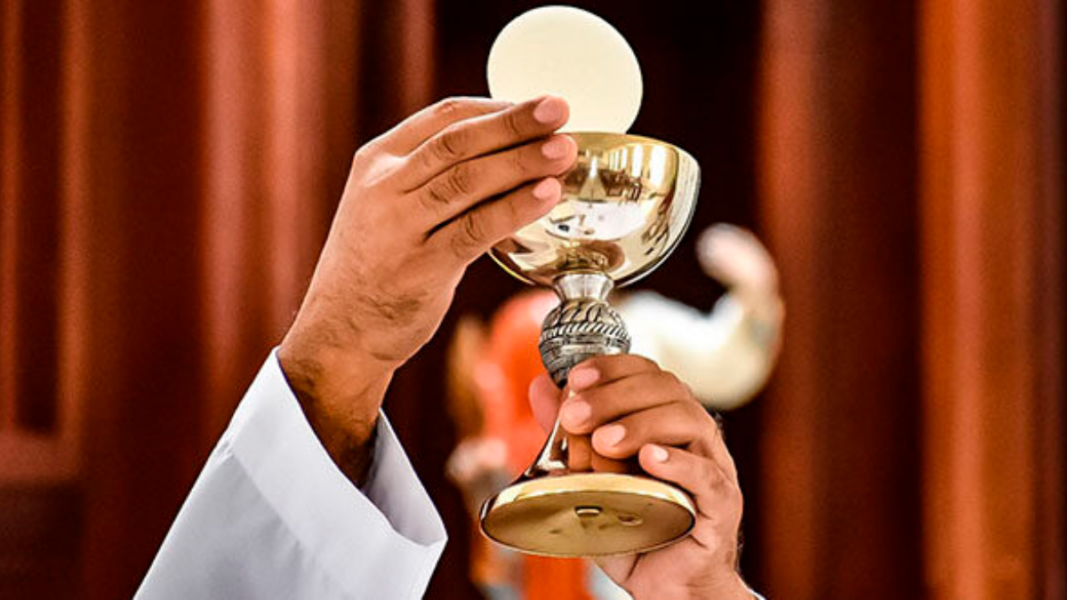
The crisis of the West is not only political, cultural, or moral. It is, above all, a crisis of worship. When a civilization stops knowing Whom it worships, it ends up not knowing who it is. History demonstrates this clearly: every great culture is born from a liturgical act and dies when that worship is emptied of meaning.
La Cristiandad Occidental y el Rito Romano is a text of historical and liturgical reflection that starts from a clear premise: Western Christianity cannot be understood without understanding the Roman rite. Javier Aizpun Bobadilla—architect, theologian, and canon of the cathedral of Pamplona— addresses this relationship not from nostalgia nor from immediate controversy, but from a deeper conviction: liturgy is not an adornment of faith, but its visible, stable, and transmissible form over time.
The treatise deliberately positions itself outside superficial debates. It does not seek to convince with slogans, but to show with arguments how the Roman rite was the structuring axis of an entire civilization, capable of unifying peoples, languages, and cultures under a single form of prayer.
The rite as a principle of unity
The unity of the Latin Church was not sustained solely on doctrinal definitions, but on a common form of worship. The Roman rite acted for centuries as a shared language that transcended political borders and cultural differences. Western Christianity was built over centuries around a concrete way of celebrating the Christian mystery: the Roman rite. It was not a mere set of prayers nor an interchangeable ritual discipline, but the spiritual structure that shaped time, space, art, politics, and the daily life of Europe. Wherever the Roman rite took root, cathedrals, universities, religious orders, law, music, and a conception of the world oriented toward transcendence arose.
But that edifice did not collapse all at once. It gradually cracked when the liturgy stopped expressing clearly what the Church believes about God, about the Eucharistic sacrifice, and about man’s ultimate destiny. When the Mass stopped being perceived as the sacramental actualization of Calvary and anticipation of heaven, and began to be reduced to a self-satisfied community gathering, the spiritual axis of civilization shifted.
Aizpun shows how this ritual unity was not the fruit of arbitrary imposition, but of a slow historical sedimentation, where Rome offered a sober, theologically dense liturgical form that was surprisingly adaptable, capable of taking root in very diverse contexts without losing its essential identity.
Liturgy and civilization: an inseparable relationship
The text rightly insists that the Roman rite not only shaped ecclesial life, but also the social and cultural life of the West. The calendar, the conception of time, the sense of sacred space, architecture, music, Latin as the common language of knowledge, even certain legal and moral categories, were born or consolidated in the warmth of the liturgy.
From this perspective, Christianity appears not as an ideological construction, but as the result of a shared form of rendering worship to God. Western civilization, as it developed over centuries, was liturgical in its root, even when it was not always conscious of it.
Liturgy is not neutral. The arrangement of the altar, the orientation of the priest, the sacred language, silence, adoration: all of this educates the faith of the people. When these elements disappear or are banalized, not only does the rite change; faith changes. And when faith weakens, the culture that relied on it becomes fragile, confused, and finally hostile to its own roots.
When man displaces God
The West did not begin to lose itself when it stopped being Christian in name, but when it stopped living as if God were really present at the center. Secularization did not begin in parliaments, but in presbyteries. Before truth was relativized, the mystery was relativized. Before dogmas were denied, worship was emptied of reverence.
The problem is not the existence of liturgical reforms in themselves—the Church has always known developments—but the ruptures that break the continuity of Tradition. When orientation toward God is lost, when the sense of sacrifice is diluted, when adoration is replaced by self-celebration, liturgy stops being the foundation of civilization and becomes one more reflection of cultural decadence.
Tradition, traditionalism, and the end of Modernity
Without denying the doctrinal greatness of Trent or Vatican II, Aizpun holds that both post-councils are part of a historical era that is coming to an end. The decisive question is therefore not what system to return to, but how to cling to the perennial Tradition of the Church—the one that crosses councils, rites, and centuries—to build a new historical stage that we still do not know.
From this perspective, the Roman rite is not a museum piece nor an ideological banner, but a living form of Tradition that must be understood in continuity with the whole set of rites of the Church, both Eastern and Latin, ancient and current.
La Cristiandad Occidental y el Rito Romano, by Javier Aizpun Bobadilla, is then an essential reading for those who intuit that the crisis of the West cannot be separated from the liturgical crisis. A brief treatise that invites us to look at the liturgy not as a problem to solve, but as an inheritance that deserves to be understood, guarded, and transmitted.