


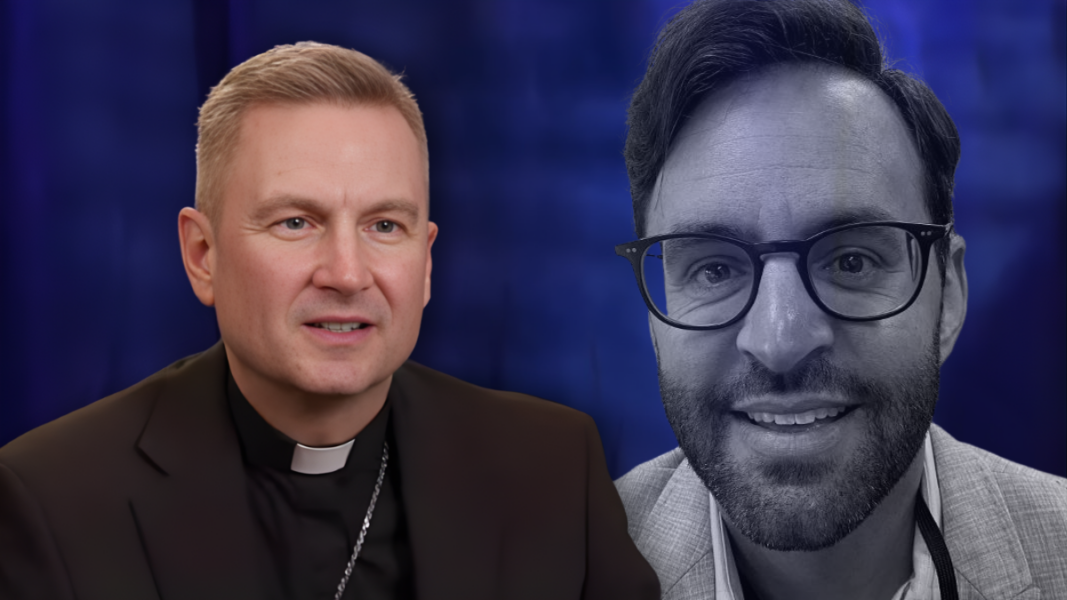
The resignation of the chancellor of the Diocese of Joliet, David Salvato, and the subsequent news that he had entered into a civil union with another man have placed Bishop Ronald A. Hicks—recently appointed in New York—at the center of attention, as he is directly responsible for his appointment and for the diocesan governance during the events.
Read also: Leo XIV officializes the appointment of Msgr. Hicks in New York
Salvato was appointed chancellor in April 2021 by personal decision of Hicks, shortly after he assumed the see of Joliet. The position of chancellor is neither minor nor merely administrative: it is one of the key positions in diocesan governance, with direct access to the bishop and responsibility for the legal validity of ecclesiastical acts, decrees, dispensations, and official archives.
An appointment of maximum episcopal trust
Salvato’s profile—doctor in Canon Law, with experience in ecclesiastical tribunals, teaching in seminaries, and work in Vatican structures—made him a collaborator of maximum trust for the bishop. Precisely for this reason, the case cannot be reduced to a personal matter, but directly challenges the discernment, supervision, and pastoral responsibility of Bishop Hicks.
According to information gathered by Complict Clergy, Salvato would have left his position abruptly, without the diocese offering any explanation to the faithful. Shortly afterward, it emerged that he had celebrated a civil “wedding” in Naperville (Illinois) with another man. Since then, all references to Salvato have been removed from the diocesan website, without an official statement or public clarification.


The bishop’s silence and the risk of scandal
To date, Hicks has made no statement about the case. It has not been clarified whether the former chancellor submitted his resignation, whether he was required to leave the position, nor whether canonical or pastoral measures consistent with the Church’s moral doctrine have been adopted.
The issue is not merely disciplinary, but deeply ecclesial. When a high diocesan official lives publicly in objective contradiction with the Church’s teaching, the bishop has the duty not only to act, but also to explain, in order to avoid scandal and confirm the faithful in the faith.
A context that aggravates the responsibility
The case gains greater relevance in light of the imminent appointment of Msgr. Hicks as archbishop of New York, one of the most influential sees in the United States. The way he has managed this situation in Joliet will inevitably be observed as indicative of his governance criteria, his understanding of public scandal, and his willingness to exercise episcopal authority with doctrinal clarity.
The silent removal of traces from the diocesan website, without pastoral explanation or explicit teaching, conveys the impression that problems are hidden rather than addressed, a practice that has caused serious damage to the Church’s credibility in recent decades.