


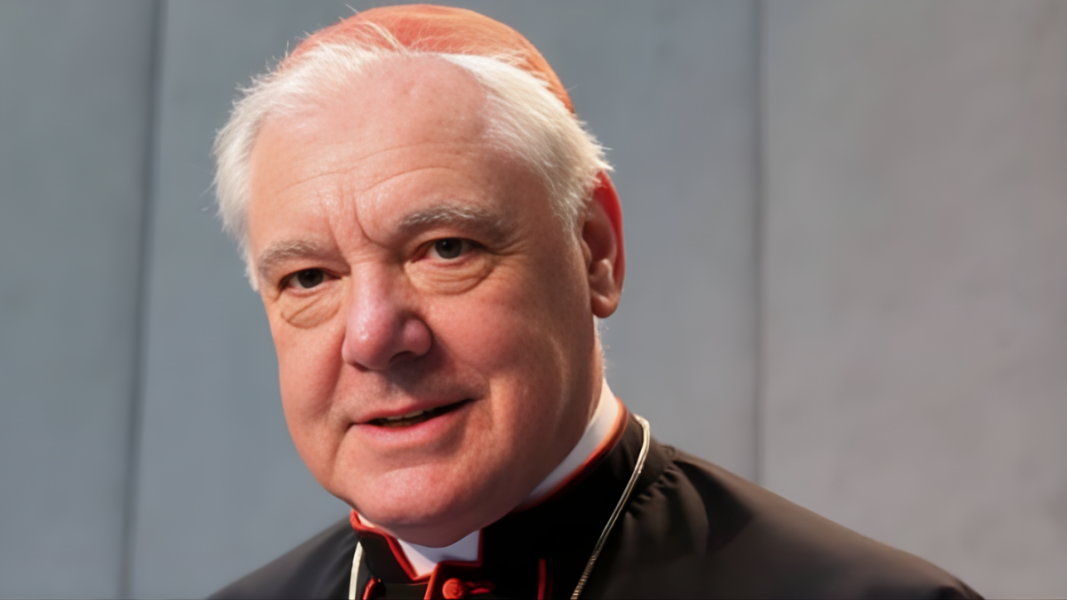
Cardinal Gerhard Ludwig Müller, former prefect of the Congregation for the Doctrine of the Faith, has accused the Vatican of applying a harmful double standard in its insistence on dialogue and respect, stating that these principles are applied selectively and that they are often not extended to faithful Catholics themselves.
In a recent interview granted to Pelican +, and reported by The Catholic Herald, the German cardinal argued that current approaches have deepened internal divisions rather than healing them. As he explained, while ecclesiastical authorities constantly emphasize openness and respect in their relationship with contemporary cultural movements, that same attitude is not maintained consistently with practicing Catholics, especially those who wish to attend the Traditional Latin Mass.
«It has not been a good thing»
The cardinal’s statements come in the context of the prolonged debate surrounding the restrictions imposed on the celebration of the traditional Roman rite, a decision that has affected dioceses and religious communities worldwide. Asked directly about this policy, Müller stated that «it has not been a good thing» that Pope Francis has suppressed the Tridentine rite «in an authoritarian manner».
The former prefect went further and suggested that the pontiff’s rhetoric has unjustly stigmatized a significant sector of Catholic faithful. According to Müller, the Pope has caused «harm and an injustice» by generally accusing those who love the ancient form of the rite of being against the Second Vatican Council, «without a just distinction between people».
The cardinal emphasized that the unity of the Church cannot be sustained through coercive measures. «We do not have a police state system in the Church, nor do we need one», he stated, adding that «the Pope and the bishops must be good shepherds».
The order reveals what is really believed
Beyond the liturgical issue, Müller raised a broader question about the current identity and orientation of the Church. The way the Church orders its priorities reveals what it believes about truth, authority, and the human person, as well as whether doctrine is something that must be lived and taught or simply managed and relegated.
From this perspective, the current tensions would not be reduced to a conflict of liturgical styles or personalities, but would reflect a deeper change in ecclesial culture, where image and gesture tend to replace theological coherence. In this sense, the cardinal rejected that his criticism is conservative nostalgia for the past, and presented it as the diagnosis of a deeper pattern.
«They talk all the time about dialogue and respect toward other people», Müller stated, adding that «when it comes to the homosexual agenda and gender ideology, they talk about respect, but toward their own people they show no respect».
A selective commitment
The problem, as he explained, is not the Church’s commitment to the modern world, something in line with its universal nature, but when that commitment becomes performative, selective, and disconnected from the doctrinal center of the Catholic faith. This would reveal, in his view, an inability to distinguish between a legitimate attachment to tradition and an ideological opposition to the Council.
The result would be a Church increasingly comfortable with public spectacle, large events, and carefully controlled communication, but less secure in the silent and constant work of doctrinal formation. While Rome fills with congresses, concerts, and acts designed to project openness and relevance, many Catholics who ask for continuity, doctrine, and tradition —as the source points out— are treated as a problem to be managed, rather than as full members of the Catholic Church.