


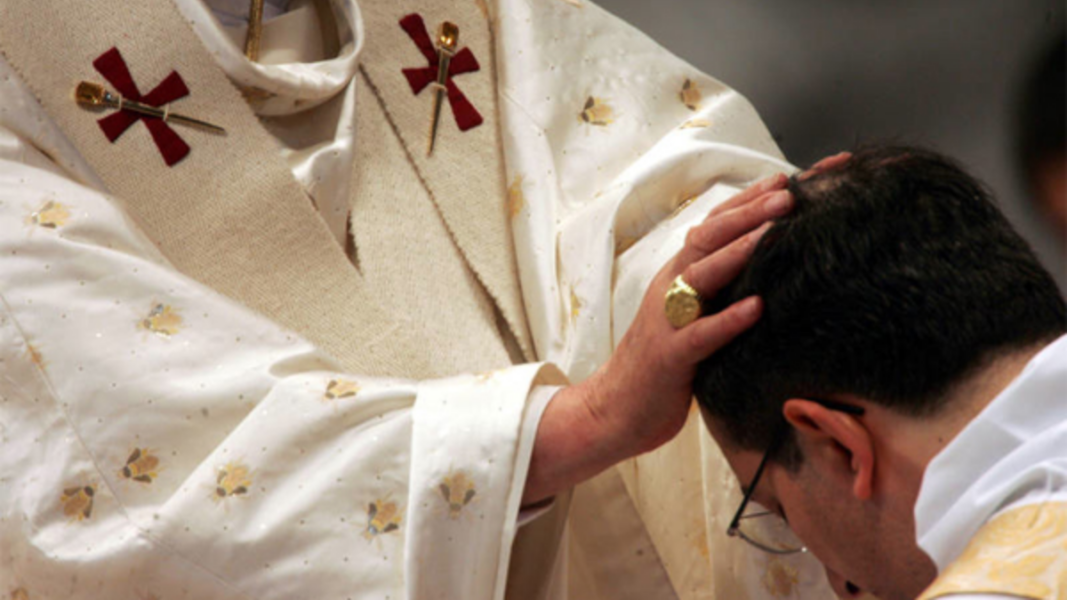
On the occasion of the 60th anniversary of the conciliar decrees Optatam totius and Presbyterorum ordinis, Pope Leo XIV has published a new apostolic letter, titled A Fidelity That Generates the Future, in which he proposes a broad reflection on the identity, life, and mission of the ministerial priesthood in the current context of the Church.
Far from a merely commemorative approach, the document invites us to reread the texts of the Second Vatican Council as a “living memory”, emphasizing that the renewal of the Church depends to a great extent on the fidelity of presbyters to their vocation and to the mission received. In this framework, the Pope places fidelity not as a static attitude, but as a permanent path of conversion, rooted in the personal relationship with Christ and sustained by the grace of the sacrament of Holy Orders.
Fidelity to the Call Received
Leo XIV recalls that every priestly vocation is born from the encounter with Christ, who calls freely and entrusts a mission. Fidelity, he states, is strengthened when the priest returns again and again to that first “yes,” especially in moments of trial, temptation, or weariness. In this sense, the Pope insists on the importance of prayer, listening to the Word, the faithful celebration of the sacraments, and spiritual accompaniment as concrete means to safeguard the vocation over time.
The letter emphasizes that priestly fidelity does not equate to immobility or withdrawal, but rather involves ongoing formation, understood as a constant updating of one’s own vocation. The Pope recalls that the Council already warned that formation does not end with leaving the seminary, and he takes up this teaching to encourage presbyters to care for their human, spiritual, intellectual, and pastoral growth throughout their lives.
Fidelity Tested in a Context of Crisis
Leo XIV does not shy away from the difficulties that have marked the clergy in recent decades. He recognizes that the crisis of trust provoked by abuses committed by members of the clergy has highlighted the urgency of more integral formation and solid human maturity. In this context, priestly fidelity appears linked not only to perseverance in the ministry, but also to coherence of life, humility, and the ability to assume responsibilities with truth.
The Pope also refers to the painful phenomenon of priests who abandon the ministry, inviting us to look at it with pastoral attention and not solely from a juridical perspective. In the face of these situations, he proposes redoubling the commitment to formation and accompanying vocations from their initial stages, so that they can take root in a deep and stable relationship with the Lord.
Fidelity Lived in Communion
Another central aspect of the document is presbyteral fraternity, presented as a gift inherent to the sacrament of Holy Orders. Fidelity to the ministry is not lived in isolation, but in communion with the bishop and with the other presbyters of the diocesan presbyterate. The Pope encourages overcoming individualism, caring especially for priests who live in situations of loneliness, and promoting concrete forms of mutual support, also in material matters, especially in illness and old age.
This fidelity to communion is inserted, according to the Pope, into the broader call to a synodal and missionary Church, in which the priest exercises his service without falling into personalism or self-referentiality, always remaining oriented toward the good of the People of God.
Fidelity Oriented Toward Mission and the Future
Finally, Leo XIV links priestly fidelity with the evangelizing mission. He warns against two opposing temptations: activism, which measures the priest’s value by his performance, and passive withdrawal, which renounces the proclamation of the Gospel. Against both, he proposes a fidelity centered on pastoral charity, capable of harmonizing contemplation and action, and of giving credible witness to God’s love in a world marked by fragmentation and uncertainty.
The Pope concludes by expressing his desire that this reflection contribute to a renewed vocational impulse in the Church and encourage offering young people demanding and authentic proposals. “There is no future without the care of all vocations,” he states, entrusting this path to the intercession of the Virgin Mary and St. John Mary Vianney.