


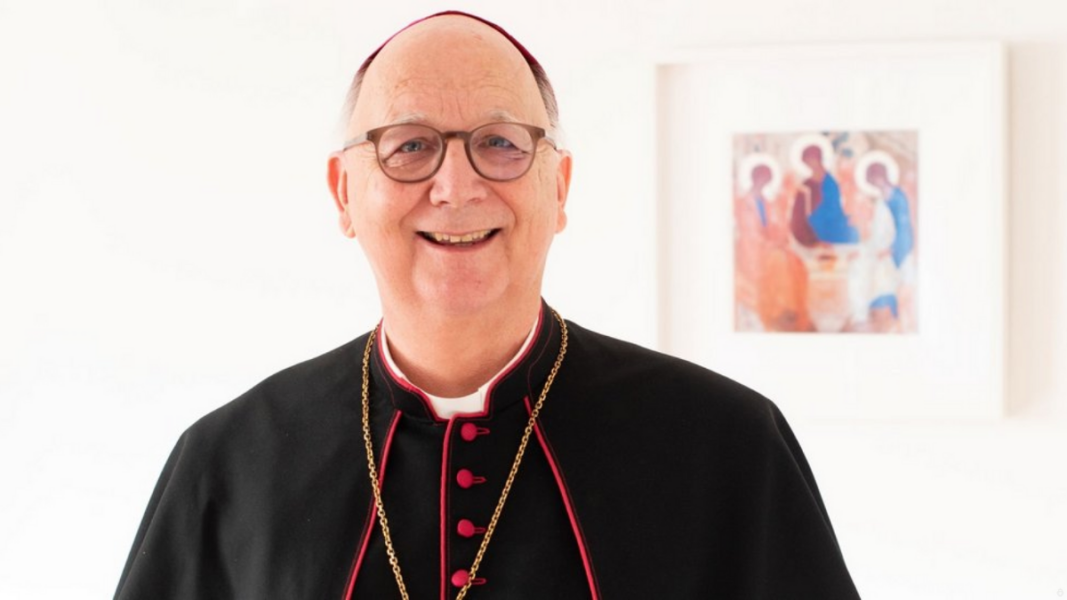
The Church’s doctrine on the ordination of women and sexual morality is clear, definitive, and binding, but it is the object of growing confusion that affects both ecclesial life and the public perception of the Magisterium. This has been warned by Msgr. Marian Eleganti, emeritus auxiliary bishop of Chur (Switzerland), in a conversation with John-Henry Westen, founder and director of LifeSiteNews.
The dialogue focused on several recent episcopal appointments made by Pope Leo XIV, including that of the bishop of St. Gallen (San Galo), known for having publicly expressed his support for the ordination of women. Westen asked if these designations could be interpreted as a sign of doctrinal change in the Church.
“The doctrine is infallible and has been closed since 1994”
Msgr. Eleganti was categorical: the doctrine on the exclusively male priesthood is clear, infallible, and definitive since the apostolic letter Ordinatio sacerdotalis of St. John Paul II, published in 1994.
“There will be no ordination of women. The sacrament of Holy Orders cannot be conferred on women. That is doctrinally decided,” he affirmed.
The bishop also recalled that the recent studies on the so-called “female diaconate” have recognized, for the third or fourth time, that the historical deaconesses were not equivalent to the sacramental male diaconate. It was, he explained, a service conditioned by specific cultural circumstances that disappeared over time.
For Eleganti, the current danger is not so much a frontal break with the doctrine, but a strategy of practical confusion:
“It is said that the doctrine does not change, but in practice similar things are done that generate confusion and empty the sacramental character of the Church of meaning”.
Episcopal appointments and lack of coherence
Westen pointed out that, in the first months of Leo XIV’s pontificate, bishops have been appointed in Switzerland, Australia, and Austria who have expressed positions favorable to the ordination of women. Msgr. Eleganti acknowledged that the episcopal selection process is complex and that the Pope usually relies on dicasteries and commissions.
Nevertheless, he warned that this excessive trust can have serious consequences if it is not accompanied by discernment and subsequent correction:
“To say that the doctrine does not change and, at the same time, to allow a closed debate to be constantly reopened is incoherent”.
The James Martin case and pastoral ambiguity
The conversation also addressed Pope Leo XIV’s meeting with the Jesuit James Martin, known for actively promoting the LGBT agenda within the Church. Westen emphasized the impact that these images have had especially in the United States, where Martin is a very well-known public figure.
Msgr. Eleganti distinguished between personal treatment and doctrinal clarity:
“One can speak with anyone, even a heretic, with respect and charity. But at the same time, the Church’s position must be made clear. What cannot be tolerated is prolonged activism that normalizes sin”.
The bishop warned of the enormous communicative power of papal images without doctrinal explanation: “Images speak. If there is no clarification, confusion is generated”.
Abortion, death penalty, and improvised statements
Westen expressed his concern about some statements by Pope Leo XIV in English, in which he seemed to equate opposition to abortion with the stance on the death penalty. According to Eleganti, it was an improvised and unfortunate statement, the result of spontaneous interviews that weaken the authority of the papacy.
The bishop recalled that, in the Catholic tradition, abortion is always an intrinsic evil, while the death penalty has historically been considered a matter of political prudence, not morally equivalent:
“The direct elimination of an innocent cannot be compared to a prudential judgment of the State. That is a grave confusion”.
Eleganti concluded by warning that the separation between doctrine and pastoral care is false:
“Truth is pastoral. There is no love without truth. When the Magisterium becomes incoherent with itself, the ecclesial damage is profound”.