


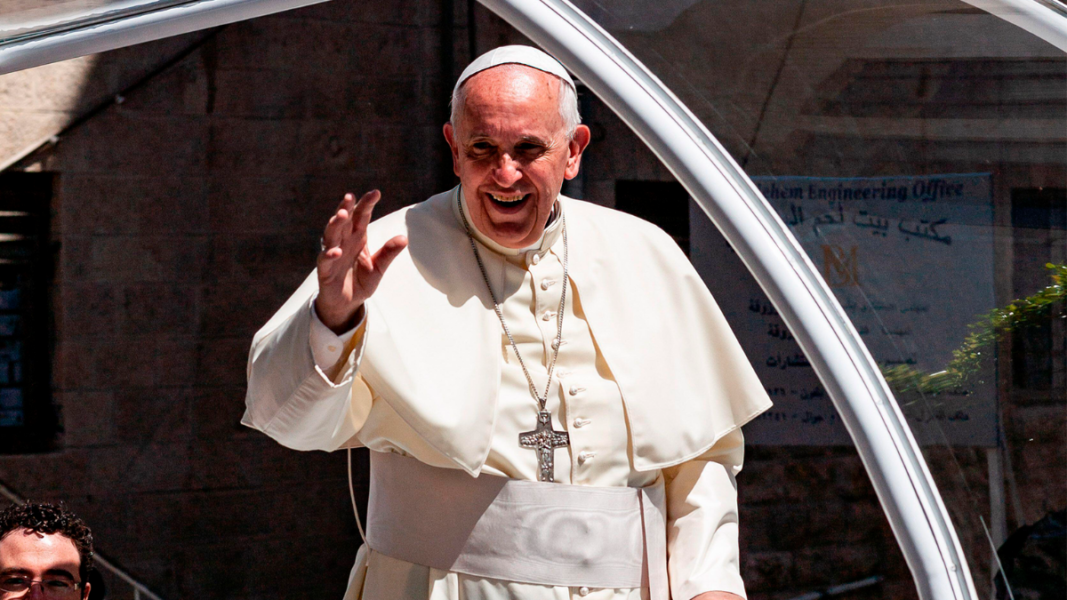
Buenos Aires commemorates the 89th anniversary of the birth of Jorge Mario Bergoglio with a concert of sacred music at the Basílica Nuestra Señora de la Merced, this Wednesday, December 17, at 8:00 p.m. The event, dedicated to Francisco, who passed away on April 21, will feature historical works from the sacred repertoire and the premiere of a cantata composed in his honor.
According to ACI Prensa, the program is part of the 300 years of sacred music in Latin America and proposes a journey through the Jesuit tradition and the dialogue between cultures through music. The concert will include works by the Jesuit missionaries Doménico Zipoli and Roque Ceruti, central figures of the musical baroque in the Virreinato del Perú. From Zipoli, the Salmos de Vísperas will be performed, and from Ceruti, the piece Hoy que Francisco reluce.
Following that historical repertoire, the premiere of the Cantata Sacra Nican Mopohua by Pedro Chemes, written in náhuatl and Spanish, will take place. The composition, linked to the thought of the Argentine pontiff, seeks to “build bridges” between indigenous roots and the Catholic heritage transmitted by the Society of Jesus.
The performance will be carried out by the Coro Nacional de Música Argentina and the Ensamble Interamericano Contemporáneo, an ensemble created for the occasion with musicians from the main porteño orchestras, under the direction of maestro Federico Ciancio. The event has the support of Mecenazgo de la Ciudad de Buenos Aires, the Arzobispado de Buenos Aires, the Universidad Católica Argentina (UCA), the Universidad Nacional de Tres de Febrero (UNTREF), and the Universidad Nacional Autónoma de México.
A Striking Tribute
The choice of a sacred music concert as a tribute is, at the very least, striking if one considers Francisco’s own pastoral style. During his pontificate, the Argentine Pope valued sacred music as an instrument of prayer and proclamation, but he distanced himself from cultural events with a formal or socially elitist tone. It was not common to see him personally attend concerts, and his preference was more for gestures of closeness to the peripheries than for high-profile cultural celebrations.
Would he have liked a concert for his birthday? He probably would have appreciated the spiritual message, the popular roots, and the open access of the event. The solemnity of the format, on the other hand, would hardly have fit with his well-known distrust of what he himself used to identify as “bourgeois” expressions of ecclesial life.