


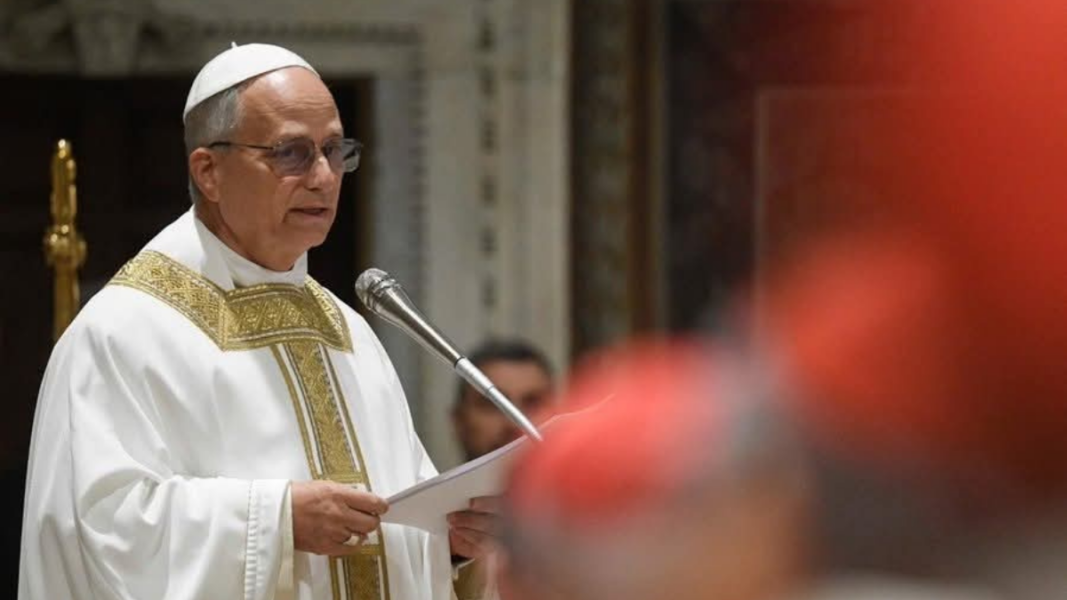
The liturgy will occupy a central place in the upcoming College of Cardinals convened by Pope Leo XIV for January 7 and 8, 2026. This has been advanced by the Italian newspaper il Giornale, which reports on the content of a “Christmas” letter sent by the Pontiff to all the cardinals, in which the agenda of the meeting and the main issues to be addressed are detailed.
As il Giornale explains, the Pope has wanted to directly involve the entire College of Cardinals—and not just a small group of collaborators—in a discernment on issues that he considers particularly grave for the life of the Church. Among them, alongside synodality and the relationship between the Roman Curia and the exercise of power, the liturgical question appears explicitly, having become in recent years one of the main foci of intra-ecclesial tension.
The relevance of this gesture is no small matter. Since the promulgation of the motu proprio Traditionis custodes in 2021, the liturgy—and especially the celebration of the Mass according to the 1962 Missal—has transformed into a true battlefield between different sensitivities within the Church. Bringing this debate to the College of Cardinals implies, de facto, the recognition that there is an open breach that cannot continue to be managed solely through administrative decisions or ideologized readings.
This breach also cuts through an ecclesial sensitivity that has shown itself to be particularly fertile in vocations, religious life, and parish revitalization, especially in contexts marked by secularization and the decline of sacramental practice. Wherever the liturgy has been cared for, celebrated with reverence, and transmitted without complexes, a resurgence of ecclesial life has occurred—against many predictions—in the midst of a Church that appears exhausted in other areas.
That Leo XIV has decided to place the liturgy at the center of a collegial meeting of this level points to a historical awareness: the liturgy is not a secondary issue or a problem to neutralize, but the place where the Church recognizes itself and where much of its future is at stake. It is not solely about the traditional Mass, but about the very understanding of the Eucharist as the source and summit of Christian life.
As il Giornale points out, the January consistory could also serve to address the way in which the Church should relate to the faithful who, fully accepting the Second Vatican Council, wish to continue celebrating the so-called Tridentine Mass. The mere fact that this topic is the object of collegial reflection already represents a significant change compared to the previous stage, in which the issue was treated unilaterally and, in many cases, punitively.
If this process led to a review, nuance, or re-reading of Traditionis custodes, we would be facing a true turning point. Not only because it would alleviate an open wound in the ecclesial body, but because it would allow the Church to reconcile with a part of itself that has proven to be spiritually fruitful in times of widespread decline.
Leo XIV’s decision to involve the College of Cardinals in this reflection confirms that the liturgy has ceased to be a marginal issue to become a strategic question. What is at stake is not aesthetic taste or nostalgia, but the Church’s capacity to transmit the faith, foster vocations, and rebuild unity around the altar. The January consistory thus emerges as one of the most decisive moments of the current pontificate.