


The Church has the right to speak about politics. Even more: it has the duty to do so when the moral foundations of social life are at stake. But that right is not exhausted in situational commentary nor is it fully realized when ecclesial discourse is limited to accompanying—or mildly correcting—the political debate as formulated by the system’s actors. At that point, the Church’s word risks losing density, prophetic force, and the real capacity to guide consciences.
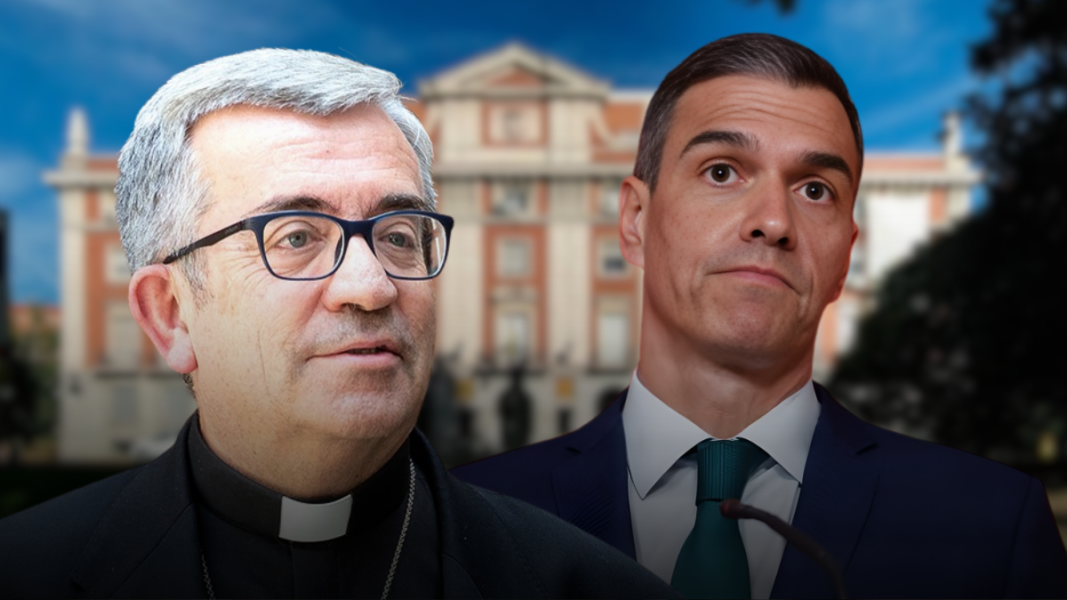
Recent interventions by leaders of the Episcopal Conference have once again placed the Church in the focus of public debate. That is not the problem. The real question is another: what kind of word is the episcopate offering today to a deeply disoriented society? A doctrinal, structural, and formative word, or just another comment—well-intentioned, no doubt—within an exhausted political framework?
Because the underlying problem is not who governs or whether it is advisable to advance or delay elections. The problem is the political and cultural system itself in which those elections take place. A system that shows evident signs of structural corruption, not only in the penal sense of the term, but in its inability to order social life toward the common good, protect the most vulnerable, and guarantee the minimum conditions for a dignified life.
It is enough to look at the reality of young people. It is not only about job precariousness or insufficient salaries. It is about something deeper: the practical impossibility of forming a home, projecting a stable life, founding a family. The debate on housing—late, poorly posed, and frequently ideologized—touches, however, a decisive point: without a material base, there is no family, and without a family, there is no sustainable society. It is striking that this diagnosis, so evident in everyday life, barely finds a clear and constant doctrinal formulation in episcopal discourse.
Something similar happens with abortion and euthanasia. They are often treated as “ethical issues” among others, when in reality they are extreme symptoms of a civilization that has lost the sense of the intrinsic value of human life. We are not faced with technical or legislative debates, but with a broken anthropology. And a broken anthropology is not corrected with occasional statements, but with a firm, repeated, and pedagogical magisterium that helps to understand what kind of society we are building and at what price.
The risk of remaining on the surface is evident. When the Church does not offer a deep diagnosis, others fill that void with categories alien to its mission. Thus, the debate ends up sliding toward a right–left axis, PP–PSOE, which is not only intellectually poor but pastorally sterile. That framework does not challenge the roots of the problem nor allow for the formulation of a recognizable Christian alternative; it simply encloses the ecclesial voice in a logic that is not its own.
It is not a matter of asking the bishops for silence, but exactly the opposite: asking them for more word, but a different word. Less reactive and more prophetic. Less dependent on the political agenda and more rooted in a Christian vision of man, society, and power. A word that does not fear to discomfort, because it does not seek applause or political correctness, but the truth.
The Episcopal Conference is not called to arbitrate between parties or to modulate the electoral calendar. It is called to form consciences, to illuminate social structures from the Social Doctrine of the Church, and to point out, with clarity and without ambiguities, when an entire system deviates from the basic principles of human dignity, justice, and the common good.
True episcopal courage does not consist in aligning with a political bloc or avoiding controversy. It consists in saying the full truth, even when that truth overflows the available ideological frameworks and exposes the moral poverty of public debate. Only from that doctrinal depth does the Church’s word recover its weight, its authority, and its capacity to guide a society that, more than opinions, needs foundations.