


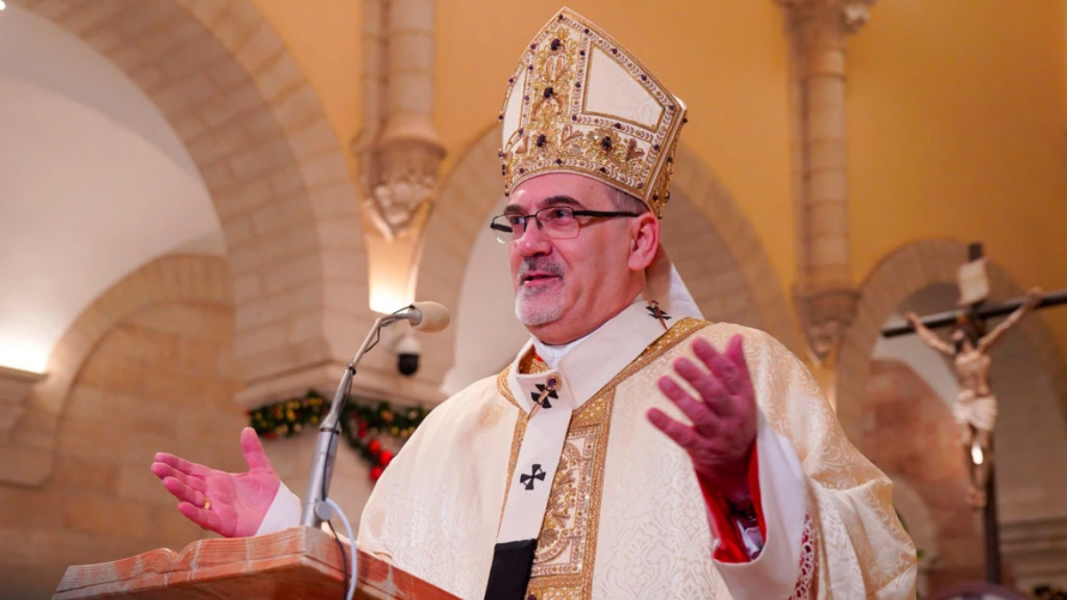
Cardinal Pierbattista Pizzaballa, Latin Patriarch of Jerusalem, called on the international community not to divert attention from the situation of Christians in the Holy Land, who are directly affected by the consequences of the conflict between Israel and Hamas. He stated this in an interview granted to EWTN News, published by National Catholic Register, during a visit to the Archdiocese of Detroit between December 4 and 7.
The patriarch emphasized that, despite the ceasefire started on October 10, the daily life of Christians in Gaza, the West Bank, and Israel continues to be marked by insecurity, economic precariousness, and uncertainty about the future.
A Christian Community Hit by War
Pizzaballa recalled that his pastoral jurisdiction includes approximately 190,000 Christians in Israel, 45,000 in the West Bank, and about 500 in Gaza. In this last area, he noted that more than 80% of homes have been destroyed since the start of the war and that the small Christian community linked to the Holy Family parish faces serious difficulties in accessing food, medicine, education, and housing.
In the West Bank, including Bethlehem, the situation is also not favorable. The cardinal explained that the collapse of tourism and the suspension of work permits in Israel have eliminated the main sources of income for many Palestinian Christian families, generating a serious economic crisis.
In addition, he warned about the increase in tension between Israelis and Palestinians in this region, with episodes of violence that have also affected Christian communities. «The situation is very problematic and chaotic,» he stated, emphasizing the widespread fear due to the lack of clarity about the end of the conflict and the reconstruction processes.
The Ceasefire as the Only Alternative
Although he recognized the limitations of the current ceasefire, promoted with mediation from the United States, the Latin Patriarch of Jerusalem maintained that there is no viable alternative. «We have no other options,» he affirmed, warning that a resumption of hostilities would further aggravate the humanitarian situation.
When asked about the genocide accusations made by some sectors against Israel, Pizzaballa avoided using that term, but pointed out the need to evaluate the facts with evidence and within their context. At the same time, he rejected the use of religious arguments to justify political decisions and emphasized the importance of distinguishing between criticism of the Israeli government’s policies and relations with the Jewish people.
The cardinal condemned antisemitism, reaffirmed the right of the State of Israel to exist, and defended a prudent analysis of the situation.
Call for Pilgrimages and Lasting Peace
Pizzaballa insisted on the importance of resuming Christian pilgrimages to the Holy Land, not only for their spiritual value but also for their direct impact on the livelihood of local Christian families.
In line with the recent appeals from Pope Leo XIV, the patriarch reiterated that lasting peace in the region depends on recognizing the Palestinian people’s right to their land and self-determination. However, he expressed reservations about the current political leadership’s capacity to achieve a stable solution.
Despite this, he affirmed finding reasons for hope in the daily witness of priests, religious, and Christian laity who, even in the midst of the conflict, continue serving their communities.