


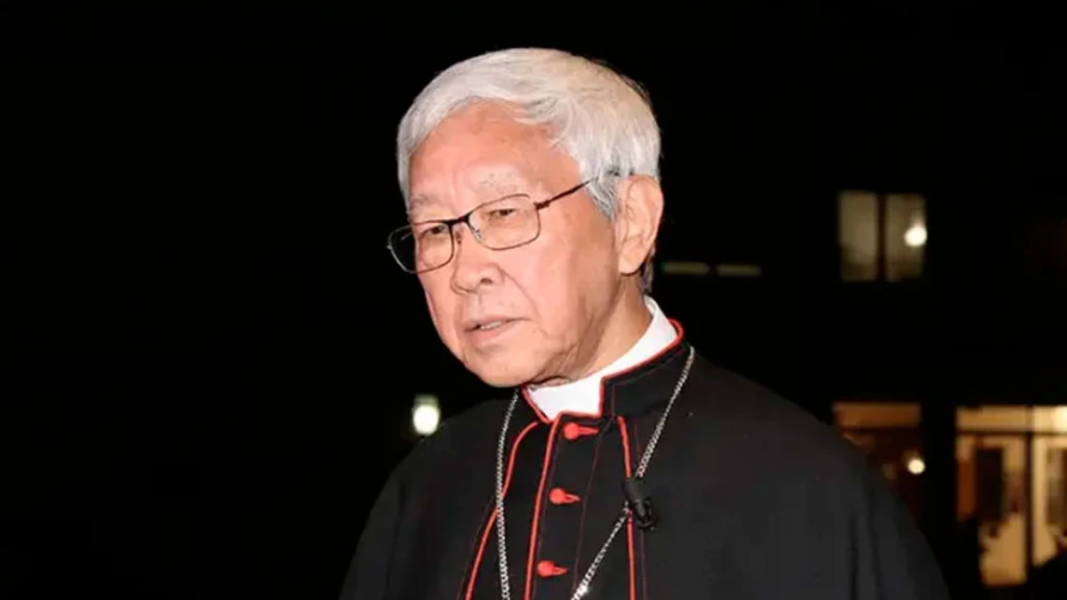
Cardinal Joseph Zen, emeritus bishop of Hong Kong and one of the most critical voices regarding the Sino-Vatican agreement, published a response to an article by Father Han Qingping about the recent retirement of Bishop Zhang Weizhu and the consecration of Bishop Li Jianlin in the diocese of Xinxiang, an event that some sectors present as a sign of improvement in relations between the Holy See and the Chinese regime.
Zen acknowledges that Father Han’s initial analysis describes a scenario that “undoubtedly should make everyone happy”, but he deeply regrets that the final part of the article includes personal attacks against those who express reservations about the process.
“Stupidity? Malice? Distorted Personality?”
In his text, Father Han stated that those who questioned the development of events, or spread rumors, would only show “stupidity,” “malice,” or a “distorted personality,” even mentioning “a certain cardinal.” Although Zen avoids drama, he acknowledges that the allusion touches him directly:
I do not admit to being a bad person or having a distorted personality, but I was certainly stupid enough to take it personally
.
The cardinal clarifies that he has not intervened in the Xinxiang case and that his concern does not arise from a desire for controversy, but from the prolonged suffering of so many faithful in mainland China.
On the Synod: “I was not talking about all synodality, but about the misguided use of the final document”
Zen accuses Father Han of using the attack to introduce another topic: the cardinal’s criticism of the synodal process. And he explains that his expression “ecclesiastical suicide” was deliberately misinterpreted.
The cardinal emphasizes that his warning did not refer to the Synod itself, but to the risk that the Conclusion Document be used as a basis for implementing an execution phase without doctrinal unification, allowing completely divergent interpretations from diocese to diocese:
The General Secretary and the Relator of the Synod admit that there will be very different interpretations, from enthusiasm to strong opposition. If each region acts according to its own reading, the Church will cease to be a unified Church
.
The comparison with the Anglican collapse
Zen warns that adopting a doctrinal pluralism like the one he describes would lead the Catholic Church toward a scenario similar to that of the Anglican Communion:
The Anglican Church has been reduced to 10% of its size, and the remaining 80% has split off, forming the Global Anglican Future Conference, which no longer accepts the Archbishop of Canterbury
.
The cardinal concludes that his concern is not personal, but ecclesial: to preserve doctrinal unity in the face of internal and external pressures that could disorient the faithful, especially in places where the Church already lives under difficult conditions, such as China.