


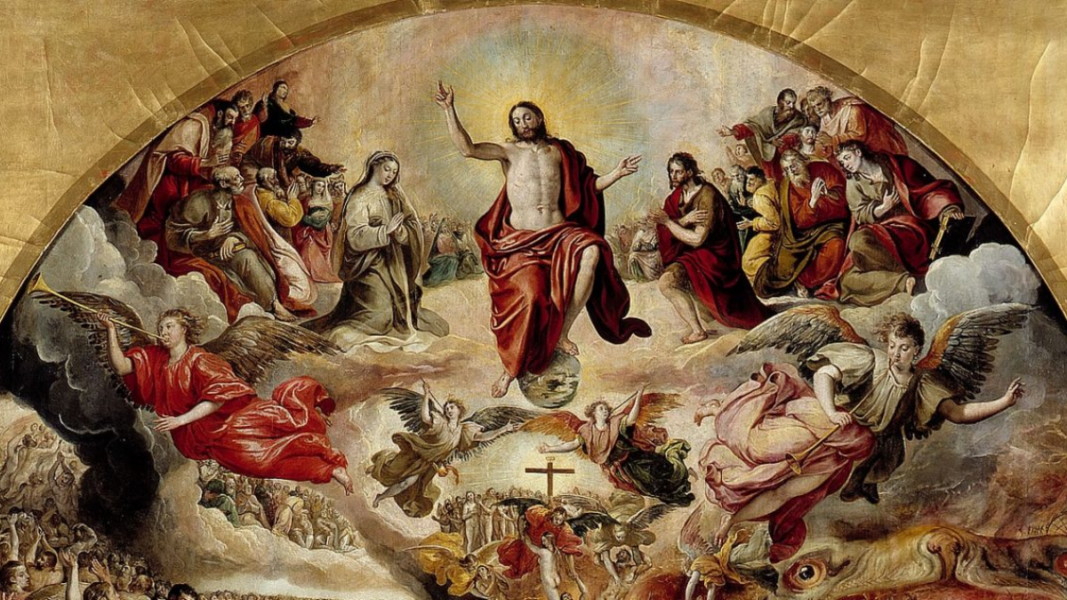
The encyclical Quas Primas, published a century ago by Pius XI, was born in a context in which Europe was emerging from the First World War devastated both materially and spiritually. Ancient empires—the Austro-Hungarian, German, Russian, Ottoman—had collapsed, leaving a power vacuum and a profound collective identity crisis. Amid the ruins of the postwar period, radical ideologies were germinating that promised a new order without reference to God: militant secularism was growing alongside Bolshevism in Russia and Fascism in Italy. These currents, though distinct from one another, coincided in marginalizing or even persecuting the influence of the Church in public life. Western civilization, rooted for centuries in Christendom, was shaken by the emergence of a new secular order that sought to eliminate the voice of faith in society.
In this turbulent scenario, Pius XI raised a firm voice. The Pope clearly saw that the social ills of that era—national hatreds, political instability, the rise of totalitarian regimes—had an ultimate cause: the removal of Jesus Christ, King of history, from the center of human and national life. With Quas Primas, signed on December 11, 1925, the Pontiff responded with a declaration of principles against those “ideological, political, and social enemies of the Church.” Instituting the feast of Christ the King meant proclaiming that Jesus Christ is sovereign not only in the private spiritual realm, but also over public life and the destinies of societies, above leaders and human systems. It was a theological and moral counterweight against emerging movements that denied God His right to reign over creation. Pius XI thus offered a remedy to postwar despair: turning humanity’s gaze to the one King who can bring true peace.
The social reign of Christ: doctrine of Quas Primas
From the first lines of Quas Primas, Pius XI links the ravages of the postwar period with the rejection of Christ’s law. He recalls that already in his first encyclical (Ubi Arcano, 1922) he had warned that the global catastrophe was due to the fact that “most men had strayed from Jesus Christ and His most holy law” in personal, family, and political life. Therefore, as long as individuals and nations deny and reject the empire of our Savior, no hope of true peace will ever shine among peoples. The central doctrine of Quas Primas is the affirmation of Christ’s universal Kingship: a reign over all persons, families, and nations. Christ has the right to govern the world not only by His divinity, but also as man, for having redeemed the human race at the price of His blood. It is a natural and conquered right: natural, because as the incarnate Word all creation belongs to Him; and conquered, because He rescued us from sin at an immense cost of love. “You were redeemed… with the precious blood of Christ” (1Pt 1:18-19) – the Pope reminds us –; “Would that all men… remember how much we cost our Savior”. Christ’s kingship, therefore, encompasses every dimension of the human, enlightening minds with truth, moving wills toward the good, and reigning in hearts through charity.
Now then, what does the social reign of Christ imply in practice? Pius XI expounds it with clear doctrine. It means above all that Christ’s law—which includes the natural law inscribed in the human heart—must be the foundation of moral and legal life. Jesus Christ is not a king among others, but the supreme Legislator; His commandments and teachings (accessible to a great extent by reason through the natural law) are the sure path to the common good. From this it follows that neither individuals nor civil authorities can dispense with God’s law without falling into disorder. The encyclical deplores that modern secularism seeks exactly that: to build society with its back turned to God. Pius XI calls it without mincing words “the plague of our times”. He explains how that plague was incubated: “It began by denying Christ’s empire over all peoples; the Church was denied the right… to teach the human race… Then… the Christian religion was equated with other false ones… It was then subjected to civil power… And it went further: there were those who imagined substituting Christ’s religion with a natural… purely human religion. There were no lack of States that believed they could do without God, and made their religion impiety and contempt for God”. This description portrays radical secularization: first relegating Christ to the private sphere, then reducing Him to an optional creed among many, then subordinating the Church to the State, and finally enthroning state atheism. The result, the Pope notes, has been disastrous: hatreds and rivalries ignited among peoples, blind egoisms, divided families, entire societies “shaken and pushed toward death” for having uprooted Christian morality at its root.
Faced with this panorama, Quas Primas proclaims the urgent need to restore the social reign of Christ as “the most effective means to restore and strengthen peace”. What does that restoration imply? It implies, in Pius XI’s words, a public and private recognition of Jesus’ sovereignty: that individuals, families, and nations “return to their duties of obedience” toward Christ. In concrete terms, the Pope expected several fruits from this public homage to Christ the King. He enumerated three areas: “for the Church –for it will remind all of the freedom and independence from civil power that belongs to it–; for civil society –which will remind that the duty to give public worship to Jesus Christ and obey Him binds both individuals and rulers–; and finally, for the faithful –who will understand that Christ must reign in their intelligence and in their will.” In other words, the Church reaffirmed in its right not to submit to the hegemony of Caesar; the civil authority aware of its duty to respect and promote Christ’s moral law (which is the natural law elevated by the Gospel) in public life; and every Christian recognizing Christ not only as a distant king of heaven, but as King of their mind, their heart, and their daily actions. Only in this way –Pius XI insists– can the deep wound of modern society be healed. The more obstinately Christ’s name is silenced in parliaments and international forums, the more forcefully Catholics must proclaim it and affirm His real rights over society.
From October to November: liturgical evolution of the feast of Christ the King
The encyclical Quas Primas not only develops doctrinal teaching; it also institutes a new liturgical feast as a pedagogical instrument for the faithful people. Pius XI was convinced of the power of the liturgy to form the minds and hearts of Catholics, especially in times of confusion. For this reason, he decided to crown the 1925 Holy Year—commemorating the peace after the Great War and the 16th centenary of the Council of Nicaea—by introducing the feast of Our Lord Jesus Christ the King. Originally, the Pope arranged for it to be celebrated on the last Sunday of October. At the end of the month the liturgical year was “almost finished”, so that “the mysteries of Christ’s life, commemorated throughout the year, end and receive their crowning in this solemnity of Christ the King”. Placing the feast before the solemnity of All Saints symbolically emphasized that Christ is the center and culmination of history: after celebrating all the events of Jesus’ life throughout the year, the faithful would acclaim His universal lordship over the entire creation.
For decades, the Church celebrated Christ the King on that last Sunday of October. However, with the liturgical reform following the Second Vatican Council, there were significant adjustments. In 1969, Pope Paul VI moved the feast to the last Sunday of Ordinary Time, that is, to the close of the liturgical year (late November), elevating it from feast to solemnity and giving it the full title of Jesus Christ, King of the Universe. This relocation enhances the eschatological character of Christ’s reign: it is celebrated immediately before beginning a new Advent, recalling that Christ, alpha and omega, will reign fully at the end of time.
A timely message amid the cultural and spiritual crisis
A hundred years later, the reasons that led Pius XI to write Quas Primas not only remain relevant, but in many aspects have worsened. The encyclical was born from a crisis of civilization, and today we are witnessing a new cultural and spiritual crisis of global proportions. If in 1925 the Pope denounced the “plague” of secularism that was incubating an atheistic society, in 2025 we see that that secularized society has flourished throughout the Western world. We see around us the bitter fruits of this silent apostasy: moral crisis, radical relativism that denies differences between good and evil, proliferation of unjust laws contrary to the natural law (from contempt for human life to the subversion of the family), violence and injustice that spring from hearts empty of God. On the international plane, wars persist and new disorders arise, while Christ is systematically expelled from public debate. Pius XI’s diagnosis in Quas Primas is fulfilled: the world’s evils derive from having removed Christ and His holy law from the daily life of nations, so that the hope of lasting peace… is impossible as long as individuals and States reject the empire of Christ the Savior.
Faced with this situation, the remedy proposed by Pius XI retains full validity: “establish the Kingdom of Christ and proclaim Him King” of all dimensions of human existence. This does not mean establishing a temporal theocracy or “imposing” religious beliefs by force—an objection typically wielded by secularists. It means, rather, working for a just social order founded on the truth about man and about God. It means remembering that above human projects stands the sovereignty of the King of kings, whose “power knows no eclipse”. No ideology, however seductive, can replace Christ without leading sooner or later to the degradation of man. For this reason the Church, faithful to its Lord, cannot cease to proclaim Him.
Long live Christ the King!
In celebrating the centenary of Quas Primas, we do so not with a nostalgic gaze at the past, but with the conviction of its perennial relevance. That cry of Pius XI –“Christ must reign”– resounds today with providential force. Our world, plunged into a crisis of nihilism and disorientation, needs Christ the King as much as (or more than) in 1925. It needs to recognize that above all passing powers rises the beneficent power of Him who is Truth itself and Love incarnate. Only under the sweet yoke of this King will true freedom be found; only in His “kingdom of justice, love, and peace”. will nations in conflict and troubled hearts find rest.
The Church, for its part, must resume with renewed energy the proclamation of Christ’s lordship. Not to conquer earthly thrones, but to save souls and regenerate society according to God’s plan. Christ does not aspire to a crown made by human hands—He already wore one of thorns—but to reign in minds and wills to transform them from within. But how will peoples believe if no one preaches to them? The time has come to shake off drowsiness and shame: “the more the sweetest name of our Redeemer is oppressed with unworthy silence…, the louder it must be shouted” –Pius XI exhorted. That exhortation stands. Today it is necessary for bishops, priests, and laity—each in their sphere—to give public witness to Christ’s sovereignty.