


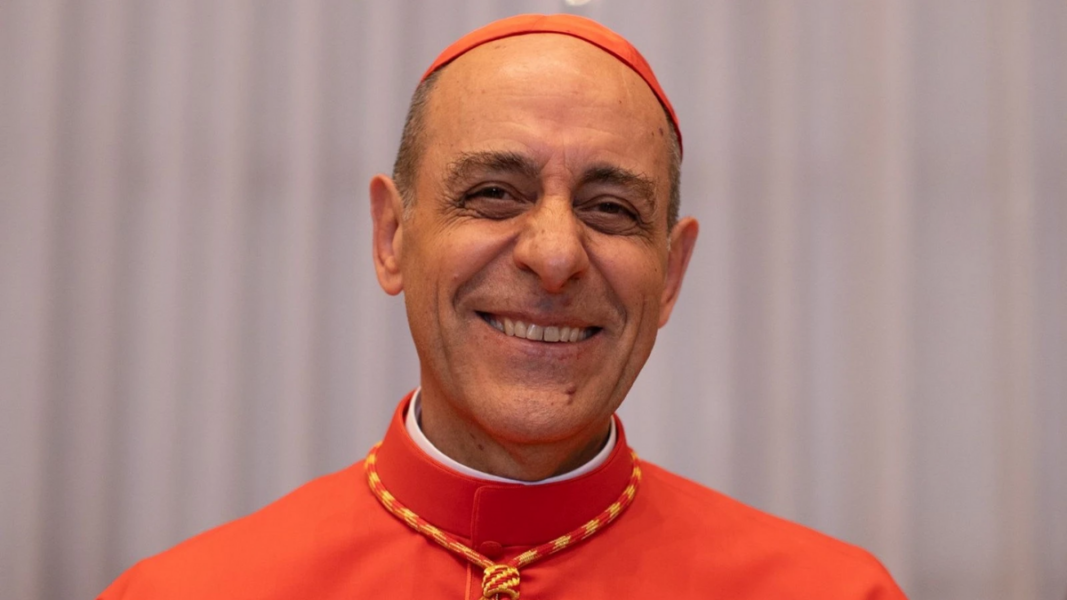
In a recent publication from El Wanderer, it reveals texts that had gone unnoticed until now with erotic content written by Cardinal Víctor Manuel Fernández—current prefect of the Dicastery for the Doctrine of the Faith—, the well-known «Tucho.» The material confirms that the cardinal’s inclination to draft this type of content was not an isolated episode of youth, but a constant in his written production over the years.
The document maintains that these new fragments “demonstrate that Tucho’s pornographic zeal did not stop at the two books known to all” (Sáname con tu boca. El arte de besar, Lumen, Buenos Aires, 1995, and La pasión mística. Espiritualidad y sensualidad, Dabar, México, 1998), but extended to other texts published subsequently. El Wanderer reproduces literal passages from books edited between 2002 and 2009, all attributed to Cardinal Fernández.
In ¿Por qué no termino de sanarme? (San Pablo Colombia, 2002), this paragraph stands out (p.10):
«A body can impact if it wears the right clothing, clothing that awakens sensuality by accentuating interesting shapes, according to the body it is. The sensuality of tanned shoulders and arms is accentuated with a t-shirt. Elegance is highlighted, disguising fatness with a black vest and white sleeves. A bare neck is more sensual by placing a chain on it; etc. If this is added to a dose of imagination from the viewer, and in a moment of dissatisfaction, when they need to fantasize or enjoy something, then a body can appear as something impressive, wonderful, indispensable. But then, with routine, and discovering other different bodies, it is discovered that that mass of flesh was nothing out of this world, that it has imperfections, lacks, and pains like all bodies, that it deteriorates and loses charm with the passage of time.»
In Teología espiritual encarnada (San Pablo Argentina, 2005), El Wanderer quotes a passage where an exercise of “scanning the entire body” is described with attention to each organ:
«It consists of scanning the entire body, paying full attention to one organ at a time. It is very important to note that this is not about ‘thinking’ about that organ, imagining it or visualizing it. It is more precisely about ‘feeling’ it, perceiving it with sensitivity. It is experiencing the sensations of each organ calmly, without judging whether those sensations are good or bad, but trying to make that organ relax, loosen up. It is advisable to do it more or less in this order: jaw, cheekbones, throat, nose, eyes, forehead (and all the small muscles of the face that we can perceive), scalp, neck and nape, shoulders. Continue with the right arm, the right wrist and hand; the left arm, the left wrist and hand. Then scan the back. Follow: chest, stomach, waist, hips, pelvis, buttocks, genitals, right leg, left leg, right foot, left foot. The key is to linger without haste in one place at a time, without the imagination being on another organ or another idea; until we feel that in the whole body there is the same tone. There is no hurry at all.»
and in Para liberarte de la ansiedad y de la impaciencia (San Pablo Argentina, 2009), the following textual statement is included:
«It is not necessarily a physical stillness, because this experience can also occur in the midst of the enthusiasm of a very intense activity. This happens, for example, in an orgasm between two people who love each other.»
The content revealed by El Wanderer does not add external elements: it is based exclusively on textual quotes taken from works published by Fernández himself.
The way Tucho Fernández addresses certain topics related to sexuality is disconcerting not because of the content itself, but because of the expressive register he employs. His style, sometimes excessively graphic and close to the sensory, introduces descriptions that seem more appropriate to intimate literature than to a pastoral or theological text. This use of bodily enumerations—where intimate parts appear mentioned on the same level as neutral elements like hands or feet—generates a sense of strangeness that disorients the reader and weakens the doctrinal or formative purpose that it supposedly intends.
Furthermore, the recourse to suggestive images or comparisons of improper tone for an ecclesial context can be perceived as a stylistic eccentricity that is difficult to justify. Far from providing clarity, these formulations introduce an almost morbid nuance that obscures the message and projects an impression of frivolity regarding issues that require prudence, rigor, and a certain conceptual distance. The result is a discourse that not only loses authority, but provokes rejection even among readers accustomed to a modern approach to moral theology, precisely because the expressive choice seems more gratuitous than pedagogical.
The gravity pointed out by the publication derives precisely from the fact that these texts do not correspond to unpublished youthful writings, but to books edited when the author was already a priest, with a Catholic press and circulation in pastoral circles.
The texts with this unpleasant content written by «Tucho,» added to the deep doctrinal and pastoral wounds he has left in the Church with documents like Fiducia supplicans and Mater Populis Fidelis, forces a conclusion that no longer admits evasions: Leo XIV must consider Fernández’s permanence at the head of the Dicastery for the Doctrine of the Faith.
This is not about rumors, nor malicious interpretations, nor evidence sought with a magnifying glass: they are his own words, printed in books published by himself, and they are also the bitter fruits of these years, visible in doctrinal confusion, in the erosion of sacramental discipline, and in the dismay of the faithful. The Church cannot continue to bear that the one in charge of safeguarding the faith is, at the same time, a source of scandal and division.