


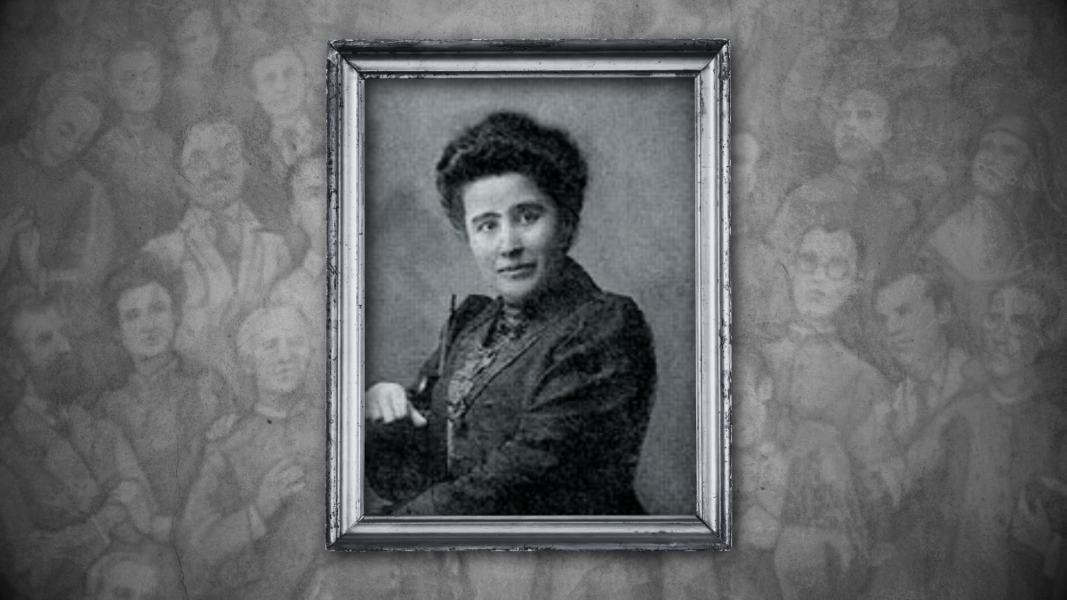
Teresa Basulto Jiménez, a 64-year-old laywoman, was murdered on August 12, 1936, in the massacre known as the “Death Train” of Jaén. Sister of the then Bishop of Jaén, Mons. Manuel Basulto, Teresa shared his captivity and finally his martyrdom, becoming a symbol of Christian feminine courage. She was the only woman among the 245 prisoners transferred in that railway convoy to Madrid, which ended up being intercepted by radicalized Republican militias.
Teresa came from a deeply Catholic family. She had accompanied her brother the bishop in Jaén, assisting in pastoral and charitable tasks of the diocese. When the Civil War broke out, Monsignor Basulto was one of the first targets of the militiamen after the failure of the uprising in the city. On August 11, 1936, the prelate was arrested in the episcopal palace along with his close relatives—including Teresa and her husband, Mariano Martín—to be “transferred” to Madridhagiopedia.blogspot.com. In reality, that transfer was a deadly trap: they were forced to board a special train full of political and religious detainees. Teresa, faithful to the motto of not leaving her brother alone, boarded the train with him, even intuiting the danger that awaited them.
In the early morning of August 12, when the train arrived near Madrid (Villaverde station), a crowd of armed militiamen assaulted the convoy with the intention of lynching the prisoners. After disarming the escort, they began to execute the detainees en masse, taking them out in groups and shooting them without mercy. In the midst of that bloody chaos, Bishop Basulto knelt praying aloud: “Lord, forgive my sins and forgive my assassins too”. By his side, Teresa watched the scene in horror. At one point, she could not contain her indignation and exclaimed loudly addressing the attackers: “This is an infamy! I am a poor mother!”. With those words—probably referring to the fact that she, an older and pious woman, had nothing to do with the war—Teresa Basulto challenged the barbarity spontaneously.
The militiamen’s response was immediate and cruel. “Don’t worry, a woman will kill you,” one of the present leaders replied sarcastically. Immediately after, a militiaman nicknamed “La Pecosa” stepped forward and shot her at point-blank range, killing her on the spot. Thus, separated from the others, the only woman in that expedition died, victim of the cruelty especially directed against her feminine condition and her bond with the bishop. After her execution, the massacre continued with dozens more prisoners, until a young militiaman managed to stop it in extremis when only about 40 survivors remained. Teresa, however, had already given her soul to God, literally defending her honor and her faith before the executioners.
The death of Teresa Basulto Jiménez shook the Catholic community of Jaén. Her brother, the bishop, was also shot moments before her, and both go down in history as martyrs of that infamous “Vallecas night.” Mons. Basulto was beatified years earlier (in 2013), and now the Church, in an act of divine justice, will raise Teresa to the altars as well. Her figure represents so many laypeople—especially women and mothers—who suffered and died for the faith in that period. Teresa had no greater “guilt” than loving God and her family, and for that she gave her life forgiving. Her beatification in December 2025 officially recognizes her martyrdom in odium fidei, offering the faithful the example of a strong and loyal woman, who with evangelical simplicity faced evil. Teresa Basulto Jiménez leaves a legacy of serene courage and fraternal love: she did not abandon her pastoral brother in the dark hour, shared his calvary, and achieved with him the victory of faith over death.