


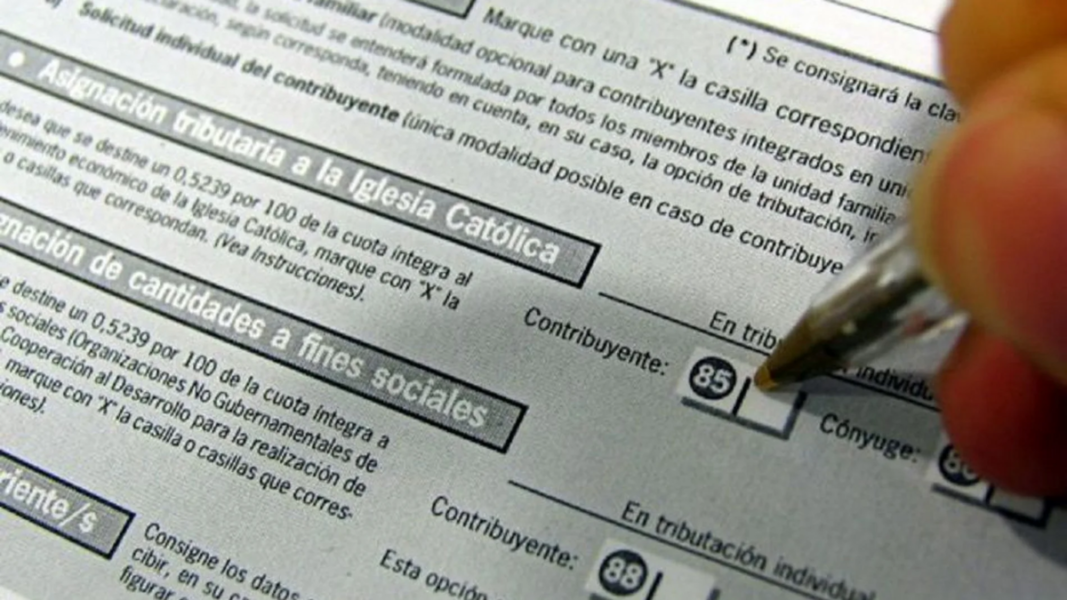
According to the data published on December 10, 2025, the total number of declarations in favor of the Catholic Church has been 7,946,347, which represents an increase of 106,363 declarations compared to 2023. The Spanish Episcopal Conference (CEE) also confirms that the 208,841 new declarations from the previous year have been maintained and that new declarants have been obtained this year.
The assigned amount amounts to 429,335,080 euros, with an increase of 46,897,081 euros compared to the previous year, which represents a 12% growth. This rise consolidates the positive trend of recent years and confirms that, in absolute terms, the citizen response to the church financing model remains solid.
However, the percentage of assignees decreases by 0.34%. The cause, according to the CEE itself, is the increase in declarations that do not mark any box, which this year grow by 1.09% and already reach almost 40% of the total. Parallely, the social purposes box records a decrease of 1.04%.
Adding individual and joint declarations, there are more than 9 million Spaniards who have marked the X in favor of the Catholic Church.
Migration, Religious Pluralism, and Sociological Evolution
The slight percentage drop does not reflect a substantial loss of support, but a phenomenon associated with Spain’s demographic transformation. The notable population increase in recent years—especially through migration—incorporates hundreds of thousands of new taxpayers who belong to different confessions: non-Catholic Christians, evangelicals of Lutheran tradition, Muslims, or citizens without religious affiliation. Most of them do not mark the Church’s box, which dilutes the percentage without reducing the Catholic support base.
This context reflects the effect of migration in Spain that is alien to its Catholic principles. Where Catholicism maintains a presence but is no longer proportionally dominant as it was decades ago.
Political Dependence or Citizen Support?
The tax assignment system opens the debate on the relationship between the Church and the State. A Church dependent on abortive, eugenic, homosexualist, and anti-family governments, subjected through financing, is a Church where the coffers are not lacking, but where the freedom to communicate its message forcefully is conditioned. The CEE’s attitude toward the destruction of the Valley of the Fallen—marked by silences, excessive prudences, and non-transparent agreements—is an example of the reduced margin of maneuver that accompanies this structural dependence.
In a country that is changing rapidly, the continuity of citizen support for the church financing model is a relevant fact. It speaks of a social commitment that persists even in an increasingly secularized cultural context but also sacrifices the freedom of action of a Church that is increasingly conditioned by a secularist State.