


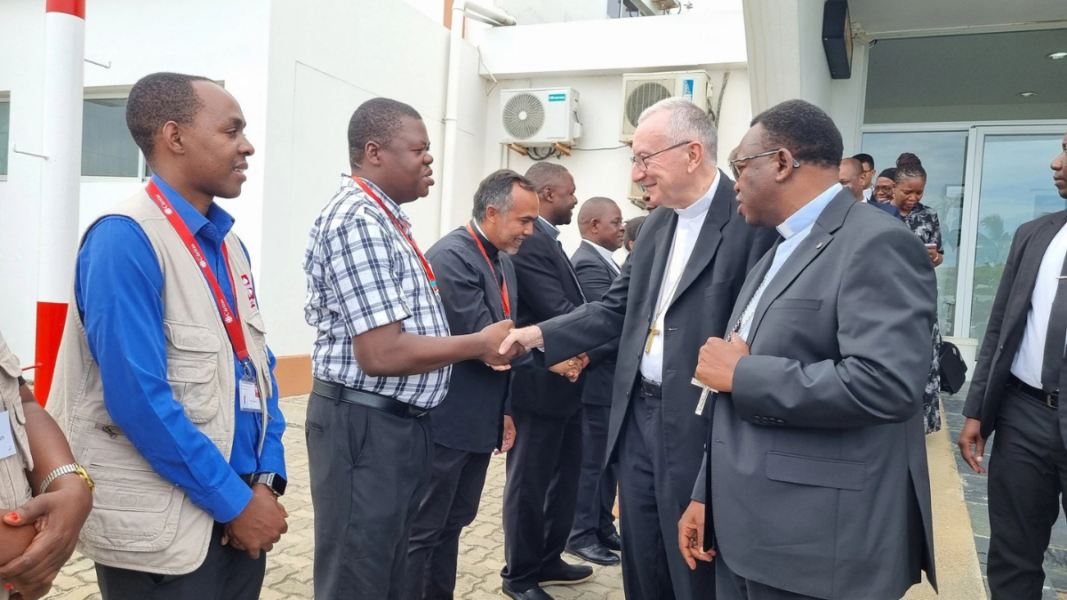
The Vatican Secretary of State, Cardinal Pietro Parolin, has traveled to Mozambique to visit the province of Cabo Delgado, a territory marked by a violent Islamist insurgency that since 2017 has left thousands dead, destroyed communities, and more than half a million displaced. The visit between December 8 and 10 seeks to bring consolation and international visibility to a region where Catholics live under constant threat.
Read also: Parolin on visit to Mozambique: will he continue denying religious persecution in Africa?
A province devastated by extremism and abandonment
Mozambique, a country with a Christian majority and a historical coexistence with Islam, has been suffering from serious political and social tensions for years. In the north, extreme poverty and instability have favored the expansion of a local jihadist movement known as Ansar al-Sunna, responsible for indiscriminate attacks, decapitations, kidnappings, sexual slavery, and the burning of churches, villages, and also mosques.
Cabo Delgado, with nearly three million inhabitants, bears the brunt of this violence. In addition, Cyclone Chido in 2024 worsened the destruction. The Bishop of Pemba, António Juliasse, has repeatedly warned that his people are being forgotten by the international community.
The objective of the visit: to show that the Church does not forget the persecuted
In the mass celebrated on December 8 in Pemba, Parolin conveyed a clear message: “The Holy Father does not forget Cabo Delgado”. The cardinal assured that the entire Church prays for peace and reconciliation in this region struck by terrorism.
During his stay, he met with local civil authorities, pastoral agents, and on December 9 he met with internally displaced persons and participated in an interreligious meeting.
The visit is part of a broader trip that began on December 5, on the occasion of the 30th anniversary of diplomatic relations between Mozambique and the Holy See, which included meetings with President Daniel Chapo, political leaders, and the country’s episcopal conference.
A necessary but insufficient gesture in the face of a worsening crisis
The presence of Cardinal Parolin has been received as a stimulus for the Catholics of Cabo Delgado, who are not accustomed to receiving high-ranking figures due to the level of danger that the province represents, included in international travel warnings for terrorism.
However, the context remains bleak. The 2025 report from Aid to the Church in Need highlights a significant worsening of religious freedom in Mozambique, with systematic attacks against churches, Christian symbols, and entire communities. The combination of jihadist advances, political instability, and weakened state authority creates a scenario in which fundamental rights are gravely compromised.
The Vatican’s limited role in the face of an international crisis
According to The Pillar, the Holy See is aware that its possibilities to directly influence the situation are very limited. It can offer moral accompaniment, raise awareness of the tragedy in international forums such as the UN, and continue exhorting the international community not to turn a blind eye to this forgotten region.