


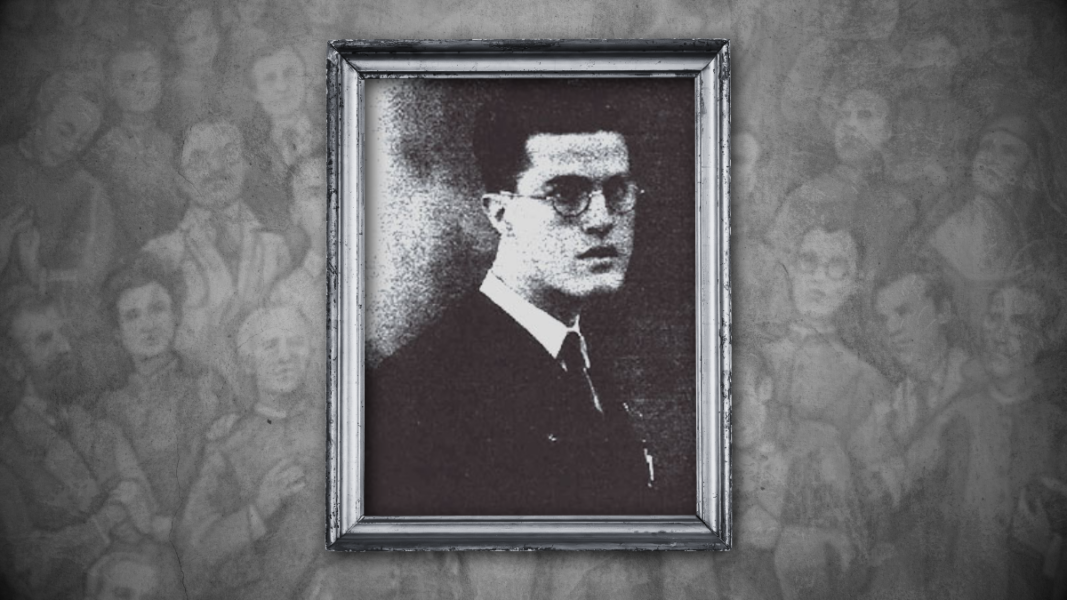
Bernardo Ruiz Cano, a 27-year-old layman, worked as a journalist and poet committed to the Catholic faith until his tragic death on September 24, 1936. Born in Jaén in 1909, he stood out in the 1930s for his brilliant oratory and combative pen in service of the Gospel. He was director of El Pueblo Católico (apologetic magazine) and later of the newspaper El Día de Jaén, from whose editorials he defended Christian principles without concessions against the prevailing secularism. A convinced Carlist and traditionalist intellectual, Bernardo raised his voice for the freedom of the Church and the Kingship of Christ in times of persecution.
As a member of the Traditionalist Communion, Ruiz Cano participated in gatherings and cultural circles where Catholic resistance to radical secularism was forged. He firmly believed that faith should permeate public life, and he proclaimed this in his articles and conferences. That courage marked him out to the revolutionaries when the civil war broke out. After the July 1936 uprising, Jaén fell into the hands of militia committees that unleashed harsh anti-Catholic repression: temples razed, archives burned, clergy and laity murdered by the hundreds. Bernardo was a clear target: practicing Catholic, public figure in the press, and Carlist militant.
At the beginning of September 1936, he was arrested at his home by armed militiamen. He suffered violent interrogations in which he was demanded to renounce his religious and political convictions. Bernardo refused to sign an apostasy, remaining serene and in prayer despite the blows received. His firmness enraged his captors. Finally, on September 24, along with other prisoners, he was taken to a ditch on the outskirts of Iznalloz (Granada) and shot without prior trial. He was only 27 years old. His last words are unknown, but later witnesses reported that he faced death with the same fortitude with which he had lived, forgiving his assassins and perhaps exclaiming “¡Viva Cristo Rey!”, the cry of the martyrs of that time.
The Holy See has officially recognized that Bernardo Ruiz Cano died in odium fidei, that is, murdered out of hatred for the faith. His upcoming beatification, along with that of 123 other martyrs from Jaén, represents a milestone for the local Church. In his figure, the sacrifice of so many laypeople who offered their lives for Christ without taking up arms or sowing hatred is vindicated. For the field of Catholic journalism, Bernardo also becomes a special patron and inspiration: a communicator who did not seek comfort or worldly fame, but the truth of the Gospel above all. Infovaticana, a medium to which he himself could have belonged due to ideals, sees in Bernardo Ruiz Cano the model of the faithful journalist who, in a hostile context, defended the faith with the pen and the word, even to the point of giving his life. His legacy challenges communicators today to proclaim the truth with courage and charity, without fear of the consequences.