


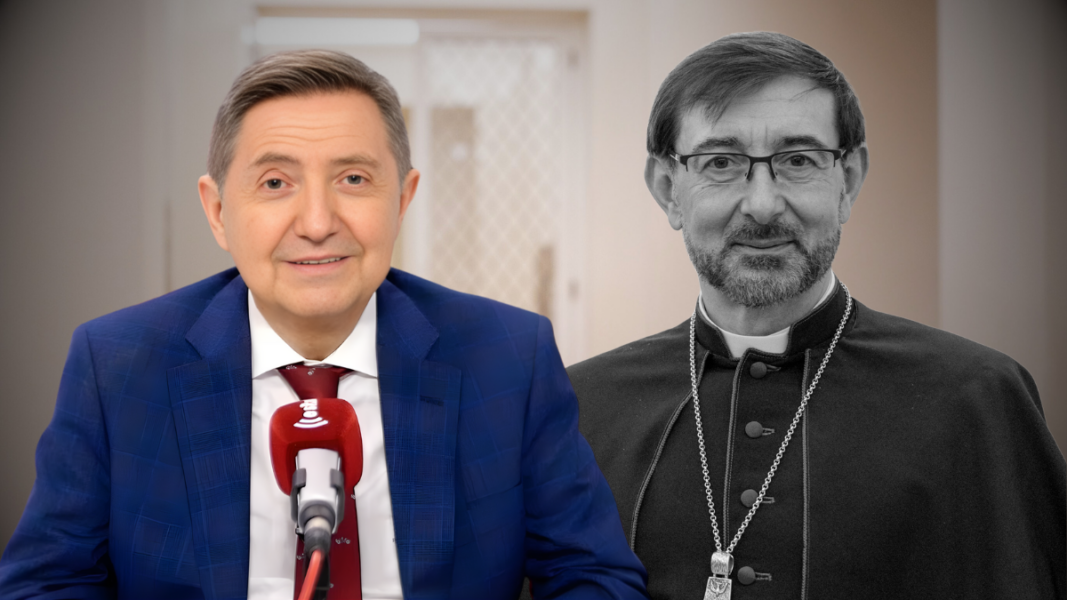
In his program on November 20, Federico Jiménez Losantos dropped a phrase that, in any minimally healthy era of the Church, would have unleashed a scandal of seismic proportions: “There’s someone who has his boyfriend involved in all kinds of messes too… I’m referring to Cobo, the bishop of Madrid”
I won’t go into—because I can’t, nor should I—whether what Federico said is true, false, rumor, slander, or radio exaggeration. That’s not the news. The news is that a broadcaster with hundreds of thousands of listeners can claim on air that the archbishop of Spain’s capital “has a boyfriend”… and the social, ecclesial, and media reaction is practically zero.
No raised eyebrows, no indignant denials, no corporate defense, no minimal institutional tremor.
And that, precisely that, is what should freeze our blood.
The serious thing is not what is said, but that it no longer scandalizes
We have entered an unusual ecclesial stage: the public image of the episcopate has become so eroded, so associated with “clerical faggotry”—a harsh word, but realistic—, that publicly imputing to an archbishop sentimental relationships improper for the clerical state no longer provokes stupefaction, but a yawn.
This is not about outdated moralisms. It’s about the breaking of the symbolic bond between the bishop and what the Church says he represents.
If a society hears that an archbishop has a boyfriend and digests it without surprise, it means the sign no longer means anything. And that is the real collapse.
The episcopate has reached a point where the exceptional has become normal
It was raining on wet ground.
In recent years, sexual scandals, doctrinal inconsistencies, moral lukewarmness, and administrative obsession have shaped a landscape where permanent suspicion has been normalized.
Thus, when someone says something so serious, instead of responding with “how dare you?”, the collective response is “well, it wouldn’t be that unusual either…”.
The loss is not only reputational: it’s catechetical. When the anomalous stops surprising, the moral sense atrophies. And there is no greater scandal than losing the capacity to be scandalized.
And now what?
That a broadcaster said what Federico said is news not because of him, but because of what it reveals about the state of our Church: an institution so violated that it can receive a direct missile to the waterline of episcopal credibility… without any alarm sounding.
No one is calling for anyone’s media crucifixion.
No veracity is being given to an accusation we cannot verify.
What is being pointed out is the silence, the apathy, the resigned acceptance that “these things happen”.
In a healthy body, such an insinuation would cause an immediate reaction.
In an anesthetized body, it doesn’t even flinch.
And a Church that stops reacting to what threatens its witness stops being a sign and becomes a backdrop.
That is the real problem.
And that should indeed keep us up at night.