


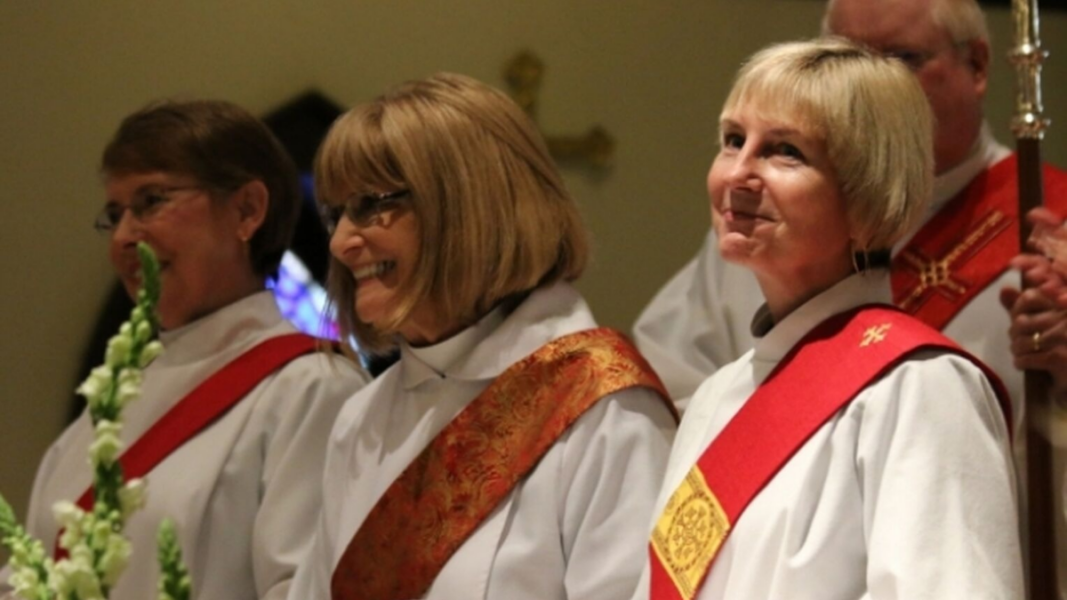
The president of the Commission for the Study of the Female Diaconate, Cardinal Giuseppe Petrocchi, sent to Pope Leo XIV a comprehensive synthesis of the work carried out by the various commissions created to study the possibility of admitting women to the diaconate. The report, dated September 18, 2025, confirms that there is no theological, historical, or pastoral consensus that allows justifying the diaconal ordination of women and emphasizes that the Tradition of the Church remains essentially opposed to this possibility.
Historical Conclusions: a Female “Diaconate” without Sacramental Character
Petrocchi recalls that, according to the historical studies reviewed by the Commissions, in the ancient Church there were women called “deaconesses,” but they did not exercise a ministry equivalent to the male diaconate, nor did it have a sacramental character or lie in the line of apostolic succession. The joint analysis of the sources shows that it was a ministry sui generis, arising in cultural contexts with strong separation between men and women.
The cardinal points out that history, by itself, cannot resolve the debate, since the issue must be decided on the doctrinal level, as Benedict XVI recalled.
Internal Votes: Unanimity on Doctrinal Doubts and Division on Ordination
The document details the results of the votes from the first two sessions (2021 and 2022). All the commissions agreed in affirming that there are serious doctrinal questions about the compatibility of the female diaconate with the theology of the sacrament of Holy Orders. Likewise, there was unanimous agreement in exploring new lay ministries to recognize women’s service without altering the sacrament of Holy Orders.
However, the positions on the possibility of instituting a female diaconate as the third degree of Holy Orders were divided: some members rejected it; others considered that, for now, the theological conditions are not met; and a minority group showed itself favorable.
In 2022, the Commission approved by a large majority a thesis that holds that, according to Scripture, Tradition, and the Magisterium, it is not possible to admit women to the sacramental diaconate, although a judgment as definitive as in the case of the priesthood cannot be issued.
External Contributions and Lack of Consensus in the Synod
In the last session (2025), the members examined abundant documentation sent after the synodal phase. Although the material is extensive, it only comes from 22 senders and, therefore, does not represent the People of God. The Synod itself showed deep disagreement: the proposition to study the female diaconate was the most rejected, with 97 votes against.
Petrocchi warns that many arguments in favor of the female diaconate are based on currents of rupturist theological anthropology, which are in tension with Catholic and Orthodox Tradition. In some cases, the requests even demanded the opening of the presbyterate and the episcopate to women.
A Divided Discussion: Two Irreconcilable Theological Approaches
The cardinal identifies two opposing lines within the debate: one that emphasizes that the diaconate is “ad ministerium,” and another that affirms the unity of Holy Orders and its spousal meaning. A thesis that affirms the masculinity of Christ as essential to sacramental identity generated an exact division: five votes in favor and five against.
Doctrinal Prudence and Greater Female Participation through Lay Ministries
In the face of the lack of doctrinal clarity and the dispersion of criteria, Petrocchi recommends maintaining a prudent stance and continuing to deepen the sacramental identity of the diaconate. The commissions agree on the need to expand spaces for female co-responsibility in the Church through new instituted ministries, recognizing the “baptismal diakonia” and the Marian dimension as the foundation of all ecclesial service.