


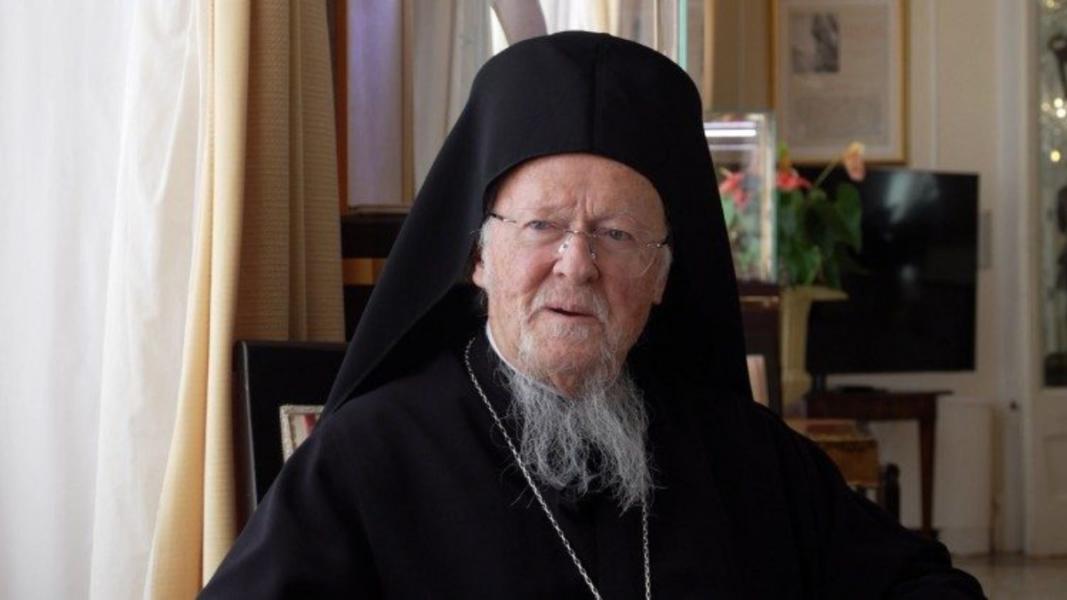
The presence of Pope Leo XIV at the Divine Liturgy celebrated alongside Ecumenical Patriarch Bartholomew I publicly reaffirmed Rome’s commitment to Christian unity, in a context marked by geopolitical tensions both in the East and in the West. The gesture evidenced the willingness to maintain a channel of dialogue between the two great Christian traditions.
During his homily, Patriarch Bartholomew emphasized the “spiritual unity” between both Churches, pointing to the Apostles Peter and Andrew as the apostolic foundations of Rome and Constantinople. However, he acknowledged the serious theological obstacles that continue to block full communion.
Bartholomew identified the filioque and papal infallibility as “obstacles” that must be resolved to advance unity. The filioque expresses the Western doctrine that the Holy Spirit proceeds from the Father and from the Son, while infallibility refers to the Catholic dogma that preserves the Pope from error when solemnly defining a doctrine of faith or morals.
Before a packed cathedral, Pope Leo XIV described the last six decades of dialogue as “a path of reconciliation, peace, and growing communion,” recalling that unity remains “a priority of my ministry as Bishop of Rome.”
After the liturgy, the Pope and the Patriarch blessed the faithful from the balcony, accompanied by Patriarch Theodore II of Alexandria. Bartholomew was at Leo XIV’s side for most of the events, including the meeting with President Erdoğan, the commemorations in Nicaea, and the Mass with Turkey’s Catholic communities.
The mutual lifting of the anathemas in 1965 opened the stage of dialogue that continues today under the International Joint Commission. Although the process has slowed due to internal divisions within Orthodoxy, both leaders reaffirmed their determination to sustain it.
Nevertheless, as The Catholic Herald notes, the patriarch’s homily introduced a clear expectation: that Rome be the party making the necessary doctrinal concessions to restore communion. By presenting the filioque and infallibility as the main obstacles, Bartholomew projected the responsibility for the schism onto the Catholic Church.
Although the Holy See has shown some liturgical openness regarding the filioque, papal infallibility—solemnly defined at the First Vatican Council—is non-negotiable. It cannot be reinterpreted as a cultural variant nor diluted without affecting Catholic ecclesiology at its core.
The patriarch warned that unity must not become “absorption or domination,” reflecting Orthodox concern over a doctrinal universalism that could dilute the identity of their local Churches.
The decisive question remains whether Catholic–Orthodox dialogue can advance without requiring one party to renounce doctrines it defines as essential to its apostolic identity. Christian unity cannot be built on the renunciation of truths defined by ecumenical councils. Closeness opens doors; doctrine remains the key.
We leave below the full words of Bartholomew I pronounced in the Divine Liturgy on November 30, 2025:
Your Holiness, Beloved Brother in Christ, Pope Leo:
With feelings of sincere joy and thanksgiving, we welcome you once again today to this sacred center of Orthodoxy, just as Ecumenical Patriarch Athenagoras received Pope Paul VI, as Ecumenical Patriarch Demetrios received Pope John Paul II, and as our Modesty welcomed Your illustrious predecessors Benedict XVI and Francis. Today, we receive You in turn in the venerable Patriarchal Church of Saint George, where we celebrate the Divine Liturgy on the occasion of the feast of the holy Apostle Andrew, the First-Called; during which we heard the Gospel reading that recalls the vocation of the two brothers Andrew and Peter, the first apostles of our Lord and Savior Jesus Christ.
As the holy Apostle and Evangelist John the Theologian relates, Andrew was one of the two disciples of Saint John the Forerunner who pointed out Jesus Christ to them, saying: “Behold the Lamb of God!”. Andrew not only followed Him immediately, but also found his brother Simon, telling him: “We have found the Messiah,” and brought him to the Lord, who declared: “Are you Simon? You will be called Cephas-Peter” (Jn 1:35-42). Thus, through this call, the two brothers left their nets on the shores of the Sea of Galilee to become fishers of men, casting the nets of the Church through the preaching of the Good News of salvation to the ends of the earth.
On this solemn jubilee day, we are gathered not only by the memory of the First-Called of the Apostles, but also by the presence among us of the precious and holy relics of the two brother apostles, which were generously offered to us by their predecessors. Moreover, we cannot ignore that the icon of the kiss of the saints Peter and Andrew has become, for more than half a century, the symbol of our shared pilgrimage toward Christian unity, constantly reminding the world that “we have found the Messiah.”
As successors of the two holy apostles, the founders of our respective Churches, we feel united by bonds of spiritual brotherhood, which oblige us to work diligently to proclaim the message of salvation to the world. Your blessed visit today, just like the exchange of delegations from our Churches on the occasion of our respective patronal feasts, cannot be reduced to acts of mere protocol, but on the contrary, express in a very concrete and personal way our deep commitment to the search for Christian unity and our sincere aspiration for the restoration of full ecclesial communion.
This was made possible 60 years ago through the lifting of the anathemas of the year 1054 between Rome and Constantinople, on December 7, 1965. In the respective Joint Declaration, Pope Paul VI and Ecumenical Patriarch Athenagoras proclaimed their common conviction that they were “responding to the call of divine grace, which today is leading the Roman Catholic Church and the Orthodox Church, as well as all Christians, to overcome their differences to be again ‘one,’ as the Lord Jesus asked His Father for them” (Joint Declaration, 1).
Thus, this historic event, after the “winter” of divisions, can rightly be called a “spring” spiritual for our Churches, inaugurating a new chapter in our mutual relations, seeking once again to overcome our past differences. As it was affirmed then: “by the action of the Holy Spirit those differences will be overcome through the purification of hearts, through repentance for historical errors, and through a firm determination to arrive at a common understanding and expression of the faith of the Apostles and its demands” (Joint Declaration, 5).
Fidelity to the apostolic faith is precisely the meaning of the celebration this year of the 1700th anniversary of the First Ecumenical Council of Nicaea, with which your visit also coincides. Therefore, it is in this spirit that our joint pilgrimage the day before yesterday to this historic site of Christendom, together with Your Beatitude the Pope and Patriarch Theodore of Alexandria and the official representatives of Your Beats the Patriarchs John of Antioch and Theophilus of Jerusalem, with whom we concelebrate the Divine Liturgy today, cannot in any way be reduced to an interest in a past event. The Creed promulgated by the Council of Nicaea proves to be a confession of faith that transcends space and time, reaffirming the faith of the Church received from the Apostles. “There is one Body and one Spirit, just as you were called to one hope in your vocation; one Lord, one faith, one baptism; one God and Father of all, who is over all and acts through all and is in all” (Eph 4:4-6), as is the motto of your Apostolic Journey.
Divinely inspired by the action of the Holy Spirit, the First Ecumenical Council of Nicaea strengthened ecclesial unity. As one of the protagonists of the Council, Saint Athanasius of Alexandria, attests in his letter to the bishops of Africa, the Council of Nicaea was convened by Emperor Constantine primarily to resolve the division caused within the Church by the Arian heresy and to decide on a common date for the annual celebration of Pascha, the resurrection of our Lord Jesus Christ, the foundation of our faith (PG 26, 1032CD). Indeed, “if Christ has not been raised, our preaching is useless and so is your faith” (1 Cor 15:14). And the First Ecumenical Council remains the foundation in our search for Christian unity today. Its Creed, its canons, and its decisions, especially the one regarding the establishment of common criteria for calculating a common date for Pascha, constitute the heritage of all Christendom, and it is only by delving deeper into this rich heritage that divided Christians will draw closer to one another and achieve the long-desired unity.
As the Holy and Great Council of the Orthodox Church reminded us (Crete, June 2016), “the responsibility of the Orthodox Church for unity, as well as its ecumenical mission, were articulated by the Ecumenical Councils. These especially emphasized the indissoluble bond between true faith and sacramental communion” (Relations of the Orthodox Church with the Rest of the Christian World, 3). It also emphasized that faith in the Triune God, Father, Son, and Holy Spirit, and in the one Lord Jesus Christ as God and Savior according to the Scriptures and the Niceno-Constantinopolitan Creed, is the essential criterion for the Orthodox Church’s commitment to the Ecumenical Movement, its membership in the World Council of Churches and the Conference of European Churches, as well as its participation in bilateral and multilateral theological dialogues (cf. ibid., 19).
In celebrating these blessed anniversaries, we rejoice that the lifting of the anathemas, which inaugurated a dialogue of love, has led to the dialogue of truth carried out mainly by the International Joint Commission for theological dialogue between our two sister Churches, established by our predecessors Pope John Paul II and Ecumenical Patriarch Demetrios. The work accomplished over the last 45 years, which began by examining what we share in common, has cultivated a spirit of brotherhood and developed mutual trust and understanding, and allows our Churches, at this critical moment in history, to address the thorny issues of the past to overcome them and guide us toward the restoration of full communion.
It is notable that the reflection on synodality and primacy undertaken in recent years within the Commission has proven to be a source of inspiration and renewal not only for our sister Churches, but also for the rest of the Christian world. We can only pray that issues such as the “filioque” and infallibility, which the Commission is currently examining, be resolved in such a way that their understanding no longer serves as obstacles to the communion of our Churches.
In the end, Christian unity is not a luxury. It is the supreme prayer of our Lord Jesus Christ: “that…they may all be one” (Jn 17:21), and also the essential condition for the mission of the Church. Christian unity is an imperative, especially in our tumultuous times, when the world is fractured by wars, violence, and all kinds of discrimination, while being devastated by the desire for domination, the pursuit of profit, and the unbridled exploitation of natural resources.
In the face of so much suffering, all creation, which “groans” (Rom 8:22), awaits a unified message of hope from Christians that unequivocally condemns war and violence, defends human dignity, and respects and cares for God’s creation. We cannot be complicit in the blood shed in Ukraine and other parts of the world, nor remain silent before the exodus of Christians from the cradle of Christendom, nor be indifferent to the injustices suffered by the “least of the brethren” of our Lord (Mt 25:31-46). We cannot ignore the problems of pollution, waste, and climate change. We must act as peacemakers (Mt 5:9), show ourselves as those who hunger and thirst for justice (Mt 5:6), and we must behave as good stewards of creation (Gen 1:26).
Your Holiness:
With these humble thoughts, we wish to express our fervent gratitude for Your visit to our City and to our Church, and for Your participation in these solemn festivities. May our holy and great founders and patrons—the saints, glorious, and most worthy apostles Andrew the First-Called and Peter the Coryphaeus—intercede for all of us before Him whom they served and faithfully preached “to the ends of the world.” May they continue to inspire us all with the breadth of their ecclesial vision and the firmness of their apostolic mission, so that we may continue our common pilgrimage in search of Christian unity and bear witness together so that the world may believe that “we have found the Messiah.”
Once again, we welcome you, most beloved brother in Christ!
Text originally published in English, you can see it here