


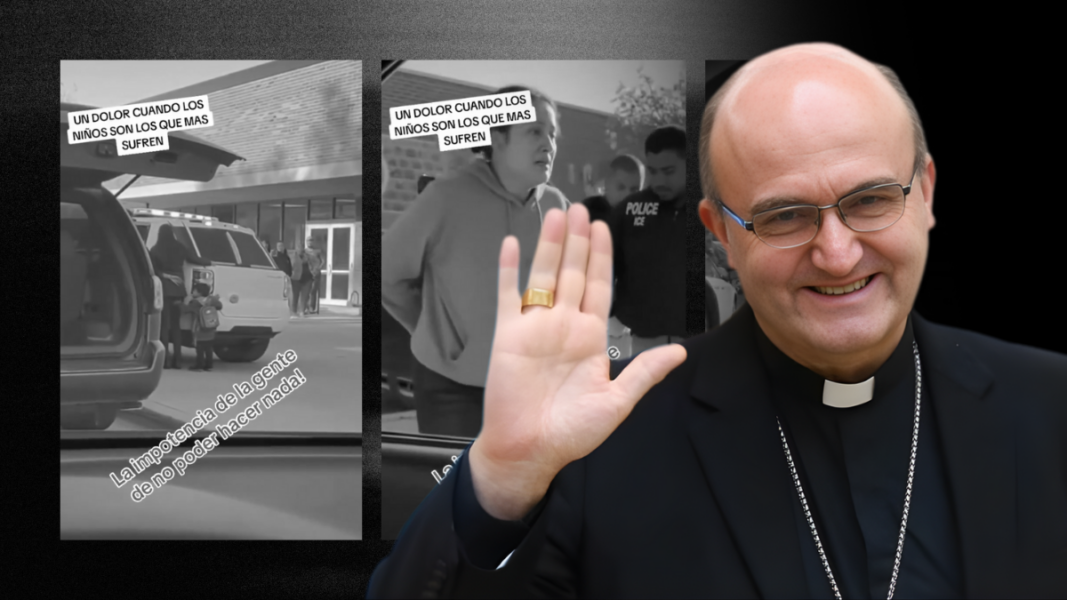
Bishop José Ignacio Munilla has publicly rectified after having shared a video on social media that included artificial intelligence-generated images of detentions of Hispanic immigrants in the United States. The prelate acknowledged the error, apologized, and announced that from now on, he will verify all audiovisual material he shares.
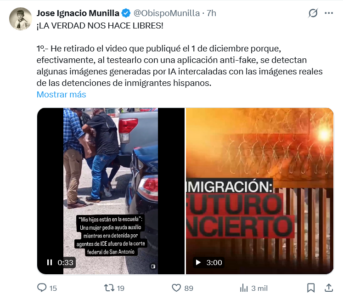
Munilla published a new message accompanied by two verified videos, insisting that the existence of montages or deepfakes cannot hide the fact that inhumane treatment situations are occurring in certain detention and deportation procedures. He also recalled that the United States Conference of Catholic Bishops has unanimously condemned «indiscriminate» deportations and called for an immigration approach that distinguishes between criminals and families who only seek to survive.
However, his rectification highlights a phenomenon that transcends this specific case: the growing demagoguery surrounding the immigration debate. The circulation of manipulated content—sometimes by mistake, other times deliberately—makes it difficult for public opinion to distinguish between the necessary compassion toward the migrant as a person and the responsible analysis of the policies that should govern migratory flows.
From a personal perspective, charity always obliges us to assist our neighbor: no one can ignore the stories of those who have crossed deserts and seas fleeing poverty or violence. That individual, spiritual, and ethical dimension is non-negotiable.
But the structural level is another matter. Migration policy decisions must avoid falling into sentimentalisms that, far from helping, can fuel a vicious circle: border chaos incentivizes mafias, causes deaths, generates frustration, and pushes entire families—including minors and pregnant women—to undertake journeys that put their lives at risk. Additionally, it can produce economic and social tensions in host countries, overwhelming public services and hindering integration processes.
Munilla’s rectification, in this sense, is not only a necessary act of transparency but also an opportunity to reflect on how public debate is constructed. Personal charity and social justice are not contradictory, but they require distinguishing between the moral duty toward the person and the political responsibility toward the common good.
In a time when falsified images and emotional speeches can shape public opinion in minutes, the challenge is twofold: verify the facts and think serenely. Only then will an honest, realistic, and genuinely human migration debate be possible.