


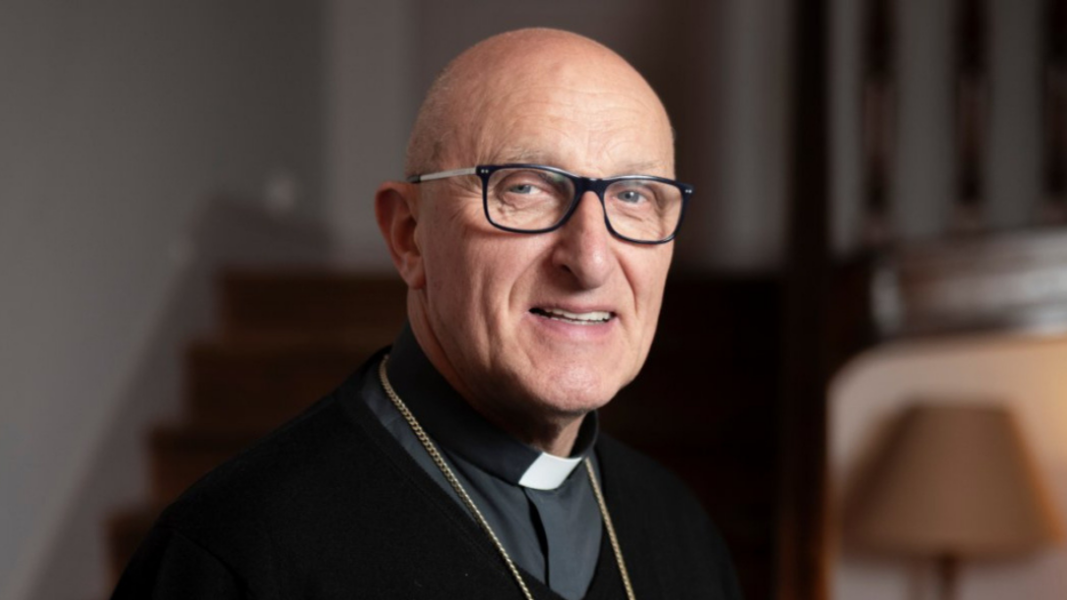
The recent interview granted by Mons. Dominique Rey to Tribune Chrétienne, on the occasion of the publication of his book Mes choix, mes combats, ce que je crois, offers an unusual and frank overview of the situation of the Church in France and in the world. Known for his pastoral boldness and doctrinal clarity, the French bishop—now residing in Paris after his departure from Fréjus-Toulon—reviews his years of episcopate, his deepest convictions, and the challenges that, in his view, mark this time of crisis and opportunity.
Rey does not shy away from any issue: from political accusations to the management of abuses, passing through mission, priestly formation, and secularization. His testimony reveals the vision of a pastor who has sought, for a quarter of a century, to maintain doctrinal fidelity without stifling the creativity of the Spirit.
The future of the traditional rite: “We are in a phase of waiting”
In the liturgical field, Mons. Rey adopts a cautious but hopeful tone. The application of Traditionis custodes has generated tensions, closures, disparate restrictions according to the dioceses, and an atmosphere of uncertainty for many faithful linked to the traditional Roman rite.
Rey emphasizes that the Pope, despite the decisions taken, has not yet “adopted definitive measures,” and that his attitude is that of “a prudent pastor, who seeks peace and unity.” To support this reading, he mentions a fact that has gone unnoticed in not a few analyses: the recent authorization for Cardinal Raymond Leo Burke to celebrate the traditional Mass in St. Peter’s Basilica.
That gesture— he explains— would hardly occur if the intention were to completely close the presence of the ancient rite in the Church. Hence his conclusion: the situation remains open and the discernment in Rome has not ended. For thousands of faithful, this assessment introduces a relevant nuance: Traditionis custodes would not have had the last word.
A look at the Church’s mission in France
Beyond the liturgy, Rey insists on the enormous missionary potential that still beats in the Church of France. Despite secularization and the loss of cultural influence, he points out that wherever fervent communities and committed laity arise, the spirit of the new evangelization promoted by St. John Paul II remains alive.
“It is time to leave behind the Christianity of custom,” he states, calling for a bolder and more coherent style, capable of speaking of Christ in a society often distrustful or indifferent.
During his tenure in Fréjus-Toulon, Rey turned the diocese into a pastoral laboratory where he welcomed new communities, charismatic groups, vocational initiatives, and diverse realities. That openness generated fruits, but also tensions and, finally, a Roman intervention that limited his margin of action.
The bishop acknowledges the trials experienced, but affirms that he maintained the conviction that his mission does not belong to him: “I am a servant, not an owner.”
New stage in Paris: a mission without a diocese, but not without fruitfulness
Today, free from administrative responsibilities, Rey resides in a Parisian parish where he accompanies Christian groups, preaches retreats, and participates in evangelization initiatives. His goal, he states, is to contribute to overcoming the fragmentation that affects both society and the Church, favoring a missionary “collective intelligence.”
Despite the crisis that the Church is going through, Rey maintains a firm tone of hope. He points out signs of vitality: conversions, baptisms, young people committed to social and evangelizing works. “Christ does not abandon his Church,” he repeats, quoting the Gospel: “I am with you all days until the end of the world.”