


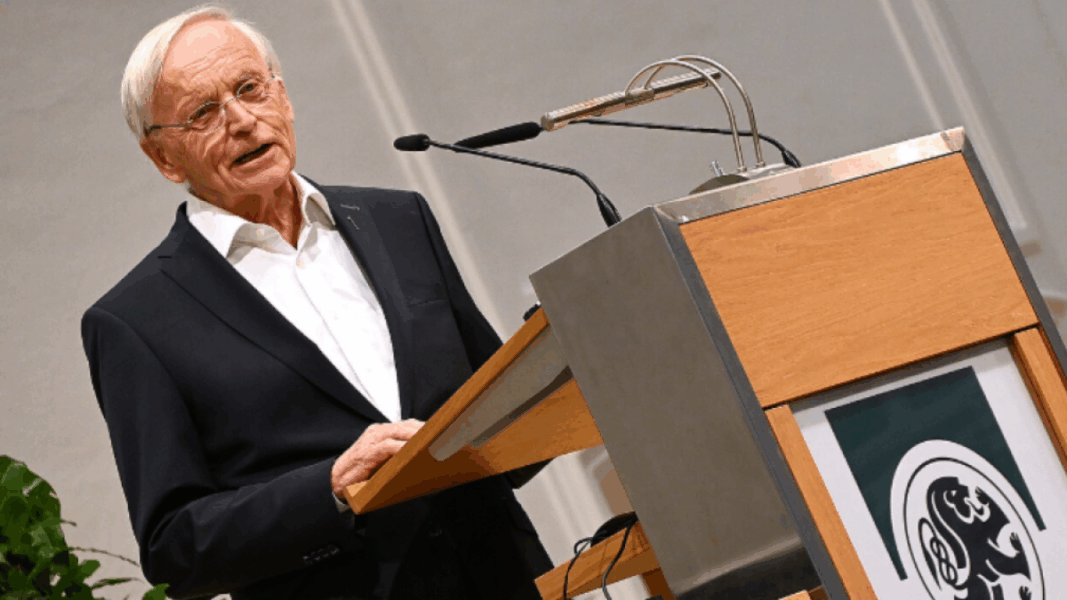
The Viennese theologian Paul Zulehner —doctor in Philosophy and Theology and ordained priest in 1964—one of the most influential references in pastoral thought in the German-speaking world, holds that the Church is entering a stage of profound changes that will transform its traditional structure. In an interview granted to the weekly of the archdioceses of Vienna and Salzburg, he states that the ecclesial future will not revolve around the priesthood, but around the laity and volunteering.
“The Church of the future will be a Church of volunteers”
For Zulehner, Europe is not condemned to disappear religiously, but it is heading towards a different ecclesial model. According to his analysis, the drastic decrease in vocations forces the Church to seek new paths:
“We need other sources for the ordained ministry, because the number of available priests is dramatically low.”
The theologian—far from proposing prayer and pastoral work for vocations—holds that, if the current trend continues, the Church will depend more and more on volunteering, to the point that—as he states—it would already be paralyzed today without the collaboration of the laity. Even so, he denounces that they still have little decision-making capacity in the life of the Church. An aspect that the German Synodal Way has dedicated itself to solving to the letter.
A pastoral reorganization without “authoritarian clericalism”
As if we didn’t already have enough synodality, Zulehner proposes advancing towards a “synodal culture of ministry”, in which the traditional clerical model, qualified by him as “authoritarian”, would have no place. He assures that a more formed laity, with a structured and professional volunteering, could give rise to a more dynamic, closer, and more satisfying way of living the faith for the communities.
In his opinion, the Church based on the priest as a “provider” of pastoral services “is coming to an end” and, moreover, could not be sustained economically in the future, thus stripping the sacrament of holy orders of all sacredness and supernatural transcendence.
Detecting vocations, training volunteers, and recognizing their work
Zulehner insists that all the baptized have a mission and that this “baptismal vocation” must be translated into concrete structures within the life of the Church. For this, he proposes the need for pastoral agents capable of identifying and accompanying gifts and talents, whom he calls “pastoral truffles”, people who know how to detect hidden vocations.
He also suggests creating volunteering academies, with serious training, clear programs, and a real culture of recognition. In that sense, he criticizes that institutional gratitude arrives late and poorly:
“Giving thanks after 50 years is too little.”