


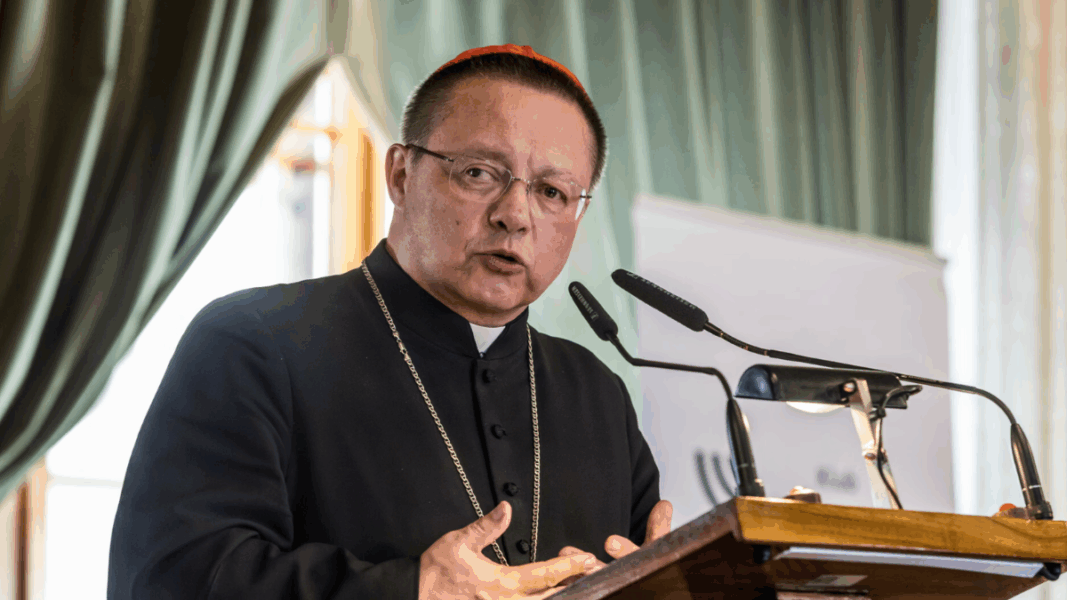
Grzegorz Wojciech Ryś was born on February 9, 1964, in Kraków, Poland. Between 1982 and 1988, he studied at the Faculty of Theology and the Faculty of Church History of the then Pontifical Academy of Theology in Kraków, while completing his formation at the Major Seminary of the Archdiocese of Kraków.
In 1994, he obtained a doctorate in theology with a thesis on medieval popular piety in Poland; later, in 2000, he achieved habilitation (postdoctoral title) in history with research focused on the Czech theologian Jan Hus and past ecclesial crises.
This academic and historical background has given him a formation that combines deep knowledge of the Polish ecclesial and cultural tradition with rigorous theological-historical training.
Priestly ministry and early positions
Ryś was ordained a priest on May 22, 1988, in Wawel Cathedral (Kraków), by the imposition of hands of Cardinal-Archbishop Franciszek Macharski. He was incardinated in the Archdiocese of Kraków.
His first years of ministry were dedicated to parish service—between 1988 and 1989, he was vicar in the parish of Saints Margaret and Catherine in Kęty—although his ecclesial profile quickly oriented toward formation, history, and administration.
Between 2004 and 2007, he directed the archives of the Metropolitan Chapter of Kraków, linked to the Institute of History of the Pontifical John Paul II University. Later, between 2007 and 2011, he was rector of the Major Seminary of the Archdiocese of Kraków; in 2010-2011, he presided over the Conference of Rectors of Theological Seminaries in Poland.
During that period, he collaborated on the historical commission of the beatification process of John Paul II, a significant responsibility given the enormous impact that process has had on the Polish Church.
Episcopate: positions and responsibilities

On July 16, 2011, he was appointed by Benedict XVI as auxiliary bishop of Kraków and titular bishop of Arcavica, being consecrated on September 28 of that year by Cardinal Stanisław Dziwisz. His episcopal motto is Virtus in infirmitate (“Power in weakness”).
On September 14, 2017, Pope Francis appointed him metropolitan archbishop of Łódź, in central Poland. He was officially installed on November 4, 2017. The following year, on June 29, 2018, he received the metropolitan pallium in Rome, a symbol of unity with the Apostolic See.
As archbishop of Łódź, he promoted pastoral reforms: he convened the fourth synod of the archdiocese, promoted the institution of the permanent diaconate, and founded an international Neocatechumenal Way missionary seminary for the new evangelization.
Between 2020 and 2021, he also assumed the role of apostolic administrator of the Diocese of Kalisz, after the resignation of its bishop due to serious allegations, taking charge of the administration during the transition period.
On September 30, 2023, Francis elevated him to the cardinalate; he was assigned the title of cardinal-priest of the Roman church of Saints Cyril and Methodius. That year, he was also appointed a member of the Dicastery for Divine Worship and the Discipline of the Sacraments, and of the Dicastery for Bishops.
Finally—and according to recent Vatican appointments—on November 26, 2025, he was designated metropolitan archbishop of Kraków, to succeed the current pastor of that historic see, Msgr. Marek Jędraszewski.
Pastoral, intellectual profile, and lines of action
Ryś is considered both a professor and church historian as well as a pastor focused on evangelization, dialogue, and formation. His academic work combines church history, spirituality, and theological reflection on faith in contemporary Poland.
During his governance in Łódź, he promoted the so-called “new evangelization,” with special attention to the youth world. He organized retreats and massive events for young people, as demonstrated by his “Youth Arena” initiative, and sought to bring faith closer to new generations in a context of growing secularization.
Regarding moral doctrine, he maintained fidelity to the Church’s teaching. At the same time, he has advocated for pastoral care focused on the concrete person, even in difficult or controversial situations. For example, in public statements, he has asked priests to accompany LGBT people while respecting doctrine, but with pastoral sensitivity.
In liturgical matters, his profile is usually described as “centrist”: he is not identified with a closed liturgical traditionalism, but during his tenure, he allowed the continuity of Latin Mass celebrations in his archdiocese, even after the publication of the motu proprio Traditionis custodes.
At the same time, his pastoral and communicative style—frequent closeness to the faithful, use of contemporary media, accessible language—has earned him recognition from those who value a more open and dialogical profile, as well as distrust from those who prefer a more conservative Church.
As a member of the Dicastery for Bishops, his influence extends to the selection of new bishops in Poland, which for some analysts represents a possibility of moderate ecclesial renewal, albeit with a clear doctrinal foundation.