


The Heralds of the Gospel, an international association recognized by the Holy See in 2001, have faced since 2017 an exceptional process: first an apostolic visitation and then a pontifical commissariat imposed in 2019. The case, one of the most complex and controversial in recent years, is presented in the book The Commissariat of the Heralds of the Gospel. Chronicle of the Events 2017-2025. Sanctioned without Dialogue, without Evidence, without Defense, as a story marked by contradictory decisions, administrative silences, criticism of the lack of transparency, and a prolonged climate of distrust between Rome and the institution.
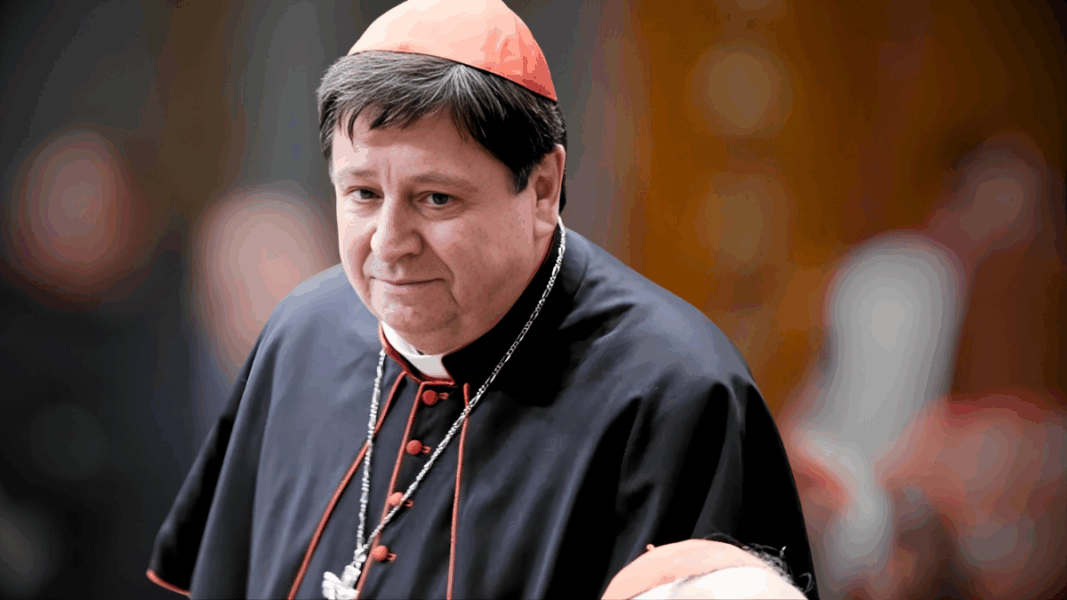
In that scenario, one figure concentrates the greatest part of the responsibility and direction of the process: Cardinal João Braz de Aviz, prefect of the Dicastery for Institutes of Consecrated Life and Societies of Apostolic Life (DIVCSVA) throughout the entire intervention.
What the book reconstructs is not only his formal role, but the background of his decisions, his personal attitude toward the Heralds, and the determining influence he exerted for years. From Infovaticana, we present a reconstruction of Braz de Aviz's profile as exposed in the work of Prof. Dr. José Manuel Jiménez Aleixandre and Sr. Dr. Juliane Vasconcelos Almeida Campos.
A Prefect with Absolute Control of the Process
As prefect of the dicastery responsible for consecrated life, Cardinal Braz de Aviz directed the apostolic visitation and had the final say in the decision to impose a commissariat. His signature appears on the key documents. It was he who declared the apostolic visitation concluded on October 3, 2018, in an internal communication addressed to the visitators. However, the Heralds themselves never received that notification, and a year later the same legal act was repeated in the decree of September 21, 2019, which also decreed the intervention. According to the book, this duplication of the closure of the visitation has no clear justification and reflects the irregular management that characterized the dicastery's actions.
In this stage, the cardinal maintained distance from both the Heralds and the pontifical commissioner himself. There were several attempts by the institution to be received, all without response. Even the commissioner, Cardinal Raymundo Damasceno, stated that on occasions he too was not attended to. Braz de Aviz usually limited himself to saying: “You are the commissioners, manage it yourselves”, revealing his disconnection from the development of the process that he himself had promoted.
A Prior Animadversion that Sets the Tone
The book provides testimonies that show that the cardinal's attitude toward the Heralds did not begin with the apostolic visitation, but much earlier. Years before taking office in Rome, when he was still archbishop in Brazil, he reacted with disgust at the mere mention of the institution. According to the account of a lawyer who dealt with him, the prelate even said:
“I do not sympathize with that institution… The problem is that I cannot stand their purity”.
This phrase, reproduced in the book, reveals a rejection prior to any canonical evaluation, based on personal rather than legal considerations.
A decade later, already settled in the Vatican, another Brazilian cardinal, José Freire Falcão, confirmed that Braz de Aviz's stance remained the same. In his testimony, he assured that it was not possible to open a house of the Heralds in Brasília while he was in the diocese “because he hates them”. This type of statement, collected in the book, reinforces the thesis that personal animadversion preceded and conditioned the entire official process.
Decisions that Change the Course of the Intervention
The weight of that attitude was reflected in the key decisions. After declaring the apostolic visitation concluded without notifying the visited, the cardinal signed the decree that imposed the commissariat in 2019. The book notes that even before that formal act, the prefect would have commented to detractors of the institution that he planned to send a commissariat after Easter. A young woman belonging to an opposing group claimed to have received that information directly from the cardinal in a private audience in April of that year. This version suggests that the decision was made in advance, without awaiting the usual institutional discernment processes.
The prefect's relationship with the detractors also contrasts with the indifference shown toward the Heralds and toward the commissioner himself. Cardinal Damasceno explained in a meeting that Braz de Aviz could not influence the commissariat, even admitting that the prefect was “partial” and that this partiality questioned the credibility of the process. The commissioner made it clear that his mission came from the Pope's authority, not the prefect's, and that he was not obligated to follow directives that would distort the entrusted work.
A Style of Government that Generates Opacity and Uncertainty
The book presents Cardinal Braz de Aviz as a prefect who acted with secrecy, lack of dialogue, and unilateral decisions. His refusal to receive the Heralds, his rejection to meet with the commissioner at key moments, and the duplication of legal acts fueled the perception of a non-transparent process. He also did not provide clear explanations about the alleged reasons for the commissariat, which were never formally communicated to those affected and, according to the text, do not hold up in light of the official reports obtained during the apostolic visitation.
Added to this is the contradiction between his words and his actions: on one hand, he demanded corrections and oversight; on the other, he ignored the commissioner's reports and preferred to attend to people outside the formal process, many of them linked to groups critical of the Heralds. For the book's author, this style of government weakened the legitimacy of the commissariat and made an orderly resolution practically impossible.
The Determining Figure of a Prolonged Process
Cardinal João Braz de Aviz not only directed the intervention against the Heralds of the Gospel from the authority of his position, but influenced its development with a personally critical stance toward the institution. His way of acting, based on silences, incomplete decisions, and a marked distance from those affected, prolonged the commissariat and contributed to a climate of distrust from which the institution has still not managed to escape. For anyone reading the case from the outside, the prefect's name appears as the thread connecting all the decisive moments, and his figure as the human factor that weighed most in the evolution—or stagnation—of the process.