


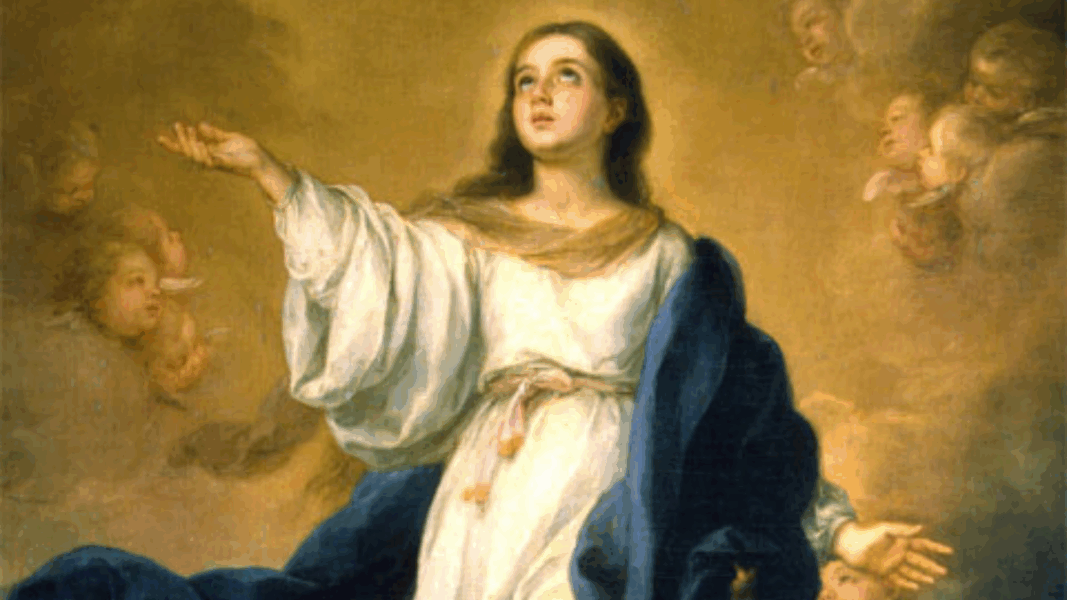
Holiness, it must certainly begin by recognizing that the document “Mater populi fidelis”, which has clear intentions to doctrinally settle the matter addressed, and which has been formally approved and signed, must also be considered, without ambiguity, as ordinary magisterium, which, as explained in point 892 of the catechism, demands religious obedience, to the point that no Catholic conscience that recognizes the signatory is exempt from its sincere adherence, whose denial, on the contrary, entails a gravity that is only second to disobedience of faith, punished with excommunication, since for some reason it will be said that «Roma locuta, causa finita», and, although the citation from Acts 5:29 is adduced, in matters of faith one must obey the magisterium as to God himself, for otherwise, what sense does the special assistance of the Holy Spirit have, whose function is supposed to be precisely to provide an objective guarantee?; therefore, it is already beyond all discussion that, if it has been sentenced that the title of “co-redemptrix”, applied to Mary, is always inopportune and inconvenient, and that, consequently, its use is not a true honor to the Mother (n. 22), but that, as a logical consequence, it would be a dishonor and even an injury, there is no more to say, and its use is definitively prohibited within Catholic theology and liturgy; regarding the title of “mediatrix of all graces” the sentence is not so resounding, saying that it has limits that do not facilitate the correct understanding of Mary’s unique place (n. 67); but its use is also unauthorized, and not only obviously in the theological sphere but again in the liturgical and devotional one.
As, in my opinion, the authentic formal constitutive of Mariology, that is: that title of Mary that grounds all the others, from which, in turn, they spring, is her immaculate conception, and not her divine maternity, which would also derive from the former, I believe that every serious Marian study must start from there.
It is understandable that the document addressed does not polemicize about a title that is already a dogma of faith, but simply speaks, in point 14, of Mary as the first redeemed; but, if we intend to be governed by the same technical rigor, it is unavoidable to raise from the beginning how that title can be reconciled with the sharp Pauline sentence that all have sinned, and are deprived of the glory of God (Rm 3:23), for the universal must inexorably encompass the entire totality of the particulars.
One could even say that Catholic Mariology has a double original sin: the axiom of «nunquam satis» and the notion of Marian privilege, for the former opens an infinite perspective that properly corresponds only to God, and the latter contradicts the biblical affirmation that in God there is no partiality (cf. Jb 34:19; Mt 22:16; Acts 10:34; Rm 2:11; Gal 2:6, and Eph 6:9); therefore, the argument of privilege would not suffice as an attempt to exempt Mary from the Pauline universal, for even God, who cannot deny himself (cf. 2 Tm 2:13), must submit to the fundamental principle of logic: that of non-contradiction.
The Angelic Doctor himself made the following statements: The Virgin Mary (…) was corporally conceived, and then spiritually sanctified (Summa Theologica III, q. 27, a. 1, ad 3); in whatever way the Virgin Mary had been sanctified before animation, she would never have incurred the stain of original sin, and consequently would not have needed the redemption and salvation that come through Christ; (…) but it is unacceptable that Christ not be the savior of all men (ibid. III, q. 27, a. 2); if the soul of the most holy Virgin had never been stained with the corruption of original sin, the dignity of Christ, which emanates from his character as universal savior, would have been diminished; (…) the Virgin Mary contracted original sin, although she was purified of it before being born from the maternal womb (ibid. III, q. 27, a. 2, ad 2); in celebrating the feast of the conception, it is not meant that she was holy in her conception, but that, since the time when she was sanctified is unknown, the feast of her sanctification is celebrated rather than that of her conception (ibid. III, q. 27, a. 2, ad 3); in the very conception of Christ, in which the immunity from sin must have shone for the first time, we must believe that the total suppression of the «fomes» occurred in the mother through the influence of the Son in her (ibid. III, q. 27, a. 3).
No matter how much one resorts to the long-outdated Aristotelian view of human conception and gestation, as an excuse to discredit the saint’s doctrine on this point, it seems impossible to evade the contundent theological reason that he himself wields against Mary’s immaculate conception: the necessary universality of the redemption wrought by Christ; therefore, for Mary to be able to be redeemed, and since «redeemed» means «fallen», she must have had some fault or fall, even if only original sin; thus one also sees the fallacy and nonsense of speaking of «preventive» or «preservative» redemption, which sounds even worse, applied to Mary, for the one who has been prevented and has not fallen, how can he be redeemed or lifted up?; for example, can something not crooked be straightened?
One could add that, if those who hold that the pope ceases to be so «ipso facto» when he errs doctrinally were correct, who could not then argue that Pius IX would have been so deposed, in defining, against the authority of the apostle, the dogma of Mary’s immaculate conception, just as John XXII was accused by some because, preaching that the deceased would not see God until after the final judgment, he contradicted the words Christ addressed to the good thief?; with the aggravating factor that the former reached the extraordinary pronouncement.
From the fundamental question of the immaculate conception, one can already see how with co-redemption not only is it intended that Mary was redeemed preventively, but it is also demanded that the redeemed be a universal co-redeemer, which contravenes the principle that no one gives what they do not have, for the one who would need to receive redemption would also be its issuer, and moreover would even have to co-redeem herself, giving what, in turn, she must receive; furthermore, since redemption is, above all, reconciliation with God, who can reconcile us with God but God himself?; that is precisely one of the capital arguments, wielded already by the fathers of the church, to prove the divinity of Christ, as the only way he can be an authentic redeemer, reconciling us with himself; but obviously Mary is not a divine person, and how then is she going to reconcile us with the one from whom she is infinitely distant?; and even what could a created and finite being do with infinite value, to compensate for divine justice before the offense: which is infinite, of sin, founded not on the sinner but on the offended?; indeed, men can do something with infinite value, but only in a negative sense: sin, for the value of the offense is measured, in reality, by the one to whom it is directed, and not by the one who commits it, while positively, since acting follows being, a finite being like ours can only produce equally finite acts.
If it were argued that Mary’s function would be that of redemptive mediation or as an instrument of redemption, it is replied that, as the distance between the finite and the infinite is not gradual but radical, there are neither intermediate steps nor any possibility of mediation to reach the infinite from the finite, which coherently would also have to be applied to the «lumen gloriae», which, if created, how will it rise to the uncreated?, and, if uncreated, how will it affect the created?; for that reason, Christ’s humanity itself does not really affect the divinity, but is an instrument to express it outward; that is the key to redemption, which does not consist in readjusting or balancing anything within God, as is usually applied to his justice and mercy, for divine qualities are immutable and totally coincident with the divine essence, to safeguard its simplicity; the great error of thinking that God would be as if divided between his justice, which would demand punishing sin, and his mercy, which would prefer to forgive it, with the result that it would be Christ’s humanity that would have to discharge upon itself the justice that mercy would want to avoid for sinful humanity, is then evident; the problem is that this would lead to the worst injustice, improper of God, by making the punishment fall on an innocent to absolve the guilty, which goes against this sentence: To acquit the guilty and condemn the innocent are two things the Lord hates (Pr 17:15); redemption, therefore, is not to be understood as a movement from outside to inside, since nothing external can surpass divine transcendence, but from inside to outside, and there is where Christ’s humanity intervenes instrumentally, which cannot influence the divinity, but can express it, and that is the meaning of Christ’s passion: not to excite divine mercy, but to express it along with justice, so that the suffering of Christ, who is a divine subject, expresses what human sin means for divine justice and mercy.
It will be rightly noted that the divinity, by its perfection, which demands beatitude, cannot suffer, and it is replied that for that very reason a divine person had to assume human nature: to be able to suffer, and thus express in it what it cannot suffer in the former, nor could it remain unexpressed, by demand of divine justice; it is then clear that pretending to assign to a created person: Mary, what only a nature assumed by a divine person can fulfill, is an authentic nonsense, for it imposes by itself the impossibility that a non-divine subject express something strictly divine, when it is known that, although the operation derives from the nature, its ultimate principle is the subject or person, so that the nature expresses the subject, but not vice versa, nor can one subject express another, but, at most, represent it.
After co-redemption, one must move on to the title of Mary as mediatrix of all graces, and, as the question of grace was already addressed in a previous letter, it will suffice now to consider that, on the one hand, the exclusive cause of all grace is God, for the supernaturality of the effect correspondingly demands that of the cause, and that, on the other hand, that same supernaturality presupposes also that our position be that of mere passive receiver, for, as the conclusion always follows the worse part, all our activity, being constitutively natural, would downgrade, liquidating it, the supernatural character of the resulting act; therefore, how, in the first place, can a natural intermediary be inserted between the supernatural cause and the effect, without making the latter also end up natural?, and how, in the second place, can a human subject, when all must be merely passive, acquire an active function, however instrumental, without contaminating the act with naturalness, whose supernaturality would be dissolved by the slightest external addition it suffered?
Having reached this point so discouraging, in which all Marian titles have been categorically denied, one might ask me why then I have placed as the formal constitutive a title: that of Mary’s immaculate conception, which, in reality, would not be valid, while the one I have discarded: that of her divine maternity, can be proven both by the Bible and by theological reason; indeed, her holy cousin Elizabeth already said to Mary: How has the mother of my Lord come to me? (Lk 1:43), when «Lord», as we know, is the name above every name, before which every knee bends, so that every tongue confess that Christ Jesus is Lord to the glory of God the Father (Phil 2:9-11); therefore, as the appellation «Lord» indicates the divine condition of Christ and his being equal to God (Phil 2:6), it follows that calling Mary «mother of the Lord» is equivalent to calling her «mother of God»; on the other hand, as it is evident that Mary is the mother of Jesus, who is not a human person but divine, it must be recognized that Mary is mother of a divine person, who is, absolutely, God, since personal differences are only relative; certainly it must be qualified that Mary is not mother of the divinity nor, therefore, mother of God in absolute terms, for the divine nature or divinity lacks all principle, but her divine maternity is only relative, insofar as she is mother of one of the divine persons: the Son, and that by reason of the incarnation of this one, insofar as the human nature that he himself assumed was conceived by Mary; consequently Mary by virtue of her divine maternity becomes, so to speak, the knot that binds, and the seal that confirms the Trinitarian and Christological mysteries defined in Nicaea, Ephesus, and Chalcedon, and then why do I insist on a title that would be invalid: that of Mary’s immaculate conception?
If it is considered that creation, as St. Thomas Aquinas also teaches, is something in the created only insofar as relation, which means that creation in the creature is nothing but a real relation with the creator as principle of its being (ibid. I, q. 45, a. 3), and that, therefore, active creation, which indicates the divine action, and which is the very essence of God, related to the creature, that is: the relation of God with the creature, is not real but only of reason, since only the relation of the creature with God is real (ibid. I, q. 45, a. 3, ad 1), it follows that everything created is, ultimately, unreal for God, insofar as only that with which a term can maintain an equally real relation can be real for that term, and that does not properly occur between God and the created, for, although for the created the relation with God is so real that its very reality depends on it, for God, who does not really depend on anything external, and who, therefore, maintains no more real relations than the Trinitarian ones, which are internal, the perspective changes completely, and the created fades into the most absolute unreality; also from the consideration of divine eternity and the temporality of the created one arrives at the same conclusion, for it is evident that before eternity, which is pure immutable simultaneity, temporal succession, which cannot be indefinite, because it opposes the necessary definition of the successive, delimited, specifically, both by the previous moment and by the subsequent one, disappears totally by the mere fact that there must be an initial moment and also a final one, and then what was before the first?: nothing, and what will there be after the last?: also nothing, and to nothing are we also reduced, we men, who evidently are part of creation?: it is no less evident that before God creation, with everything it contains, yields no more than that; for that reason the only logical possibility of establishing a real relation with God is salvation, which is no longer natural but supernatural, which would allow it to transcend in some way the limitations of all created nature.
The problem of considering salvation as an authentically real relation with God is the danger of falling into pantheism, confusing this relation with the other also real ones for God: the aforementioned Trinitarian ones; now, as the constitutive of God is necessity, and thus everything divine is necessary, and vice versa, it suffices, to overcome the mentioned obstacle, to indicate the possible and not necessary character of that salvific relation, which is then sufficiently distinguished from the Trinitarian ones, which, on the contrary, are completely necessary, and therefore also divine, for the constitution of divinity itself.
To not remain in mere names that, according to Ockham’s razor, would not really contribute anything, it is, altogether, imperative to really establish the mentioned possibility, which is achieved by making it depend on an equally real condition, so that, fulfilled this one, the positive sense of the possibility will also be fulfilled, and, otherwise, the negative one will come to pass; that real condition for salvation resides precisely in creation, which thus already acquires a real consideration before God, although indirectly, for the same comes to lay the foundation so that, responding affirmatively to God, man fulfills the condition, and attains salvation, or else, responding negatively, sinks into perdition.
As the next constitutive note of God, after necessity, is perfection, which is obvious, for God, in contrast to all the created, which is limited and imperfect, is the sum perfection, it follows that he, to be able to carry out the salvific work, which, as a real work, to establish also a real relation, must be perfect in itself, requires likewise the perfect fulfillment, at least in one case, of the condition that sustains the possibility of salvation, which comes to mean that, although the created human response must be limited, like everything created, it must however be perfect as such, that is: devoid of defects or resistances to grace, which suppose a detriment to grace itself.
At this point all its sense is found in that stupefied question that on one occasion was put to Jesus: Who then can be saved? (Mt 19:25; Mk 10:26, and Lk 18:26); indeed, if God needs, as a starting point, a perfect response, to be able to unfold and culminate the saving work, where can he obtain it?; as it is already a fact that serves as a condition of possibility for the fulfillment of all the unavoidable theoretical development mentioned above, there is no choice but to resort to biblical revelation, in which the perfect response of Mary indeed appears: Behold the handmaid of the Lord; let it be done to me according to your word (Lk 1:38); however, this response does not appear in the place where it would have been expected: at the beginning, but very late, which can only denote that she was not the first person to whom God demanded said response, but that such person failed resounding.
From here precisely the immaculate conception of Mary can already be fitted with the Pauline sentence that emphasizes the universal need for redemption, for, had that first person not failed, at least she would not have needed any redemption, but would simply have received the grace that God gives in justice, so that it can be responded to her; but, once a first imperfect and, therefore, negative response occurred, the order of justice was completely exhausted.
On the plane of principles, God, who is necessarily perfect, must also be so in his works, including that of salvation, which, as has been said, is also a real work for him; however, as this work, unlike the Trinitarian processions, is only possible, by also depending on a term different from God himself: the saved, who is free, and can reject it, it follows, as an unavoidable demand, that there must be, at least, a term that responds perfectly, fulfilling without any resistance the condition on which its possibility depends, since, otherwise, no other term would be saved, for the simple reason that the salvific work, not being able to occur in perfection, would not occur in any way nor in any case; but the plane of facts goes on to consider the fulfillment or not of the condition that sustains each possibility, and there is where the Bible tells us, first, that God’s primordial plan was not fulfilled, from which the failed response of, at least, the first person to whom God asked that perfect response is inferred, and whom we could call “first decisive person”, and, second, that finally God was able to find a person who would replace the previous one, giving the so longed-for perfect response, and becoming the authentic decisive person; something like this is hinted at in the words that Mordecai had transmitted to Queen Esther: If you decide to remain silent, relief and deliverance will come to the Jews from another place (Est 4:14); therefore, as, after the first negative, the regime of strict justice was closed, which allowed a strict merit of grace, which then was only gratuitous insofar as supernatural, only room remained for mercy to pass over that first negative, to continue offering the grace that would still allow a perfect response, as was the case of Mary; now, as mercy can only be activated by redemptive grace, we already have the precise sense in which Mary was redeemed: not because she had fallen, since her response was, in fact, perfect, nor because she had been preserved from the possibility of falling, for, not being impeccable, she could perfectly have fallen, just as the first person fell, but because the grace that produced in her that response did not reach her under the regime of justice but of mercy, which, as has been said, is entirely due to redemption.
If it were objected that Mary had to be preserved, to be able to give the aforementioned perfect response before the angel, it is replied that, as, according to what has already been said, time is totally unreal for God, while the affirmative response must be real, although indirectly, insofar as condition of the real relation with him, such response does not properly occur in time, where it is only expressed, but outside of it: in a timeless moment, to be able to be received by the one who is also outside: God himself; for that reason the immaculate conception of Mary is a consequence of her perfect response, caused by the fullness of grace that God grants her, and made possible by the exemption from the mark of original sin: the degeneration of human nature, transmitted by generation, and thus provoked by the first person who responded negatively, before whom the fathers of the church already saw Mary as the new Eve; now, that exemption from the damage in nature, which is the only preservation applicable to Mary, was already a work of mercy, just like her supernatural elevation, without which her perfect response would have been impossible, which thus required the redemptive work of her Son, just like all the others after the first failure.
The sense of the Pauline phrase that all have sinned can now finally be understood: from its equivalence with this other: God has shut up all in sin, that he may have mercy on all (Rm 11:32), for, once the sin of the aforementioned first decisive person occurred, all, including Mary, were affected in some way, which is what allows recognizing the truth of the first phrase, insofar as, as is known from the most elementary hermeneutics, biblical inerrancy does not necessarily suppose the truth of all senses, but is saved by a single true interpretation that fits.
Having speculatively demonstrated Mary’s immaculate conception, as a condition of possibility for universal salvation, several biblical texts can also be adduced that, understood in all their depth, highlight Mary’s most singular character; the first is this affirmation of St. Paul: He chose us in the Son (…), that we should be holy and immaculate in his presence (Eph 1:4); the question is that by ourselves we could not have been chosen, because our response’s imperfection prevented it; for that reason we were chosen thanks to the one who was holy and immaculate in a full way and from the beginning, making the incarnation possible, so that we could be chosen in his Son, who, redeeming us, erases in us the consequences of sin, and renews us, so that we end up being also holy and immaculate; the second is that of the angel’s greeting: Full of grace (Lk 1:28), for that fullness cannot be understood temporally, as it could occur in us, since then, in the first place, it would not be total, starting from a diminished situation, and, in the second place, it would indicate an initial imperfection, incompatible with a perfect response, and the third is the praise of her holy cousin Elizabeth: Blessed are you among women, and blessed is the fruit of your womb (Lk 1:41), where a parallelism between the blessing of Mary and that of her Son is observed, which would not make sense if there were any imperfection in the former, which obviously would have repercussed on the latter, and do not say that, to preserve Christ’s human nature, it would have sufficed with the sanctification of the mother just before the Son’s conception, for, as there is no time in God, and also with respect to us everything is fulfilled in a single moment, which is what fits with the uniqueness of simultaneity, only the immaculate conception of the first allows an identical conception of the following.
One can continually see how the required perfection of Mary as the effective first decisive person, expressed in her immaculate conception, grounds everything else, starting with her divine maternity, for it is logical that the one who allows as a necessary condition the redemption and salvation appear as the mother of the redeemer and savior for the double reason that without her this one would not have been able to carry out any redemption or salvation, nor, therefore, would his incarnation have made sense, and neither could anyone else have been redeemed or saved, from which Mary’s determining function in the redemptive and salvific work is derived, just as, in admirable synthesis, St. John sketches with the appellation «woman» on Jesus’ lips, and which, referred to Mary, forms a whole arc that opens at the wedding at Cana (cf. Jn 2:4), and closes at Calvary the public ministry of Jesus (cf. Jn 19:26-27), so that the one who at the beginning was only woman, with the burden that implies in reference to Christ himself as Son of man, ends up becoming mother precisely at the moment when she delivers in sacrifice the natural Son, and receives as supernatural son the one who represents all men, who receive the new life, from a new father: the same one who shortly before had called the apostles «little children» (Jn 13:33), and from a new mother: the same new Eve to whom the fathers of the church referred: the one of whom it can truly already be said that she is mother of those who really live (cf. Gn 3:20), for the one who gave birth without pain to the redeemer, being free from all sin and its sequelae (cf. Gn 3:16), gave birth, on the other hand, to the redeemed amid great pains, by allowing, not refusing to deliver him, but accompanying him to the end, that Christ constitute himself as redeemer on the altar of the cross (cf. Jn 19:25, and Rev 12:2); hence co-redemption and mediation for all graces can only be properly founded on the need that God has for a first perfect response, with all that this, to also amend the previous negatives, supposes of absolute self-denial and most painful, and whose understanding makes everything else acquire sense, confirming the thesis that Mary’s immaculate conception, which expresses the perfection of her response, is the formal constitutive of Mariology.
Evidently, if the first person had responded satisfactorily, no redemption would have been needed, until some imperfection occurred in the response of another person; but the unmitigated failure of the first made all the others, including the Virgin Mary, need redemption to receive any grace; said redemption, which reached us with the redemptive grace, which is a merciful grace, was wrought exclusively by Christ, whose human nature constitutes itself as our head, and thus unites us as members, and whose divine person reaches us, as has been explained, the infinite reparation of all rejection and resistance to grace; nevertheless, the doubt would remain as to why the apostle had to say these, at least, strange words: I suffer in my flesh what is lacking in the sufferings of Christ (Col 1:24), for what can be lacking in the work of a divine person, which, although limited from the instrument of human nature, is unlimited from its value as authentic expression of divine mercy and justice?
There will be those who argue that what is lacking is our acceptance of redemptive grace; but that depends on each one in particular, and it would not make sense for the cited phrase to be completed thus: For his body, which is the church, for each one’s response depends, ultimately, on himself, and that, by the intransferable character of each person, no one can supply; then could something be done, so that another person could respond better, not frustrating redemptive grace?
The answer lies in that, although it is said that redemption has unlimited value, as the work of a divine person, and in which divine justice and mercy are perfectly expressed, it cannot, however, be said that redemptive grace is infinite, since everything created, as that grace is, must be, by force, finite, which explains that we can resist it and even reject it; then the question is how much grace each one will receive, or with what intensity it will reach him, for everything finite has reason for more or less; certainly there is no equality, as can be seen, for example, in the parable of the talents (Mt 25:14-30), so it can be said that God, when giving, is the most unjust, although then, when asking, he compensates, with excess, the initial injustice, for to whom much is given, more will be required (Lk 12:48); consequently, on what account does God give more grace to some than to others?; that reason is called “communion of saints”, consisting in the hierarchical establishment of an order in the call to salvation, insofar as grace reaches each one, depending on the response of others, which makes us all effectively interconnected salvifically, as is proper to a body whose members are well joined and ordered among themselves (cf. 1 Cor 12:12).
The ultimate reason that justifies that procedure on God’s part is the fact that he is not arbitrary, but grounds everything rationally, and for that reason, as was said, he does not show partiality, but what, at first glance, seems a privilege, then, ultimately, is not such, but the positions are burdens; hence, although Christ’s redemptive grace has an immense potential, and is more than sufficient to provoke in all a perfect response, its intensity can then arrive quite diminished, for the greater or lesser docility of those who preceded in the plan of the communion of saints, acting as channels, wide or narrow, of the unique grace of Christ, influences determinatively in its final intensity; in that sense, it can be said that all the previous links are co-redeemers of the subsequent ones, for it has been through the first ones and through the mediation of their response that redemptive grace has reached the last ones, and cannot it be said, in the same sense, that Mary: the person who finally gave the necessary response required by God, is also co-redeemer, and precisely in the highest rank of that scale, since without her response there would simply not have been, in fact, even redemptive grace in any degree of intensity, but it would have been completely frustrated, and would not have reached absolutely anyone?; how, in sum, is Mary not going to be co-redeemer, when, thanks to her, there has been, in fact, incarnation and, therefore, redemption and salvation?; she is then co-redeemer of all the others, only at another level than that of the one who, had her Son not become man, would not have been able to be redeemer or savior of anyone.
Having demonstrated Mary’s truly crucial function as an effective channel of all graces, although obviously not as source, which is the exclusive function of her Son, how can she not also be rightly and justly called mediatrix of all graces, if precisely through her came the one who, incarnated in her, whom she thus made mother of God, is the very fount of all grace, and who through her always, as through a pristine channel without any obstacle, makes all grace flow that reaches the last man?; of what grace is she not going to be mediatrix, if there is no grace that does not arrive through her?
It only remains to put the dots on the i’s, to delimit what can be said of Mary, and to strictly specify in what way the appellations of co-redeemer and mediatrix of all graces can be applied to her; thus she cannot be an active co-redeemer, but only passive, for no one before grace is positioned but only in a passive way, unless then what they do is resist, nor is she either the cause of redemption: exclusive function of her Son: the incarnate Word and the redeemer, but therefore it will have to be said that she is co-redeemer in a subordinate sense, merely passive and as a necessary condition, although not exclusive, that is: by her perfect response, which is what God urgently needed in at least one case, regardless of who gave it to him, only that, as, in fact, it was her, she is also the one who came to fulfill the neuralgic function so that redemption could really be fulfilled, and she is the one who allowed, and thus grounds, the entire real salvific plan, outside of which there is absolutely no grace nor any possibility of salvation.
In this way the initial objections are resolved, since, not being an active cause of redemption, it is evident that Mary no longer has to produce the redemption that she herself receives, but that, by receiving it in fullness, she simply becomes an adequate channel that derives it to all, nor is she properly the producing subject of our reconciliation with God, but allows said subject, by incarnating in her, to produce it and extend it to all; hence Mary can also be called «sub-redeemer», to emphasize the different level of her contribution, which however does not detract an iota of transcendence from her.
Finally, I am perfectly aware that, by adhering to these conclusions, with which I have only intended to fulfill the recommendation, made by St. Peter, to give reason for hope (cf. 1 Pt 3:15), I position myself against the obedience that at the beginning I claimed for the addressed magisterial document; but has not this document also placed itself against the declarations of previous popes, as the same document recognizes in point 18, and which, even without the contundence of this document in denying them, affirmed the disputed titles to Mary?; with which pope do we stay then?; this is, once again, the unfortunate situation, which lately seems to become the norm, of opposition between current and previous teaching; that yes: the present is by no means the most conflictive case, as I already detailed in the letter I dedicated to the matter; but it happens that now an extremely sensitive theme has been addressed: the Marian one, which, for me, is especially non-negotiable, for certainly of Mary we can never say enough, fulfilling her own prophecy of praising her (cf. Lk 1:48), we who, after God, owe everything to her, and even more when without her God could not have saved us, and then it would have been better for us not even to have been born (cf. Mt 26:24), for of what use would it be to us to have been born, if we had not been rescued? (Paschal Proclamation).
More beautifully still St. Anselm expressed it: Everything that is born is a creature of God, and God is born of Mary; God created all things, and Mary conceived God; God, who made all things, made himself through Mary, and in this way remade all that he had made; he who could make all things from nothing did not want to remake without Mary what had been stained; God is therefore the father of created things, and Mary is the mother of recreated things; God is the father to whom the constitution of the world is due, and Mary is the mother to whom its restoration is due, for God begot him by whom all was made, and Mary gave birth to him by whom all was saved; God begot him without whom nothing exists, and Mary gave birth to him without whom nothing subsists; truly the Lord is with you, for having made every creature owe you as much as to him (Sermon 52).
Who will not then understand that skimping titles to such a person, blessed above all consideration, supposes a complete doctrinal derangement?, for to the one who has the most sublime appellation of all: that of mother of God, which yes I grant to that title, although it is not the formal constitutive of Mariology, what honor can legitimately be withheld from her, when the second person of the most holy Trinity has, in some way, equated her to his most beloved eternal and generating Father?; how then is he not also going to equate her, in some way, in holiness and salvific relevance to the third person, proceeding from the previous two?
The ancient pneumatomachi have become the modern mariomachi; but note that those who do not militate under the banners of the matchless lady, do so under those of the primordial serpent, already become a colossal dragon (cf. Rev 12:9).
An appellation that, certainly, is not accurate to apply to Mary is that of «suppliant omnipotence», but because, in the first place, there is no salvific omnipotence at all, but salvation depends determinatively on the subject himself, and, in the second place, her power is not arbitrary, but founded on humility: her own and that of the one who can receive her salvific favors.
I do not want to finish without sketching, in the wake of the above, and as a corollary, a very important idea to glimpse Mary’s greatness and the imponderable convenience of professing an authentic devotion to her, and it is that, while God in his necessary perfection cannot do anything without rationally grounding it meticulously, which admits no exception, Mary, however, by reason of her most perfect response, given freely, has ample faculty to take great liberties always for the good of those who, so to speak, earn her sympathy from the very quality in which she is the absolute queen, and which also most enchants God: the mentioned humility; indeed, it was so pleasing to God that, after the sublime incarnation, which occurred before the traditional Jewish espousals were completed, she accepted, on the one hand, to pass before practically all, for only to St. Joseph did the angel appear to give him the appropriate explanations (cf. Mt 1:20-21), as a despicable public sinner (cf. Lam 1:11b-12; 2:13, and Jn 8:41), and, on the other, to allow the atrocious and redemptive sufferings of Christ, which she in great part accompanied (cf. Jn 19:25), without obviously counting on the support of the divine personality, which made the slightest uncertainty in fulfilling the mission impossible, but only miraculously survived the lance thrust into the dead body of the Son (cf. Lk 2:35, and Jn 19:34), that for all that he has conferred on her the power to, acting as a direct channel that supplies the deficiencies in the framework of the communion of saints, dispense at discretion immense amounts of grace that she always uses for the salvation and greater sanctification of those who excel, in some way, in humility; for that reason sincere devotion to Mary is perhaps the clearest sign of predestination, for she even comes to excuse and protect great sinners out of frailty, if she sees sufficient humility to raise them to very high levels of sanctity (cf. Mt 23:12, and Lk 14:11, and 18:14); this is so because, although God mercifully forgives guilt, freeing from condemnation, his justice, however, inflexibly demands that the last quarter of the penalty be paid (cf. Mt 5:26), since his holiness imposes the need for total purification (cf. Hab 1:13), while Mary has authority to, based on humility, privilege certain persons, making much more grace and mercy reach them, and exempting them from a large part of the deserved penalty, through which it is seen that, only by having captured Mary’s pious attention, can God’s predilection be achieved (cf. Jn 19:26), for she is the beloved by right (cf. Sg 6:9); hence, as a counterpart to the above, refusing to recognize Mary, and to praise her, and even reaching to offend her, thus failing the already alluded prophecy that she herself made, is, on the contrary, the most terrible sign of reprobation; thus the lukewarm and heretics do not know the great good from which by their impiety they deprive themselves, and the grave risk in which, foolishly, they incur, for not joining with reverent humility the true and total glorification of Mary: the champion of humility, and therefore the most fearsome adversary of the one who, in turn, by pride is God’s adversary, and, not being stupid, already assumes that he cannot metaphysically defeat him, not then putting interest but in what he thinks is the greatest humiliation for God: that he has to see how humility, which is the foundation of charity, and thus the most fundamental of all virtues, only achieves the condemnation of many who refuse to practice it, and barely appears in those who with difficulty manage to save themselves; for that reason it will be Mary who, vindicating God’s glory, to magnify him appropriately (cf. Lk 1:46), will humiliate the former, crushing under her bare foot: sign of humility, the erect head: sign, in turn, of pride (cf. Gn 3:15, and Rev 12:17), and the one who, to show the worth of humility: so much greater the less it is recognized (cf. Mt 17:20, and Lk 17:6), grants the humble and simple a gratuitous and as supererogatory reward that, by exceeding the precise terms, is not directly in God’s hands, who, although delighting in humility and simplicity (cf. Mt 11:25, and Lk 10:21), is constrained by the rigid rules of his own justice, but in those of the one who, having surpassed, also supererogatorily, every mark for humility, now allows God to appease the rigor with an overabundant outpouring of mercy and grace (cf. Rm 5:20).
Note: The articles published as Tribune express exclusively the opinion of their authors and do not necessarily represent the editorial line of Infovaticana, which offers this space as a forum for reflection and dialogue.