


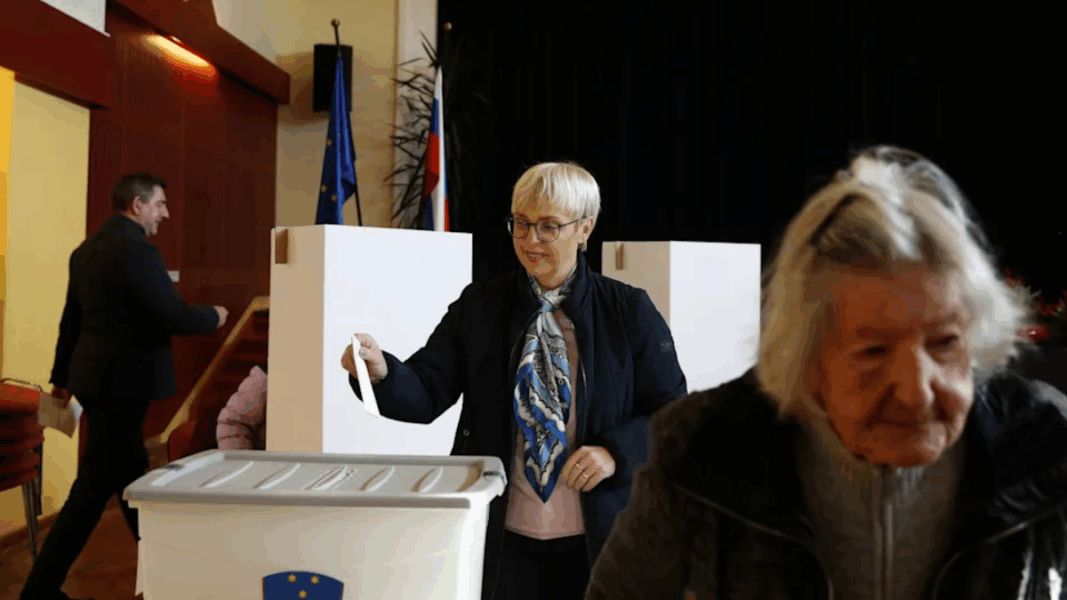
Slovenia has taken a decisive step in the defense of life by revoking the euthanasia law approved this same year through a referendum. According to the Euthanasia Prevention Coalition (EPC), 53% of voters rejected the norm compared to 47% who supported it, also surpassing the legal participation threshold necessary for the result to have legal validity. As a result, the legislation is rendered ineffective, and the government will not be able to present another similar law for at least one year.
The referendum was promoted by the citizen movement Voice for the Children and the Family, which gathered 46,000 signatures to activate the popular consultation mechanism and submit the controversial law to national voting. Its leader, Aleš Primc, celebrated the victory stating that in Slovenia “solidarity and justice have triumphed.” In statements reported by the Citizen Tribune and the STA agency, Primc denounced that the country “rejected the government’s reforms based on death and poisoning”.
A social reaction to a law approved without consensus
The euthanasia law had been approved by the Slovenian Parliament at the beginning of this year, with a text that allowed doctors to administer lethal substances in certain cases. The approval caused widespread rejection in social, medical, and religious sectors, who denounced both the content of the law and the way it was promoted.
In response to this situation, various groups—led by Voice for the Children and the Family—launched a signature campaign to activate the referendum. The citizen response was broad enough to force the government to submit the law to a popular vote.
The director of EPC, who participated in public events in Slovenia in January 2024 to counter the propaganda in favor of euthanasia, noted that the result demonstrates that an organized and focused campaign can halt deeply harmful legislation, even when there is massive funding from pro-euthanasia groups.
A democratic victory with direct effect: the law is annulled
The referendum required that at least 20% of the 1.7 million voters on the census support the winning option. Participation reached 40.9%, which gives full validity to the result and allows the law to be repealed in its entirety.
The consequence is immediate: the government is prohibited from presenting another euthanasia bill for the next 12 months, a period that pro-life organizations consider crucial for strengthening public awareness and promoting alternatives such as support for palliative care and accompaniment for the sick.
EPC emphasizes that this result “will save lives” and prevent the legalization in the country of “giving permission to doctors to poison their citizens,” in reference to the way the law defined the assisted death procedure.
Society can halt the culture of death
The vote in Slovenia has been closely followed by pro-life movements across Europe, who view this referendum as proof that the expansion of euthanasia is not inevitable. On a continent where several countries have legalized assisted death in the last decade, the Slovenian case demonstrates that citizens can stop a law of this type even after it has been approved by Parliament.
The campaign led by Aleš Primc was not presented as an ideological confrontation, but as a defense of the fundamental right to life and the State’s duty to protect those going through situations of suffering, dependency, or vulnerability. For many observers, the rejection of euthanasia also expresses a rejection of the approach that the solution to social, economic, or health problems is to eliminate the sick instead of addressing their real needs.