


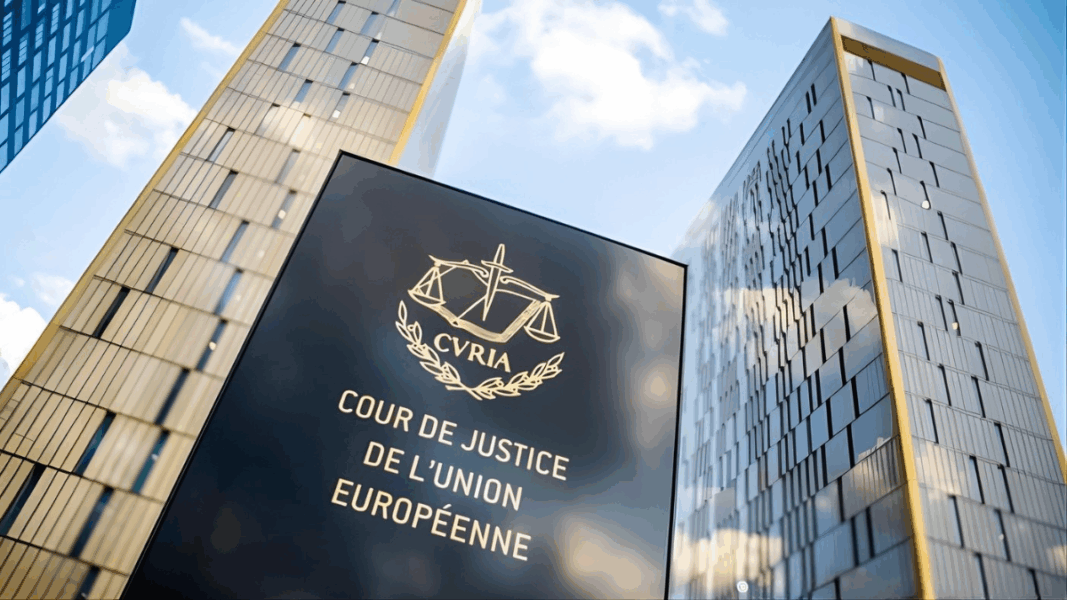
The Court of Justice of the European Union (CJEU) has ruled this Tuesday that all EU countries are obliged to recognize unions between people of the same sex legally celebrated in another Member State, even when their domestic legislation does not contemplate «equal marriage», as in the case of Poland. The Court considers that denying this recognition violates the freedom of movement of European citizens and affects the right to private and family life.
The resolution arose from the case of two Polish citizens married in Germany, whose request to transcribe their union in the Polish civil registry was rejected. The CJEU concluded that this refusal constitutes “an obstacle contrary to Union law”, as it prevents the couple from exercising the rights acquired as «marriage» within the community bloc.
The CJEU ruling: mandatory recognition, although without imposing internal legislative changes
According to Reuters, the Court was clear in its nuance: Member States must recognize the legal effects of the union celebrated in another EU country when such recognition is necessary to guarantee community rights, but they are not obliged to legalize «equal marriage» in their own national legislation.
This precision means that the recognition is limited to practical effects —residence, benefits, family rights, administrative registration—, without altering the family model defined constitutionally in each country. It is then a «formality» to gradually erode the sovereignty of those who still defend the natural model of marriage.
Poland in conflict between the national Constitution and European obligations
Poland thus finds itself at the center of the problem, which beyond the legal is a matter of convictions. Although the CJEU demands recognition of a marriage celebrated in Germany, Polish domestic legislation maintains its stance: the Article 18 of the Constitution of Poland defines marriage exclusively as the union between “a man and a woman”. This interpretation, widely confirmed by national courts, prevents the creation of a legal framework for equal marriage.
Poland also does not recognize any form of civil unions or same-sex couples, which has already been considered a violation of the European Convention on Human Rights by the Strasbourg Court (ECtHR).
Political pressure and institutional resistance
The current Polish Government, according to Polish Radio, has hinted that it might study the creation of registered civil unions to partially comply with European demands. However, President Karol Nawrocki has announced that he will veto any norm that modifies the constitutional concept of marriage.
In parallel, in April 2025, the Advocate General of the CJEU had already warned that Poland would have the obligation to recognize equal marriages celebrated abroad. Although that opinion was not binding, it exactly anticipated the firm judgment issued now, in November 2025.
The CJEU judgment crystallizes a legal tension that particularly affects Eastern European countries, where traditional family models remain constitutionally protected. For Poland, the problem does not consist in modifying its domestic legislation —something that the ruling does not demand for now—, but in being forced to seek administrative mechanisms that allow compliance with European demands without contradicting its constitutional framework.